Off the Top of My Head #4: The Unconventional Wit and Wisdom of Karl Pilkington

Off The Top of My Head

Genius is an objective concept.  What might seem like genius to one person may seem absolutely ridiculous to another.  What might seem simplistic may be brilliant.  What is absurd and what is genius can be blurred by perspective and not all of us agree on what is profound and what is nonsense.

Enter Karl Pilkington.

Karl Pilkington

A friend at work told me about the show Idiot Abroad and frankly due to the title and my lack of interest in the concept I resisted watching it.  I since have seen the show, The Ricky Gervais Show HBO episodes, and read two of Karl’s books.  Despite what Ricky Gervais believes, I think Karl is a kind of genius (which according to Ricky makes me an idiot too…), but like Ricky…I can’t get enough of his peculiar form of brilliant insanity.  I’ve included several of videos featuring Karl in this post.  All are hilarious, but be aware there is some  typical Ricky Gervais-language in them.

For those who don’t know him, Karl Pilkington was a radio producer on Ricky Gervais and Stephen Merchant’s radio show.  They found his unique outlook and simplistic views on things to be so entertaining they have since put him in their podcasts and twice sent him around the world.

Ricky refers to Karl as a “moron, he is a round, empty-headed chimp-like, mank moron.  Buffoon.  Idiot…but absolutely lovable.”  Stephen Merchant states Karl is, “Some kind of real-life Homer Simpson…small minded, petty, but at his core a  good person.”

I find Karl to be rather more intellectual and philosophical than idiotic; albeit in quite an unconventional way.  Karl can ponder the functions of the human mind, the future, and discuss the nature of virtual life vs. real life.  At the same time he believes dolphins with rifles escaped during Hurricane Katrina; that longer days on Mars are the cause for Martian technological advancement; and that monkeys can steal cars, serve as doctors, and fly spaceships via training with a banana chute.

Hearing Karl’s unconventional and sometimes seemingly mad ideas (like population control could be accomplished by having old women give birth to the next generation right before they die) it’s easy to jump to the conclusion that he is an idiot as Ricky describes.  To me, despite his sometimes pessimistic tendencies, he seems to think with a positive attitude, meaning when he finds a story that interests him he doesn’t come at it from a perspective of, “this can’t be true.”  Instead he comes at it from the angle, “why can’t this be true?”  He approaches the stories he reads with a certain level of naivety, accepting what is presented simply because he “read it.”  This can lead him to very unusual conclusions, and it doesn’t help that even legitimate stories he reads get, as Karl would say, “bungled in” with other stories and facts (like Mt. Everest growing and a piano being found on top of it.)  I find his willingness to accept unrealistic concepts as refreshing and creative (even if he doesn’t always see it as creativity).  Also, as he says when he selects a dictionary as the book he’d most want to bring to a desert island, he isn’t always able to express his thoughts in the clearest way.  I know I’ve been there, so I identify with him when he struggles to put his thoughts into words.

His views are also completely void of vitriol or malice.  When he talks about unusual people (he calls them all “freaks”), other cultures, poetry, and vacationing in other countries he doesn’t express a hateful opinion just his honest one.  I actually prefer his honest, yet sometimes ignorant, perspective far more than the crowd-pleasing, phony, politically correct beliefs we see from most pundits.

It’s like Karl lives in his own world, and that would be a fascinating place to be…

If you are unfamiliar with Karl, look him up on the internet and/or get a copy of The Ricky Gervais Show on podcast or video.  Even if you don’t think he’s a modern day philosopher (as I do!) you’re bound to laugh at his antics.

My next post will be a review of the first season of Karl’s travel program, An Idiot Abroad.  A terrific show that puts an unconventional man in unfamiliar surroundings and hilarity ensues.  For now, enjoy this, one of my favorite videos!

And check out Karl’s official site here!

Writing for Web: Blogging — Time and Readership

Last week I discussed how to start your blog or website. This week I want to talk about how to keep it going and build a fan base who will follow your content. There’s one thing you must be in order for your site to succeed: loyal.

Loyal: adj., (3) faithful to a cause, ideal, custom, institution, or product

(Source: Merriam-Webster.com)

In order for a blog or site to succeed, contributors must be loyal to their content, fans, and themselves. If you decide to write, you must commit to the cause – whether it’s to make a name for yourself or share your creativity with the world – writers must put in the time and effort.

Felder recommends challenging yourself to stick to a schedule. When RevPub started, we decided we would each do a post a week, make it the best we could, and have fun. Whether it’s a post a week or a post a day, a schedule will help you find and make time to add content.

Building a Fan Base

One you’ve created a topic list and set a schedule, how do you build a fan base? Here are some tips from the book and a few others we recommend:

  • Be a credible source. One new tip: don’t overload your writing with keywords. If you write naturally, your keywords will be there.
  • Keep content fresh. Don’t reuse your content. If you run out of ideas, try writing exercises or guest bloggers.
  • Include a bio with photos. Your readers want to know who you are, so tailor your bios and photos to the type of page you want.
  • Have an About page. What is your site about and what are you trying to accomplish?
  • Encourage feedback and comments. Negative or positive, comments help you gauge your readers, make improvements, and get people talking.
  • Be passionate. Give 100 percent every time you post. Use your passions to fuel your creativity, or keep an open mind so you find new ones. The results are up to you.
  • Use social media. Facebook, Twitter, LinkedIn, Pintrest, etc.; it doesn’t matter. I suggest starting with one, and as your site grows and you make more time, take on more social media platforms. You may even find people who will help you push out your content.
  • Talk about your site with peers, coworkers, and family. The support we receive is overwhelming, and I learned this is just as effective as social media. People can see your excitement and thrive off of it.
  • And most importantly, commit. Make a commitment to yourself and your readers to make each post as awesome as it can be. The Avengers grossed $1.5 billion this year, and at one point, that was just an idea. Loyalty can go a long way.

I learned a lot from chapter 12, and I look forward improving our site and adding a new category, which will premier this month. What do you think? Is there anything you would like to see on RevenantPublications.com?

Lil’ Horsemen Update!

Lil Horsemen Logo

I mentioned in my post way back on May 22 and again on June 6 that Revenant Publications’ first actual publication would be based on the Lil Horsemen of the Apocalypse concept I created back in 1998 (first story in 1996 now that I think of it…)  I thought now would be a good time to update everyone on our progress.  To date ALL principle artwork is complete!  This was some 58+ individual hand drawings I did in the intervening time between the project’s announcement and now.  Also, more than a dozen background landscapes and interiors were created.  The fairer-half of RevPub did a wonderful job inking all my pencils and I’m now ten pages in to the process of doing page layouts for the finished publication (which I’m now believing will be between 25-35 pages depending on how layouts end up).  There are still a few stages to go but it is pretty much on schedule and will be coming to a RevPub post soon!

This is my first real publication project and, even though it’s being produced entirely in-house from the hard work of the two RevPub partners, it is an incredible rush to see these characters who, as of yet, lived only in my head with my other series’ characters and my multiple personalities.  It’s been an eye-opener to work on it, one of those “this may actually be something I could enjoy doing for the rest of my life” projects.

So it will be coming soon and I just hope it’ll be as entertaining to read as it has been to produce.

Lil Grimmy Reaper Color Test
Grimmy is waiting patiently!
Skirmish
Skirmish is waiting impatiently…

Stay Tuned

Writing for Web: Blogging – Getting Started

“Everyone who’s ever taken a shower has had an idea. It’s the person who gets out of the shower, dries off and does something about it who makes a difference.” – Nolan Bushnell

So, you’re in the shower and you think, “Wouldn’t it be cool to start a blog or website?” The answer is yes. It is very cool and totally doable with the tools and technology available.

This week’s chapter is all about blogging, but I would like to add a little spin. Let’s talk muse, too.

Felder gives some great ideas for getting started. The first decision to make is what to write about? Some questions you can ask yourself are:

What makes you mad?

What makes you smile?

What hobbies do you enjoy?

What is your passion?

Is there a topic you can talk about for hours?

What do you want to learn more about?

Now take those questions and pick a topic. Then decide if you can write a lot of content about it. If not, expand your topic. For example, if you like haunted houses you may want to extend that to all places haunted, which may include lighthouses, castles, asylums, prisons, etc.

Make a list of topics (these will later be blog posts). Write them down for as long as you can, and always keep a pen and paper handy. A friend gave out a tiny composition book during a blog session a couple of years ago, and it is still in my purse just in case.

We at RevPub like to have a stockpile of ideas too because sometimes you just don’t feel creative or want to work a lot on something. In those instances, what should you do? Here’s where the muse comes in.

 The Muse

Muse: The source of your inspiration that gives you new ideas and topics.

Most people have something that inspires them. It can be a child, job, lifelong dream or goal, best friend, or successful people in the world. It doesn’t matter what your muse is or how you find it; the important thing is to find it, hold onto it, and let it guide you.

If you feel your muse has abandoned you, don’t worry. Felder suggests taking a walk, listening to music, aromatherapy, and even eating chocolate. Other strategies I found are TV shows like Shark Tank and Supernatural, yoga, and hanging out with people who have similar interests. In fact, most of my Writing for Web posts are done with a horror movie in the background. All of these can get your mind moving in the right direction, so just pick what works for you and go with it!

Now that you have a category and topics, it’s time to research a little. Felder advises looking at other sites and blogs about similar topics, making notes about what you like and don’t like, and deciding how to make yours better. This is an interesting exercise and allows you to improve your writing and style before you write your first post.

With all those in mind, get started. Pick a site to blog on – WordPress and Blogger are both free and very popular. Be sure to check in next week when we’ll discuss scheduling, content, and readership.

In the meantime, tell us this: what is your muse? Do you have tips for others on how to find inspiration?

Off the Top of My Head #3: How I Spent My Summer Vacation, Painting and the Balrog of Moria

Off The Top of My Head

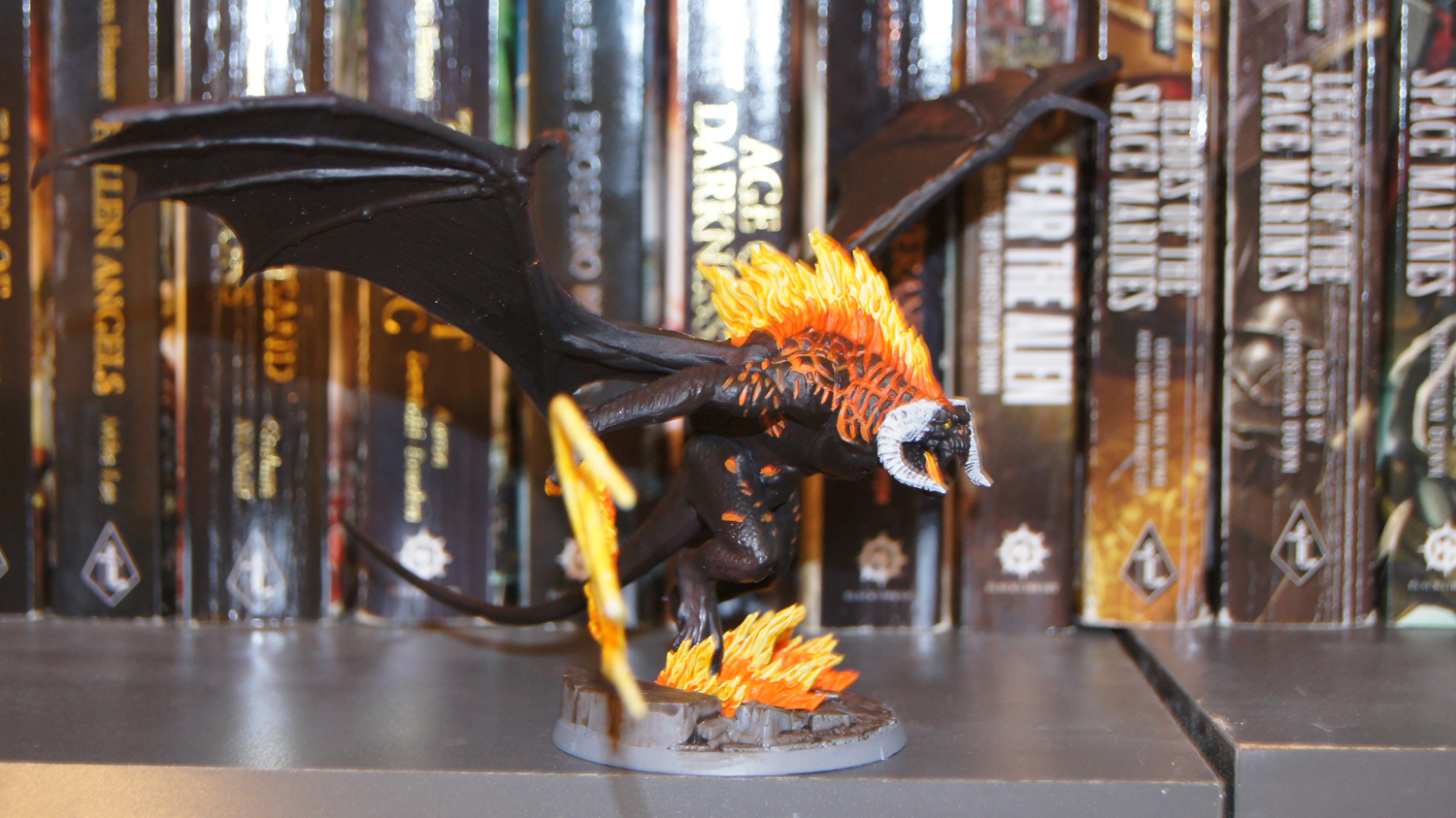
I posted in my second “Off the Top of my Head” some of the 40k figures I painted.  While I started painting with the five “came with the paint set” marines, the second model I painted wasn’t a Black Reach Ork but a Games Workshop, Citadel Balrog of Moria.  I love the Lord of the Rings movies, but I don’t have much interest in the game (I like the grim darkness of the 41st millennium).  This model was given to me by a friend I work with.  His son loves the Lord of the Rings figures.  He found this particular to be a little too advanced for him and offered it to me as a thank you for locating some hard-to-find movies and toys online (he calls me “the finder of lost items”).  The weekend before my vacation I decided on a weapon for the Balrog, primered him, glued him and started painting him.

After painting it I decided, since I don’t collect the LOTR figures, I would return it to the young man who gave it to me.  He was very happy to get the completed Balrog back and I received the ultimate kid compliment for my work: I was invited over to view his collection of Lord of the Rings miniatures and play video games.  I take it as high praise!

Barlrog Full
My Balrog. Chaos Black primer, washed all over in old Baal Red, then the fire parts were painted white and washed in Casandora Yellow. I used some Troll Slayer Orange for the darker fire parts and washed it in Bloodletter Glaze
Balrog Right
Full Balrog from the right. The whip used the same technique as the fire, painted white then washed in yellow with orange details glazed in red.
Balrog Left
Balrog from the left.  My Horus Heresy and 40k books made a good backdrop.
Balrog Base 1
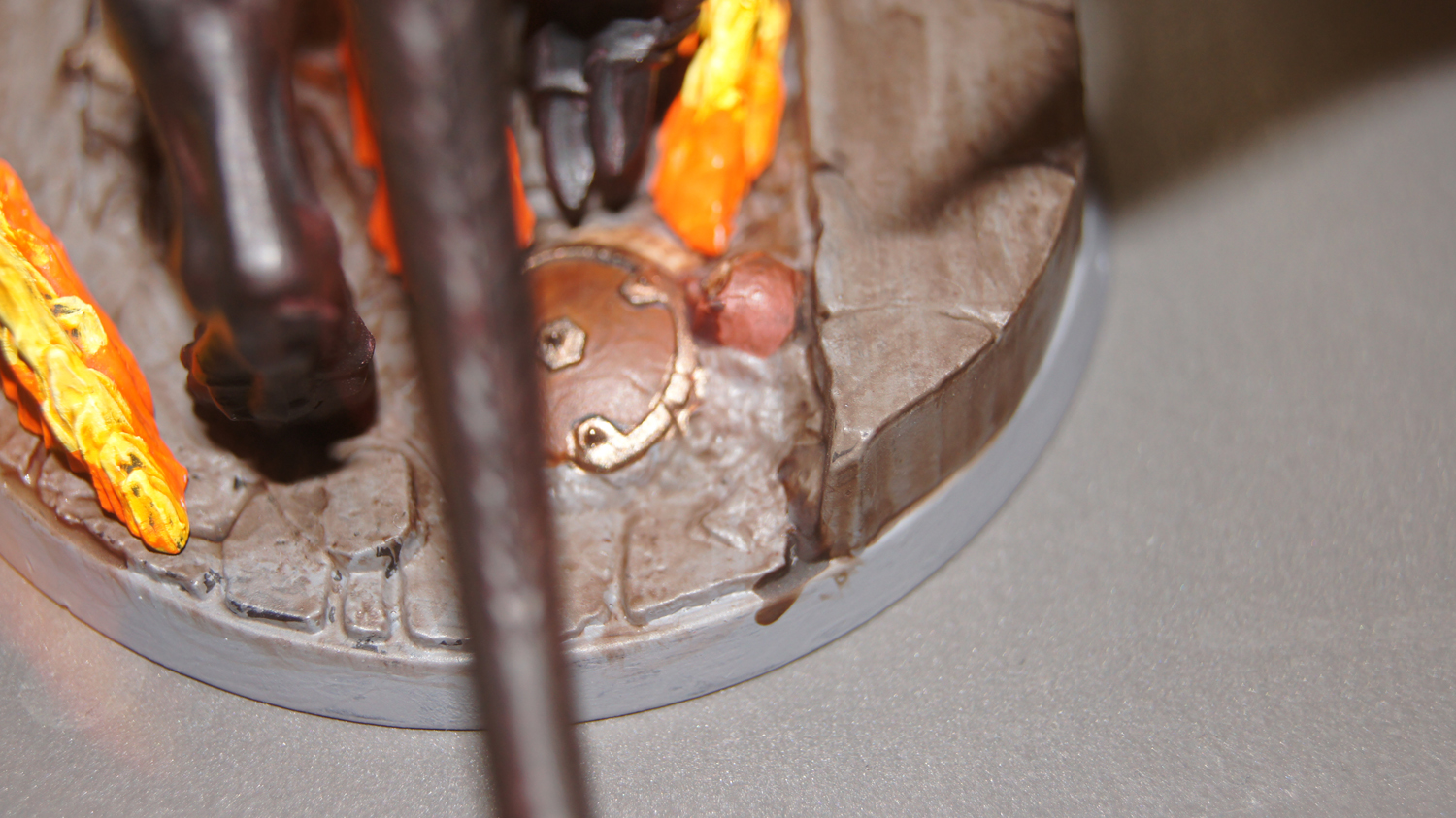
The base was the most fun to paint. I liked the detail of the skeleton in armor with an axe. I painted it Runelord Brass, Moonfang Brown, Bugman’s Glow, and Screaming Skull then washed the whole thing in Earthshade.
Balrog Base 2
Base of the Balrog showing the bony hand with axe.  I didn’t put the orange detail on the Balrog’s arms.  I probably should have but I was eager to get to that 40k army!
Balrog's Face
The face of the Balrog. His horns are drybrushed with Praxeti White.

Writing for Web: Instructions and Processes

Have you ever put an entertainment center together? What about watched a YouTube video of how to do something? Or maybe you like to try new recipes?

If you have done any of the above, you followed instructions. This week’s chapter is about writing instructions and process, and how to do so effectively. Felder explains the dos and don’ts, and this is a longer chapter, so I encourage those who want the full scoop to buy Writing for the Web.

How to Write Instructions and Processes

1. Determine who your audience is and what materials they need.

2. Write an introduction to your project. Felder suggests an overview, summary or anecdote.

3. Use numbers to write a step-by-step process for the task. I find doing the process while writing it helps you avoid missing steps, and you are testing your process. That’s multitasking!

4. Write a conclusion. Felder encourages ending on a positive note with a fun sentence or anecdote.

5. Proofread your instructions. (You knew I would make that a step).

6. Should you add photos, screen shots, or video to explain your process? Visuals are great additions.

7. Pull it all together, and have someone else test it.

8. Revise as needed.

9. Upload and publish.

10. Ta-da! You have successfully written a process.

Process writing is my favorite type of writing, and I have written them for years. I love the feeling when someone goes through the process, takes notes, and uses it as a reference. That is what I get out of writing.

Tips for Writing Instructions and Processes

Now that you know how to write a process, let’s go through the dos and don’ts.

  • Keep it simple. Use simple language and familiar terms tailored to your audience.
  • Don’t preach or lecture. This is important with video and audio, too. Give your instructions some life.
  • Learn the different learning styles. This helps you cater to your readers, and will help you decide what to add.
  • Use commands and be straightforward. Don’t worry about being bossy; you’re there to help.
  • Don’t over or under explain. Your audience doesn’t need every single step, so stick to major steps. During testing, you can adjust the process accordingly.
  • Break up lengthy steps. Don’t put more than one step in a numbered item. A lot of people do not read ahead, so too much information may frustrate them.
  • Have fun! If you have fun writing it, your audience will enjoy reading it.

Felder discusses other tips, but many of these are writing rules in other chapters. Writing instructions and processes are great ways to practice writing, too.

Now it’s your turn. What is your favorite thing to write about? Could you turn it into a process or instructions?