Call it Cap: Civil War

The MCU’s journey of Steve Rogers thus far has taken audiences from the streets of Brooklyn; the battlefields of World War II; and into fights with gods, monsters, and even old friends.  So could his latest installment possibly bring his story arc together?

The answer turns out to be a rousing “yes” and is perhaps the pinnacle of how Marvel studios has orchestrated its universe.

The plot is well-known by now.  The Avengers’ heroism has caused considerable collateral damage and the governments of the world would like to exercise some control over them.

Current, past, and future team members become divided on their opinions of these controls; with those supporting the so-called “Sokovia Accords” lining up behind Tony Stark and those opposed to them lining up behind Steve Rogers.  It turns out a very creative and subtle villain is orchestrating additional animosity between the sides and this leads to a clash of the two opposing ideologies.

As usual in Marvel films, especially when directed by the Russo Brothers, there is a lot more going on than just one level, or even two.  Let’s look at some motivations.

Tony Stark: Then came Ultron…again my fault…

To a lot of the audience’s surprise Tony Stark lines up to be regulated by the government.  Mr Rebel himself putting his powers in the hands of someone other than him.  But there are very good reasons for why he does, beyond even what Civil War provides.

Stark’s motivations in the film are given to him by a grieving mother whose son died in Sokovia during the events of Age of Ultron.  Stark’s mental state was already a bit of a mess we learn due to the absence of Pepper Potts, but also as he says later, the entire Ultron problem was more his creation than anyone’s since he created Ultron.  So while many can easily argue that the Avengers saved far more people than they accidentally killed, the Ultron escapade was without a doubt resting of the shoulders of Iron Man.  So maybe he feels he needs some “adult supervision” as it were to keep things in check.

Add to that the events of Iron Man 3, which he mentions in Civil War, left him not using his superpowers anymore and…maybe looking for a reason to come out of retirement, with some oversight if needed.

And if Iron Man’s motivations seem complex…wait until we look at Captain America…

Steve Rogers: The best hands are still our own

Again to a lot of audience surprise the guy literally dressed as a national flag is opposed to government oversight.  This is because, as was mentioned previously, Rogers’ isn’t a symbol of the US government but the ideals of the country.  He represents its people not its leaders.

Rogers is diametrically opposed to some governing body controlling where and when the Avengers can go.  As he says, they could be sent to handle a problem they don’t believe in, or told to stay out of one they do.  Especially after his experiences with Nick Fury in Winter Soldier he’s very wary of other people’s agendas for him.

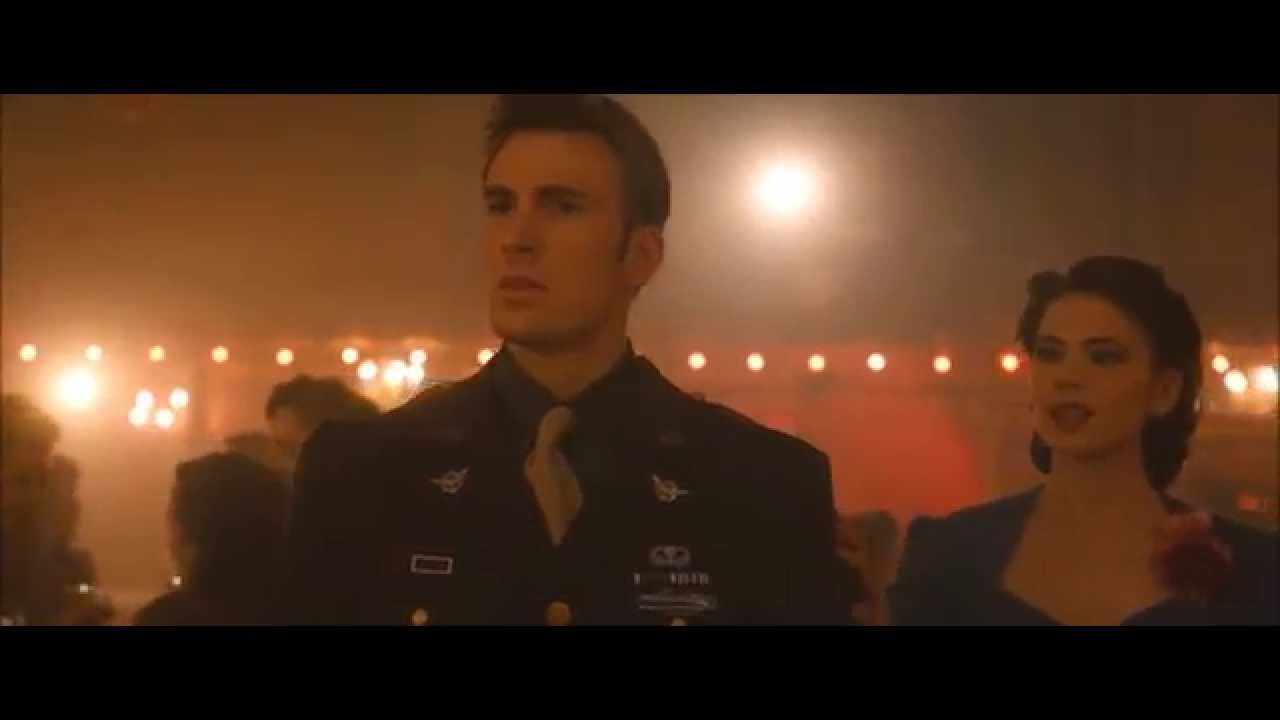
And then there are his personal feelings. What did we learn about Rogers’ worst fear in Ultron?  During his nightmare sequence we see the times he missed and the empty Stork Club with the dance he never got to have and the people who have left him long ago.  In Winter Soldier he found connections to his old life in the now aging Peggy Carter and again when his best friend Bucky Barnes is revealed to be the Winter Soldier himself.  The two most important people in his life were still in his life, even if it wasn’t in the same way.

Then…

Right in the middle of the first debate about signing the accords amongst the Avengers Steve gets word that Peggy has died.  One more link is gone.  Compounded by Peggy’s niece, Sharon, providing some profound words from her Aunt that helps bolster his decision to stand firm on not signing the accords.

During the summit to approve the accord his MIA best friend is blamed for the bombing that disrupted the entire process.  And Steve sets out to find him, with his entire goal being to bring him back alive.

Because this one person is his only link, his last connection to his previous life.  The loss of Barnes would be his nightmare, which he lives a version of every day, to come starkly and cruelly true.

So while Captain America opposes the Accords on moral grounds…Steve Rogers will do anything to save his friend and last connection to the world he left behind.  And this leads one bad choice…

Cap Calls it Wrong

No I don’t mean his decision not to back the accords.  While it could be debated, I feel Cap is 100% right to not give control over super heroes to the friggin’ United Nations to use as their own person hammer.  A hammer that would either be locked in a drawer never to be used or swung with an arm heavy with personal agendas.  Cap knows people’s politics and knows what it would mean to be a branch of an operating government.

What call did the Captain get wrong?  He should have told Tony about the Winter Soldier’s role in his parents’ deaths.  It is the discovery of Barnes’ assassination of his parents that causes Stark, who had arrived humble and contrite after his crusade was proven to be based on lies, to go ballistic on the two of them, perhaps ending the Avengers as we know them.  Would the result have been different if Rogers had told Stark what he knew ahead of time?  It’s hard to say.  But keeping it secret made things worse.  But Barnes is Rogers’ weakness for the reasons mentioned above.  And his weaknesses compromise his judgment.  Even he acknowledges he made a mistake handling this in his letter to Stark.

Civil War is more like WWI to me.  The motivations of the protagonists and antagonists are so varied and complicated that none of them are wholly right and none are wholly wrong.  The result is a catastrophe…that could potentially lead to a bigger disaster should it be allowed to escalate.  Even in the grand scope of ideology the conflict can still be brought down to personal, almost petty disagreement.  Tony and Steve have been fighting since the first Avengers hammered home again by Tony’s statements of how much he hated Rogers just from hearing his dad talk affectionately about Captain America endlessly.  Which is even more powerful as in Iron Man 2 he says his father “never said he loved me he never even said he liked me.”  The titular civil war is about Sokovia Accords and long-kept secrets but it’s as personal as a fight could be, built up over years of movie narrative.

But mixed into all of the weighty storyline and intricate subplots are characters who are true to themselves, it’s still very funny when it needs to be, very moving when it needs to be, it’s fun and tragic (Winter Soldier is remarkable tragic, his line, “I remember all of them” is downright heartbreaking) and just a terrific film.  So the villain’s intricate plot is left in the background (appropriately as that’s how he played it) to let Iron Man and his group become quasi-antagonists through most of the film.

Whether or not it’s a better movie than Winter Soldier is a hard one for me, since Soldier is so wonderfully constructed and tightly built.  Civil War is certainly right up there, though as one of the best films in the MCU and a fitting end to this chapter of Steve Rogers’ journey.

I personally am looking forward to seeing what is in store for the character next!

Call it Cap: The Avengers Movies

The Avengers films both contain a full crossover’s worth of characters and motivations but it’s worth mentioning Steve Rogers’ place in them.

The Avengers – Call it, Captain

He’s the superhero Agent Coulson gushes over, as he’s the classic hero and the one most likely to be admired by straight up Level 8 SHIELD operative Phil Coulson.  He’s also the only “adult” of the bunch of superheroes; Tony Stark still maintains his comic narcissism and penchant for Chaos; Thor is still a bit of a mighty, mighty man child; Bruce Banner hides his Hulkiness but you get the impression he really can’t wait to break it out; and Widow and Hawkeye are so mired in SHIELD agent-ing they are typically held in supporting roles.  Rogers has to come down and break up the fight between Iron Man and Thor because he’s the only one who really could.  And despite the tough fight goign on between them, when the Captain says, “That’s enough!” they both stop to listen.

Even after being called out for being too much of a boy scout, Rogers does some looking into Fury’s potentially nefarious dealings on his own and finds the root of the secretive “phase two.”  Not only that but with Stark, Thor, and Fury in the room Captain America is the only character who has the authority and presence of mind to tell Banner to put down the scepter when the doctor picks it up unconsciously.

And then there’s the sequence that gave this series its title.  After the beautifully iconic “assemble” shot Tony Stark, with whom Rogers has had the most interpersonal conflict and the one who clearly has the biggest problem with authority, gives profoundly subtle respect to Rogers and grants him the role of leader with the line, “Call it, Captain.”  After which Rogers gives the group direct orders on how to contain the threat and best use their abilities.  It’s an important moment for the character and the team as a whole.

Age of Ultron – Every time someone tries to win a war before it starts, innocent people die.

The second Avengers film is a different kind of movie as the characters are already established and we’re now living with their personality conflicts.  It also spends more time establishing the villain (a bit of an underwhelming villain really…) than it does with the heroes, but it still has some important moments for Captain America’s character.

The first is a funny one, at the party following the defeat of Strucker and the capture of the scepter all of the characters attempt to lift Mjolnir.  It’s a great piece of character development, but reaches its climax when, after every hero has had his turn (Natasha defers) without so much as the hammer budging, Rogers gives it a go and it moves ever so slightly.  Even Thor sits up in minor concern.

The second important moment comes when Scarlett Witch attempts to put the greatest fears into the minds of each of the Avengers; all of them seeing fantasies of terror or traumatic moments from their past to such an extent that it fundamentally changes many of their characters for the second act.  All except Rogers.  He doesn’t see alien invasions or horrors from his past.  He sees the Victory in Europe party he never got to attend and the dance he never got to have with Peggy Carter.  Then he sees that dance hall empty.  Tony Stark later says he “doesn’t trust a guy without a dark side” after seeing how little Rogers seems to have been effected by the experience.  But it’s clear why he seemed to recover so quickly and why he didn’t suffer as profoundly from the visions as his team mates.  His greatest fear is something he lives with every day.  His fear of being alone and in a world that’s passed him by.  His fear of having missed everything he should have experienced and being stuck in time.

It makes his actions in the third installment of his franchise all the more clear.  We’ll wrap up with Civil War next week.

Call it Cap: The Winter Soldier

The First Avenger was a great period piece about America’s first superhero in the Second World War.  The problem is you can really only tell that story once.  The big question hovering over the franchise after Cap’s unexpectedly terrific introduction was: where does the character go from here?

The answer, to the surprise of many, was a tight political espionage thriller.  With some shield-throwing tossed in for fun.

This isn’t freedom…this is fear

The most important aspect of the film is the character arc of Steve Rogers.  Typically seen as the biggest flag wavers in all of comic books, Captain America is profoundly misunderstood.  Something the Russo Brothers tackled in The Winter Soldier.  Captain America doesn’t represent the American government but the traditionally accepted values of its people.  Freedom being the most important.  And freedom gained through fear is not his idea of a perfect society; a concept that puts his philosophy directly in contrast to that of Hydra, who hope to co-opt the fear their plan will create into a new world order.  Their concept is freedom through fear and pain.

“If you want to stay ahead of me, Mr. Secretary, you better keep both eyes open…”

It looks like you’re giving the orders now, Cap

Once Hydra is revealed to be a parasite inside SHIELD it’s easy to make Captain America the hero standing up to the evil bullies the way he always has.  What’s interesting about his character, and what makes him possibly the most interesting Marvel film character, is his willingness to stand up toward “good guys” he thinks are being bullies too.  You see this in the conversation with Fury quoted in the first section.  You see it again when he advocates tearing the entire SHIELD infrastructure down; a scene in which he’s so convincing all of those present, including Maria Hill and Nick Fury, agree with him.  It’s the transportation of the skinny kid he was in 1941 to the present and the continuation of Dr Erskine’s last request that he always remain a good man.  He’s virtually incorruptible; but he does have weaknesses…

I’m with you til the end of the line…

In case you’ve been in cryo-sleep yourself for the last couple of years there is a spoiler here.  The Winter Soldier is Steve Roger’s best friend, Bucky Barnes.  In my comments on the first film I discussed how I thought Bucky’s character arc would go.  That he would become envious of the new Steve and this would lead him to villainy.  It turns out he was led to villainy but rather than be turned to the dark side by a selfishness it is against his will…and it is Steve’s unflinching loyalty to his friend is just another example of who he is, refusing to really fight back against him once he knows who he is.  Throwing himself on another grenade, figuratively this time, as he drops his shield against a super-powered version of Bucky who could very well literally beat him to death.  He’s the only link Steve has to his original life, but more than that it’s Cap’s best friend who never gave up on him so he certainly wasn’t going to give up Bucky.  Sebastian Stan’s performance also needs to be commended here.  Not only is the Winter Soldier menacing (he’s become my favorite antagonist of the MCU so far) but also sympathetic as you see what Hydra puts him through to maintain control of him.  Something expanded on in the next movie.

Before we get started…anyone want to get out?

Character work aside, this film has some of the best sequences in the entire MCU, standing up easily (though on a more personal scale, which works remarkable well) with the now-famous “Avengers Assemble” scene in the first Avengers film.  The opening battle on board the Lemurian Star (“Was he wearing a parachute?” “No he wasn’t…”); the ferocious close quarters combat in the elevator; and one of the best car chase sequences that isn’t in Mad Max Fury Road (though ironically containing another “Fury”) as Sam Jackson’s Nick Fury races his way through a massive assassination attempt.  Couple all that action with more terrific character sequences; the “On your left” scene introducing Anthony Mackie as The Falcon (a breakout character for sure); Steve meeting with a 90 year old Peggy Carter and seeing all the emotion he still has for her; Cap and Widow on the run a segment filled with multiple peeks into their characters and bolstered by the fact that the two actors know each other well and have actual chemistry; and the marvelous scene with Arnim Zola (“First correction, I am Swiss.”) all add up to one of the best action thrillers in recent memory, out-Bourne-ing Bourne movies at every turn.

“It kind of feels personal…”

Winter Solder still may be my favorite MCU film (though the third installment of te franchise is a close race).  It’s a perfect continuation of the original, an advancement of the characters and concepts, a major movement in the entire narrative, and just a great film on its own.

Next week a pair of mini reviews as we look at the Captain in the Avengers films.

Ghostbusters 2016 Is Not a Battleground

Off the EdgeThis week James Rolfe, who’s probably best known as the “Angry Video Game Nerd,” posted a video stating he doesn’t intend to see the new Ghostbusters movie because he thinks it looks bad and discussing his plans to release another video explaining the doomed history of Ghostbusters 3.  He threw no insults and, in typical James Rolfe fashion, kept the comments succinct, lightly humorous, and classy.  And in response the internet lost its collective mind.

Many of those who claimed to support his opinion crept out from the dark side of the internet and began to spew vile hate speech about how wrong the so-called “SJWs” were and how awful it was women had been cast in a “guy’s” movie and used Rolfe’s short, low-key video as more evidence they are right about the gender-swapped Ghostbusters being an awful idea.

Many of those who claimed to oppose his opinion began to heap equally hate-filled speech on him.  Accusing him (and anyone who even said they supported his statement not to view the film, like “MovieBob” Chipman) of misogyny and of supporting the “anti-female Ghostbusters” movement; posting personal attacks on him and immediately insulting his opinion and work.

My thoughts as this all went down?  How on earth did this movie become the battleground for gender equality in the media and why has it become such a controversial issue?

There’s plenty of blame here to go around as fires were lit, stoked, and spread by the worst elements of both sides.

To be honest I have no idea why a studio would want to remake any movie and then just change the genders, races, or ethnicities of the characters.  By doing this the makers, though probably unintentionally, cast aspersions on the original by declaring that it was actively not diverse enough and that it is something in need of great correction.  Sometimes the original film wasn’t very diverse.  Whether that is in need of massive correction though is debatable.  As I’ve stated in remake posts in the past, nothing angers an audience more than telling them what they loved wasn’t good enough and that it will be corrected.  This is especially true if the original is a classic and cherished property.  And that’s exactly what the filmmakers here have done.

When the news of an all-female cast was announced the actual misogynist movement, fresh off the deplorable behavior on display during the “gamergate” nonsense, immediately jumped into action insulting the very idea of a female cast; as though a made-up job in a made-up world can be defined by any gender.  They then set about their normal internet troll actions of flaming anything to do with the new film with more misogynistic, anti-LGBT, and racist hate speech.  This escalated as more and more information on the film was eventually released and, no matter what, this crowd jumped on it (with almost preternatural cognizance) to blast anything about it as being terrible…because it was about women.

The filmmakers responded by releasing their famous “girl power” set photo, which, while understandable, merely stoked the flamers more and unwittingly cast anyone who ended up not liking the film on what was known about it automatically in league with those who hated it for gender reasons.  And on and on it went like this.  Back and forth.  Until the first trailer came out.

I’ve already posted about the first trailer (and the second, the so-called international trailer didn’t help matters) but the vast majority seems to agree that it, well, just wasn’t a good trailer.  It didn’t make the film look good.  It wasn’t funny.  Max Landis pointed out that the original film and other films that are comedies that cross over into other genres tend to present themselves as the adjoining genre first and save the comedy for characters and situations (Men in Black was another of his examples).  Something this film didn’t seem to do.  YouTube creator StoryBrain posited many of the aspects of the trailer make the entire production “feel” phony, from the lighting to the character reactions.  Even the filmmakers themselves seemed to distance themselves from the film, promoting it very little.

The problem is a ton of the negativity assigned to the film is the horrible hate speech being spread by the actual misogynists and so-called “men’s rights advocates” (a movement that strikes me as strange.  It’s like when a panel of white, middle aged men on Fox News claim they are being discriminated against because they have to settle for having almost everything instead of the complete cultural domination they so crave).  But that doesn’t mean there aren’t valid criticisms of the trailer.

It was lame on comedy.  It seemed to miss the point and tone of the original.  It looked like a cartoon.  It didn’t feel like Ghostbusters, and those of us who grew up with it can define what Ghostbusters is the same way Justice Potter Stewart defined pornography, “I know it when I see it.”  And what they showed decidedly wasn’t it…

Many have automatically defended the trailer, and attacked Rolfe, stating that other reboots(such as Batman, Star Wars, etc) haven’t received so much hate and inflaming the situation further by assuming the all-women cast is the causality.  They rather conveniently forget the fan reaction to the Michael Bay-Produced TMNT.  The general reaction and failure of Robocop.  The total failure of Jem.  Apparently fans just aren’t terribly excited about revisiting some properties in a reboot.

Though it hasn’t helped that the film and studio have made some choices that are a bit questionable.  In a follow up video to her original trailer reaction, YouTube personality Alachia Queen broke the news that the studio has been accused (and there has been considerable evidence about this) of deleting valid criticism of the trailer and its construction but leaving the worst hateful rhetoric in the comments section in an effort to drive a public narrative that only anti-feminist haters are opposed to the movie.  This narrative has been happily picked up by the media more interested in drama than accuracy.  The studio’s behavior in this case makes it excessively difficult to fully denounce those who claim the movie is using sexism as a tool themselves.

Which leads me to the point that this Ghostbusters movie doesn’t push the movement toward gender equality in films at all.  It actually works against it.  What it is showing is that something done by a male cast can also be copied by a female cast.  What’s the point in that?  It is the regressive propping up of “anything you can do I can do better” or “Man Smart, Woman is Smarter.”  I agree with YouTube reviewer Comic Book Girl 19 who states that to make something really progressive why not a diverse cast of people working together?  All the “gender swap” does is show people continuing to work apart.  It’s really…well just another form of sexism.

So how do you progress the need for gender parity in media?  We need more Furiosas, more Ellen Ripleys, more Peggy Carters, more Ramona Flowers; all in movies showing women and men and of various sexual orientations treating and being treated equally by other characters and the narrative.  Where neither gender is shown as better.  Cooperation is displayed rather than separation.  Parity rather than dominance.  That’s what media needs more of.

Instead we got Ghostbuster 2016 and the debate around it has become toxic.  No one can support or denounce the film without being immediately and childishly branded as a party to either militant feminism or rabid misogyny.  When, for most of us, neither is true.  It’s just the most vocal of the crowd co-opting the argument completely and dominating the stage.  Movie review personalities are actively avoiding discussing it because of rhetoric on both sides and even a single comment leads to long, tedious defenses with prefaces of “I’m not bothered by the all-female cast but…” being necessary to distance themselves from the ongoing assault from that side and attempt to mollify quick-draw criticism from the other.  How does that help the progression of equality or even engender a positive discussion in any way?  And how is anyone even able to give this film any kind of genuine criticism without being labelled or branded something they truly aren’t?

I suggest we take a step back.  We absolutely can discuss this movie and its place in the franchise as a movie, not as a social experiment.  And as it turns out, after numerous, hateful, and even high-profile call-outs on Twitter, that was essentially what James Rolfe did.  A relatively concise, calm, well-thought out history of the failed attempts to create Ghostbusters III with some very brief opinions of how he thinks the new film looks, where he never mentions gender once nor does he criticize anyone in particular or anyone’s view.  He never even says people shouldn’t go see it.  Just that HE won’t.  And yet you’d think from the response after his first post, he was going to go full sexist rant on them.  Some even ridiculed his opinion, putting words into his mouth that were never there (satirically claiming he was using the “destroying my childhood” argument or sarcastically claiming his willingness not to buy a ticket was “oh such a BIG statement.”)  All he said was he wasn’t going to see it.  And yet the side calling for MORE equality and understanding has rather cruelly attacked him personally and his position.

James Rolfe is a filmmaker.  He makes videos saying what he thinks of video games and movies and is a massive Ghostbusters fan (in fact his three-part AVGN Ghostbusters videos were my introduction to his work).  He’s allowed to have his opinion.  Of course people are allowed to have opinions on his opinion, but what people shouldn’t do is hang signs on him and everyone else who voices a pro or con perspective on the film as being either “with us or against us.”  Healthy debate is fine, but people should NOT ridicule or attack each other personally based on what we think about an upcoming movie.  Because we should not a turn everything into a petty binary mudslinging contest.  And we should absolutely NOT be broken into two diametrically opposed revolutionary movements based on Ghostbusters 2016.

I’ll say it now.  I don’t plan to see this film either unless some trusted reviewers give it positive reviews or incredible new information is released about it.  You know why I’m not going to see it?  It’s not because of the all-female cast.  I wouldn’t have gone to see a Seth Rogan and Jonah Hill Ghostbusters directed by Judd Apatow either.  It’s because based on all three trailers we’ve seen it looks unfunny and poorly conceived.  Can I tell if the entire movie will be bad based on the trailers?  Not for certain, but I have a pretty good idea after three of them it’s not looking good and I tend not to go to movies that have advertising that make it look bad to me.  That’s even more true of a remake…especially one of a great franchise.  I love the original film.  I don’t want to see what appears to be a bad remake use the name of an absolute classic to make money and even worse to use the divisiveness of gender politics for publicity.  But here’s the thing.  I shouldn’t HAVE to clarify that I like or don’t like the look of a movie based on anything other than my own tastes and the merits I can ascertain.  Not because of the politics heaped upon it by factions who have descended on it like a Tyranid hive fleet, stripped it of its biomass, and left only a dried husk behind waving the flags of both factions at once.

Ghostbuster 2016 is NOT a battleground for gender issues.  It’s a movie.  A product, designed by a studio around a beloved franchise, given new life through questionable decisions, irrationally hated on by the arrested adolescent gender IN-equality crowd, and incomprehensibly revered by the more militant wing of the “girl-power” movement.  Both sides are guilty of hate speech, both sides are guilty of brain-washed group think, both sides have initiated and reacted to uncalled-for vitriolic assaults, and both sides have been totally played by a film studio who just wanted to make some cash on a well-known film franchise and has now seen its efforts rewarded by free publicity (yes both good and bad, but you know the saying “there’s no such thing as yadda yadda yadda”). Ghostbusters 2016 looks like another bad remake from a studio and in a culture of historically bad remakes.  Some people may like it and they’re welcome to like it.  I wish I could too because, like Jim Sterling says, I can’t see a downside to liking more things.  But I don’t.  I don’t think it looks good at all.  And no, the girl-power movement doesn’t get to brand me, or anyone else who wants to call out what we think is a bad movie for being bad, as a sexist, misogynist, or anti-equality henchman just because we have different opinions on how a movie looks to us.  It doesn’t help endear anyone to your cause and makes you as extremist, brutish, and thuggish as the actual racists and sexist you rail against.

I don’t think it’s too late to debate this movie on its merits.  Its success won’t be a victory for gender equality.  If it turns out to be as bad as many of us think it will be going to it doesn’t mean you’re showing your support for the equality cause, you’re just helping a studio make money on a poor film and even prove that there’s profit to be made in exploiting good causes and bringing out the worst in human nature.  If it actually turns out to be a good installment and people refuse to see it they’ll have missed out on a good experience and helped to kill off any hope for a revival of a great franchise.

We’ve moved past this jingoistic, binary attitude.  It’s a film folks.  It’s entertainment.  There is work to be done in the realm of gender parity, but we shouldn’t turn the release of a comedy remake into the hill we all die on…

Call it Cap: The First Avenger

In the hands of lesser creators Captain America: The First Avenger could be a cheesy, jingoist, propaganda film about a true-blue hero who goes through the motions of gallant cliché and beats up bad guys while draped in national colors.  Because it was made by people who not only understood the character but seem to love what he is, it turned out to be not only a great superhero movie, but a great period movie, a great war movie, and a great character piece.  The last point is really what made this film shine.

Chris Evans as Steve Rogers

Many of us first met Chris Evans in the original Fantastic Four movie but we didn’t really appreciate what he could do until his terrific performance as skater Lucas Lee in Scott Pilgrim vs the World.  I won’t go too far into Steve Rogers’ character, as last week’s post pretty much covered it, but Evans’ performance as Steve Rogers is pitch perfect, maybe even out-shining Robert Downey Jr’s Tony Stark due to the nuanced complexity of the Captain’s persona.  He has to be tough but gentle, ferocious but innocent, and passionate but not obsessive.  You catch just how impressive Evans is during a scene where he’s watching his own propaganda movies, his sheepish smile insinuating both pride and embarrassment, without a word of dialogue or broad action.  I can’t see anyone else as Cap now, and I can’t imagine the MCU without him.

Hayley Atwell as Margaret “Peggy” Carter

Peggy Carter could have been a cop-out character.  I actually expected her to be.  Met during his early training (while he was still a 95 pound recruit), I assumed she would be either a hard-bitten, no-nonsense, tough girl…OR…she would be a virtually useless, damsel in distress love interest.  In most difficult fashion Peggy Carter is neither, is a bit of both, and is one of the best characters I’ve seen in a while.  For some reason (I’ll go with laziness) writers tend to write “tough” female characters in a certain way, giving them the dull traits of toughness and stoicism.  Peggy Carter markedly does not do this.  She’s a woman, she’s tough as can be, but she’s also still feminine and doesn’t mind putting on her red dress any more than she minds donning combat gear.  She’s not a master sniper (for some reason a lot of tough female soldiers are master snipers…I have no idea why) but she’s a whiz with her pistol and doesn’t mind rushing in to the raids herself, Tommy Gun in hand, to blast some Hydra super-soldiers.  She’s no-nonsense in her job, but it’s insinuated she does know how to have fun, and her persona is one of someone who is damn good because she’s worked to be damn good.

The writers had a narrow path to walk with her and I’m amazed they pulled it off.  The problem is that you don’t want Agent Carter to suddenly warm to Steve only after he becomes the 6’2” 240 pound Chris Evans.  It would make her seem shallow and quite unlikable.  Instead the filmmakers worked in subtle hints that Peggy Carter actually fell for Steve at the same time her fell for her, when he was still a frail, good-hearted kid just wanting to change the world.  You see this in her final moment of the film, where she finds a photo of little Steve in his training dossier.  In the later Agent Carter One Shot you see she has that picture in a frame she keeps with her.  NOT any of the macho news reel pictures of Captain America, but the little, noble kid who just wanted to stop the bullies.

Atwell’s performance (even if I hadn’t developed a major league thing for her during the course of this movie) is stunningly impressive.  A personal favorite piece is during a moment of levity; Howard Stark asks Peggy if she’d like to get a “late night fondue.”  The now enhanced but still socially awkward and painfully innocent Captain America asks, “So do you two…fondue?”  And her response, again just in her expression, communicates bemusement, confusion, and flattery (she can tell he’s a bit jealous or disappointed) all at once.  It’s great stuff.

Sebastian Stan as James Buchanan “Bucky” Barnes

Bucky Barnes is another character who could have easily fallen into the worst chasm of film cliché.  When he was introduced I arrogantly mapped his entire arc: he is Steve’s friend and protector but once Rogers becomes Captain America he’ll become jealous and resentful, eventually turning on him in the end and becoming some kind of villain.  I think the fact that none of that happened the way I thought it would is a most impressive part of the movie.  Barnes, at first, represents everything Rogers wants to be, good-natured but strong in his convictions and has the physique to do something about it.  Once Rogers becomes the Cap, Barnes at no point expresses any resentment of anger toward Steve.  This is, in part, because of how Rogers is portrayed; as described last week, he’s just a good guy and Bucky knows it.  So when Rogers comes to rescue Barnes and his fellow captured soldiers it’s Barnes who genuinely leads the “let’s hear it for Captain America” cheer.  The banter he and Steve share during his rescue is wonderfully genuine and he joins the Howling Commandos because he’s following “that kid from Brooklyn too dumb to back down from a fight.”  The only moments where Barnes shows a tiny bit of (and I hesitate to even use the word) “envy” is when Rogers’ gets the girls’ attention instead of him (though he makes a genuine joke about it, clearly holding no ill-will toward his friend) and when he tries to use the Captain’s shield, the latter more a sign of self-determination (“I can do this!”) than actively trying to show Steve up.  Barnes is a great character and the next film just reinforces how great he is…

Hugo Weaving as Red Skull

A great good guy needs a great bad guy.  Unlike Loki, Ultron, or Maleketh Red Skull is not a misunderstood or seemingly and justifiably bitter.  He’s just bad. He’s bad bad.  He’s “too evil for the Nazis” bad.  He is perfectly created in this story as Captain America’s antithesis.  The serum brought out his worst qualities turning him into an even bigger monster, yet he still fervently insists that he has “left humanity behind.”  Weaving has a talent for making characters hidden behind masks express far more than they could have.  There isn’t any over-complicated depth to the Red Skull; he has no ambitions beyond using his power to dominate the world.  And only wishes to do so because he is a selfish bully, exactly the kind Rogers wants to stop.  In what could have been a one-dimensional character, Weaving makes the Red Skull a fully formed being, driven by the base cruelty, but three dimensional.  It’s just that all three dimensions are, well…BAD.

The supporting cast also helps establish the world, Tommy Lee Jones as Colonel Phillips, Dominic Cooper as Howard Stark, and even a nice cameo by Natalie Dormer.  And this colorful cast is what makes the world of First Avenger feel authentic.  Yes the costumes, surroundings, and set dressing help keep you invested but it’s the characters that make you believe you’re in the 1940s.  And also almost make you forget this is a Marvel Comics movie about the hero with the biggest Boy Scout reputation this side of Superman.

It’s a testament to the character, the actors, and the franchise that the next installment of Captain America would be drastically different but still maintain its heart and stay true to the character while catapulting the narrative into exciting new places.

Call it Cap: Why Captain America is My Favorite MCU Character

Cap

I recently enjoyed an MCU marathon this weekend just to prep for Civil War and it occurred to me that not only, and completely surprisingly, are the two previous Captain America films my favorite sub-franchise in the MCU, but that Cap himself is also my favorite character as well.  Something wholly surprising.  I thought I’d take a look at why both he and his movies have become my favorites.

I’m….Captain America…

What makes the Captain and Steve Rogers almost unique in his films is his personality is entirely heroic.  In the first film Rogers is physically frail but has a hero’s heart.  He’s genuinely a good person, something that most superheroes and superhero movies lost sometime in the 90s.  I can remember in the original Men in Black Will Smith’s character mocking the rigid, goody-two-shoes soldier as “Captain America.”  A term that has been largely pejorative as angry, anti-heroes started to co-opt the protagonist landscape.  The idea of the “truth and justice” hero was passé and viewed as simplistic.  Heroes needed to be dark and laconic; almost as bad as the villains to be “cool.”  There was a movement in all of entertainment to shift from the classic “babyface and heel” dynamic (god help all of us who remember the “Attitude Era” of pro wrestling…) to ALL heels, just some are fighting with us and some against us.

It’s a mood that has both carried forward and evolved as films have.  Look how dire and cheerless the Christopher Nolan Batman movies were compared to even the abstract mind of Tim Burton’s.  Even Marvel’s character, who are by-and-large a lot more dynamic (meaning capable of more than two emotions often displayed in DC movies, those being misery and rage) tend to have these traits.  Let’s just look at Rogers’ fellow Avengers at the end of Phase 1.

  • Tony Stark is a chaotic, self-obsessed narcissist who, while lovable, is also capable of profoundly selfish and bad decisions.
  • Thor is literally a god who did some growing up in his first outing but managed to remain a bit of a bull in a China shop man-child for a lot of his story lines.
  • Bruce Banner is simmering with mass-destructive rage, so much that he can be used by villains as effectively by heroes depending on the circumstance.
  • Natasha Romanoff and Clint Barton both filling in as socially mal-adjusted killer agents trying to juggle regular human life with decidedly non-regular daily activities.

Essentially they’re all deeply flawed people, “good guys” but the kind of good guys we’re used to seeing nowadays with mixed motivations and lurking dark sides.  Even the Guardians of the Galaxy, who I adore, are all maladjusted outcasts ranging from thieves to murderers, whose negative personalities are mitigated through the humor of the storytelling and their charming personality quirks.

Then there’s Steve Rogers.  We know from the first film he selflessly wants to volunteer for combat in WWII, specifically in the unit in which his father served and died in during WWI.  His motivations are clearly stated as “men are fighting and dying, I got no right to give any less.”  He’s beaten up for his early attempt to stand up for what’s right, even if it’s just to shout down a movie heckler, and throws himself on a grenade during training.  You get the impression that there is a sadness lurking in Rogers and that maybe he’s eager to die heroically after losing his parents and being the little guy in a big mean world.  His obsession with inadvisably joining the army and even volunteering for an experiment with potentially catastrophic consequences shows he has kind of a “nothing to lose” attitude.  And that could have been the “dark side” motivation assigned to him by a lesser team of filmmakers.  There is, however, one statement that proves this aspect of Rogers’ character to not be his main impetus.  So what does drive the First Avenger?

I don’t like bullies…I don’t care where they’re from.

When poignantly asked by Dr. Erskine if he wants to go kill Nazis this is Steve Rogers’ response.  He’s been a victim of bullies.  He doesn’t have a desire to kill them, or even to fight them, he just doesn’t want anyone to get pushed around.  That sentimentality doesn’t change from when he’s a scrawny fellow being punched in an alley to when he’s a super-soldier going toe-to-toe with an entire rogue Nazi Science Division.  And what a sentiment to have.  Having been the little guy he’s always just wanted to be the one standing up for the little guys and through the narrative gains the ability to do so.

Dr Erskine reminding Rogers that no matter how powerful he may get he HAS to remember to be a good man. A message as powerful as “with great power comes great responsibility.”

Rogers is an optimistic hero.  Not one born to be a hero or who goes through a startling 180 degree revelation that provides his heroic compass, like many of the other Marvel characters.  He starts with the moral compass and finally gains the power to act on it.  This isn’t saying he doesn’t deal with tragedy.  He’s an orphan, his mentor and the first person to really believe in him dies.  His best friend becomes a casualty of war.  He never gets his dance with Peggy Carter.  And yet…none of this tarnishes his beliefs or changes his motivation.  It would have been easy for him to chase down and ruthlessly kill the Hydra spy who kills Erskine, if it weren’t for the latter’s last request being a reminder to Rogers to stay a good man.  It would have been simple for his drive against the Red Skull to be motivated by vengeance for his fallen friend, instead he acts completely selflessly again to save the world not seek revenge on the bad guy.  Even though he misses out on perhaps the love of his life, it doesn’t stop him visiting her decades later and still call her “his best girl.”

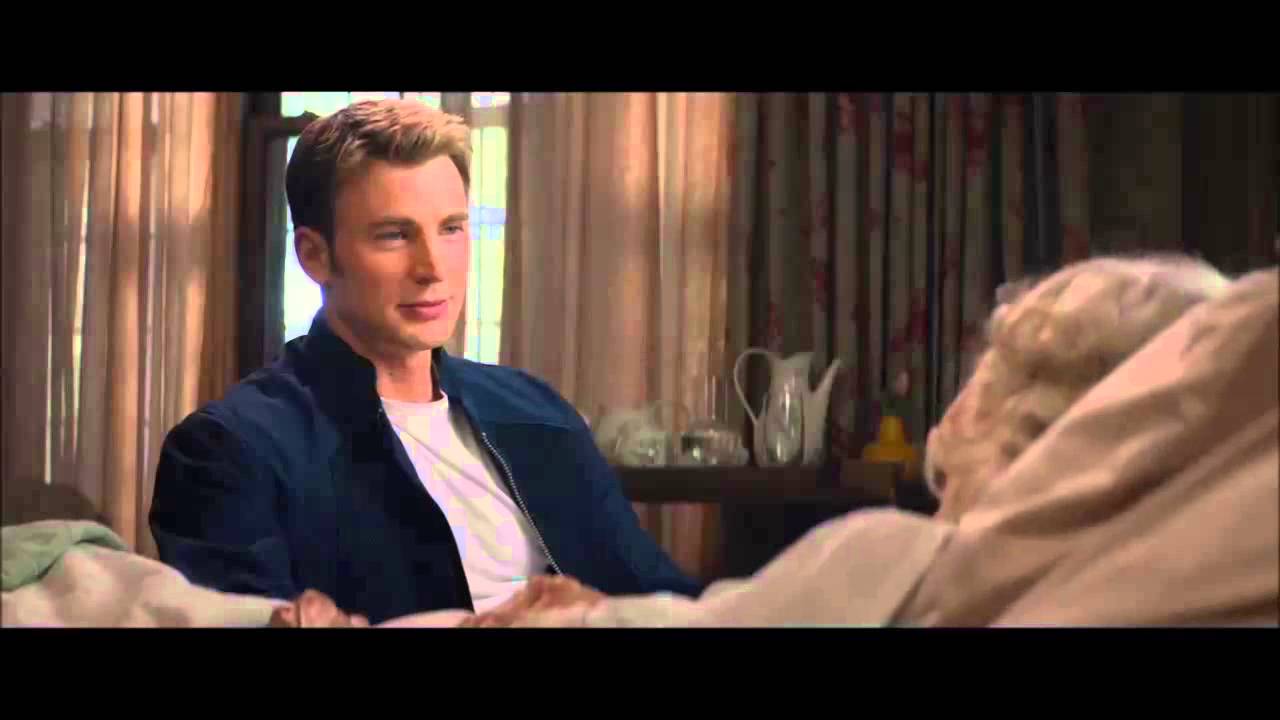
The look on his face says it all. 70 years later she’s still his “best girl.”

In a world of miserable, po-faced anti-heroes I find Captain America breathes life into the classic concept of the hero.  Not because he’s “good at everything” because he’s clearly not (becoming a super soldier didn’t make him any less socially awkward and he plays in a certain league; Asgardians can still knock him for a loop) but because despite everything he goes through he still tries to be as good as he can and to do what’s right.  And that’s ok.  We need that to offset the number of heroes who have been made brooding and dark.  We need Leonardo to offset Raphael.  Too many heroes suffer from deep emotional issues and have been turned into shadowy, twisted versions of themselves in a desperate effort to be “edgy” in the perverse belief that it makes them more “complex.”  It’s refreshing to see good guys can still be good.  Hell even, Superman, the cultural icon of truth and justice, is a wretched, blue-tinted, humorless bastard in his latest incarnation.  It’s a palpable relief to see Captain America be, well Captain America.

So we know why it’s refreshing to have an old-fashioned hero on film, but why are his movies so good?  We’ll take a look at that next time.