Remakes and Reboots Redux: Part 2

Off The Top of My Head

I remember always being behind the times as a kid. I never saw the Rambo or Indiana Jones movies when they were new. I didn’t get the newest pop music or know anything beyond what showed up in “Weird” Al Yankovic or Kids Incorporated. BUT…I distinctly remember the first time I saw a RoboCop movie.

It was actually RoboCop 2, which is slightly inferior but in the same spirit as the original. I loved the action, the big robots, and the stop motion. You saw little glimpses of Officer Alex Murphy’s previous life as a person, enough to make his current state as a cyborg meaningful, but it was mostly shoot ‘em up robot fun with some funny parts and just a dash of character development.

I didn’t see the first film until the 2000s and despite its decidedly 80s vision of crime and the future it held up very well; and I can say that honestly as I didn’t have any youthful attachments to it. Bad guys were wonderfully bad. Robo had an established personality but was a great cyborg. His partner, Anne Lewis, was one of the best tough female characters this side of Vasquez from Aliens. And the story had an excellent progression and a fantastic “oooh gotcha!” conclusion.

The Real RoboCop

THEN they did a remake.

The original RoboCop series established certain demands on anything trying to call itself “RoboCop.” He-is-go-ing-to-talk-like-the-computer-in-War-games. He’ll spin that gun like a he’s in a 1950s western. He’ll call someone a “creep. “ Tell them to freeze. Then lots of shooting will occur.

That’s what RoboCop means to those of us who care about the series and, to be totally honest, would be the audience for a remake series.

Here’s what I don’t watch RoboCop movies for: To see his family life. To get to know him as a person for hour. To have a strong female character turned into…a dude… To see RoboCop CRY. And have Alex Murphy talk like Marky Mark Circa 1991.

Nearly half the remake is used building Alex Murphy’s character. He’s an honest cop, a devoted family man, a good partner, a decent person, a tough guy, a badass, a rebel against corruption. For an hour we see this in story, exposition, and flashbacks. Even after he becomes RoboCop we see more character exposition, as he copes with his new status, trains to become RoboCop a la Batman Begins, and fights against corporate prejudice (from one of the many rather good performances in the film, this one by Jackie Earl Haley. Other great performances include those of Sam Jackson, Michael Keaton, and Gary Oldman).

This is some strange RoboCop…thing

Less than half an hour into the original film Alex Murphy is RoboCop. Out RoboCopping it up with Old Detroit’s street trash. Before he gets all Robo’d, he’s introduced as a rookie to the precinct, which means other characters have to get to know him naturally and thus the audience gets to know him in an organic process. He’s cocky and arrogant, but in less than five seconds of dialogue we see how he’s developed and achieved a rapport with Lewis. He spins his gun because his kid likes it (and maybe he does too…) establishing he’s got a family he cares about, and we see that family in staccato flashes after he’s attacked (actively I’ll say by the bad guys, not in a BS car bomb). All of his character is built in about 10-15 minutes. His transition into RoboCop is done via first-person montage. As he’s switched on, sees something new, and is switched back off again. Time passes, he’s advanced to a new state of Robo, time passes again. Never wasting time so we get to the main story as soon as possible.

RoboCop does a lot of this blow stuff up stuff…

Where Apes updated the premise while making the story fit to a new audience and changing times, 2014’s RoboCop is a near-Clash of the Titans-level farce. The Corporation plot is senseless and muddled. There was a needless “military drones should be legal in the US” angle. Robocop was Strong Sad in an exoskeleton. His wife and child just WOULDN’T GO AWAY. And none of it had to be done.

An hour into the movie RoboCop 2014 makes his first bust (35 minutes passes in the original for RoboCop 1987 to accomplish this) and the corporate mouthpiece comments that Robo ID’d the bad guy after only 60 seconds on duty, and says how impressive that is. Why then, may I ask, did it take the movie 60 MINUTES to get us here?

And none of this “what have they done to me?!” stuff…

Now many of you may start shouting, “But wait, wait, wait, Apes updated its story, was dramatic, and deep, and you showered it with praise!” True. I did. BUT. The original Planet of the Apes movie was a sci-fi drama. Designed to have social commentary, make observations on human hubris, and still wrap it up into a terse, excellent sci-fi movie. That’s exactly what the two new Apes films did.

What was the original RoboCop series? An outstanding, fun, sci-fi action movie with more Dawn of the Dead style tongue-in-cheek commentary on consumerism, economic Darwinism, and social progress seen in the periphery and through action, rather than exposition. It was not a DRAMA. It was NOT a personal introspective look at the life n’ times of a homie from the block who became a robo cop. And how it made it him feel. And what does it mean for society.

The new movie was a product of a film industry that seems not to know how to have much fun anymore. It either makes dreadful and derivative Scary Movie style “fun” or it makes action movies that have to show consequences and emotions rather than just the cartoon style blasty-blasting we saw in the 80s and 90s movies. Even action movies, have to try to hit you in the feels rather than just show a half-dead robo-man blowing away street scum.

More importantly either filmmakers don’t know what kind of movie they want to make, or want to make a cross-genre thing that, as Jim Sterling would say in a mocking, whiny voice, “appeals to a wider audience.” Before making any film the question needs to be asked, “What is this movie about?” And stick to THAT. A movie like RoboCop can have social commentary, the original certainly did. But it shouldn’t shoehorn it in at the expense of the real plot. We shouldn’t spend more than half the film establishing character. We shouldn’t spend an equal amount of time on drama. We shouldn’t waste even more screen time getting into the mechanics of how RoboCop robo-works.  We shouldn’t go down the plot-rabbit-hole chasing military drone legalization and political debate. A movie that tries to do everything at once accomplishes doing nothing much in the end.

In a scene that packs more emotion in three minutes of activity than the 2014 remake did in an hour of exposition, Alex Murphy lies to his wife in RoboCop 2 saying, “They made this…to honor him.” They certainly didn’t make the new RoboCop to honor you, Alex.  So Hollywood, the fans are taking away your remake privileges. Dead or alive they’re coming with me…

Next week will be a bonus wrap up with a pair of movies about the same character, one from the 90s one from the last couple of years, that both succeeded in making fun movies but in totally different ways.

Remakes and Reboots Redux: Part 1

Off The Top of My HeadRise and Dawn of the Planet of the Apes

In my very first series of posts on RevPub I detailed what I thought made a remake, reboot, or sequel successful. In the modern film environment it’s easy to see why that’s important. Over this past weekend I watched three films that made me want to go back and revisit this concept. The first two were excellent (one a reboot/prequel and its subsequent sequel) and the last one dreadful and all helped prove the point of what makes the “re-” genre work and what makes it fail. This week I’ll start with the successes: Rise and Dawn of the Planet of the Apes.


Few films are as iconic, not a word to be used lightly, as the 1968 Planet of the Apes. I’d say it’s up there with The Godfather and Scarface for quotability and nearly invented the modern shocker twist ending. It’s a product of its cold war time period, but many of the lessons it professes are still valid and it largely still holds up, even if many of the film making and special effects may seem dated.
There were a number of less-than-stellar sequels and even the Tim Burton remake from 2001, so when a new one was announced it felts like territory that had been over-traveled. The first film, Rise of the Planet of the Apes was a pleasant surprise…and an impressive film in its own right.
Part reboot, part prequel, it does everything a film in this kind of category should. It pays proper homage to the original, making small references, quoting, and even foreshadowing the previous film, and never NEVER once makes light of the original film or attempts to outdo or show up a film more than 40 years old.
Apes movies are in the “monster” genre I feel and in many ways the latter half of the first movie and the entire second film feel like a far more original extension of the zombie genre. These kinds of monster movies are only as effective as their human characters. In the first film the human cast, led by James Franco and supported by John Lithgow, Brian Cox, and Freida Pinto are compelling in their positive and negative qualities. Andy Serkis, of Gollum fame, is a show stealer as Caesar, the real star of the movie and the character in whose story we are invested. Like his role in the Lord of the Rings however his performance is lost in CGI, though I would wager echoes of his emotions shine through. This is very similar to the stories I remember hearing about how difficult it was for Roddy McDowell and Kim Hunter to emote behind layers of thick prosthetic make up.
The story itself is character-based, always pushed on my characters (mostly Caesar) responding to events and actively making choices and deciding, rather than having choices thrust upon him. Not only that but one actually feels far more attached to him than to the human characters, even those we like, because of how well he is portrayed, both in the writing and in the performance.
Furthermore it fills in plot holes from the original such as why the apes speak English, use human-style tools, and how they progressed so quickly. It also skillfully updates the setting from a cold war nuclear age to a 21st century biological age without detracting from the original purpose or even re-writing the events of the canon.
All in all it’s a terrific reset to a legendary film, and compelling to watch for fans of the original and just those seeking some great entertainment.


Dawn of the Planet of the Apes succeeds where the sequels to the original film largely failed in that it is actually a good movie. Dawn picks up where Rise left off, telling the story of how the newly self-emancipated apes and the remnants of humanity come into conflict with each other, and how even in an idealized setting, one under perfect leadership and the best altruistic foundations, selfishness and violence can creep in. It’s a perfect extension of both the ideology and story of the first film and progresses us more and more toward the eventuality of the progenitor film. Again the human cast is effective led by Gary Oldman, Jason Clarke, and Keri Russell.
Yes this “reboot/prequel” franchise is a success. It succeeds because it takes what made the original film work, builds upon it, pays proper respect to it, and then tells its own narrative. Most of all these two moves are just well-made, well-designed, well-told stories. They know what they set out to do and do it. A rarity in modern film making…
Next week we go from the sublime to the ridiculous as we look at last year’s remake of another classic film…this one from the 1980s.

Sources of Inspiration: The Majesty of Marvel

Marvel Movies – How to do a Comic Universe Right

I’d like to drag the world kicking and screaming from Batman worship for a bit and snap everyone into reality. He’s kind of a bore and to quote Ben Yahtzee Kroshaw, he’s always the dullest character in everything he’s in. That expands to most of his movies (not his 90s animated series though which was GREAT) and DC in general seems to make movies that are so severe and so serious with themselves they are difficult to really enjoy.

Marvel on the other hand somehow gets it exactly right…and I find their expanded universe on film to be an extreme source of inspiration.

I haven’t really been in to reading comics since I was about 20. I think it’s a valid creative art form but many of the stories at the time were so hashed and re-hashed I felt I’d seen a lot of the best there was to offer. I’ve seen a few here and there since and even read some newer Judge Dredd material but nothing captured me like the Fatal Attractions and Age of Apocalypse stories in the 90s.

But Marvel MOVIES have been doing just about everything right recently. From the great X-Men franchise which, despite a single rocky entry, has had its ship righted and full sail since the excellent First Class to the absolutely stunning achievement of the Infinity Wars story they’ve been building up to for years now.

I can’t remember any other franchise in history that has crossed so many stories, so many characters, and so many genres to tell what will end up being one, super, super-hero story. Furthermore, Marvel has the wherewithal to know NOT to make every movie a super hero story. DC hasn’t gotten the hang of that… Even at their best with films like The Watchmen DC’s tone is such a drag it’s hard to say the movies are “fun” to experience.

They can be space stories, science fiction stories, fantasy stories, social justice stories. Marvel turned the entire “comic book” genre on its head with these movies. Even critics who often excoriated films based on this so-called ”childish” material, now have found how broad and operatic these narratives can be.

For me, I see how even minor stories, LIKE Guardians can be utterly re-invented and turned into something we’ve never seen before, and even better than expected. How a universe can be moulded to fit a medium, and how vast a universe can be…even when only experienced in 120 to 180 minute blocks. I’ll list a few of my current personal favorites below:

  • Guardians of the Galaxy: It’s better than the Avengers. That’s right Joss Whedon lovers… It’s better. More fun. More action. Clever without being snarky, funny without being brash. It’s heart but doesn’t wear it on its sleeve. It’ll even bring a tear to your eye. It’s everything we LOVED about Star Wars minus everything we hated about it. No melodrama. No choppy writing. Everything fits, and everything works. I watch it more than any of the others.
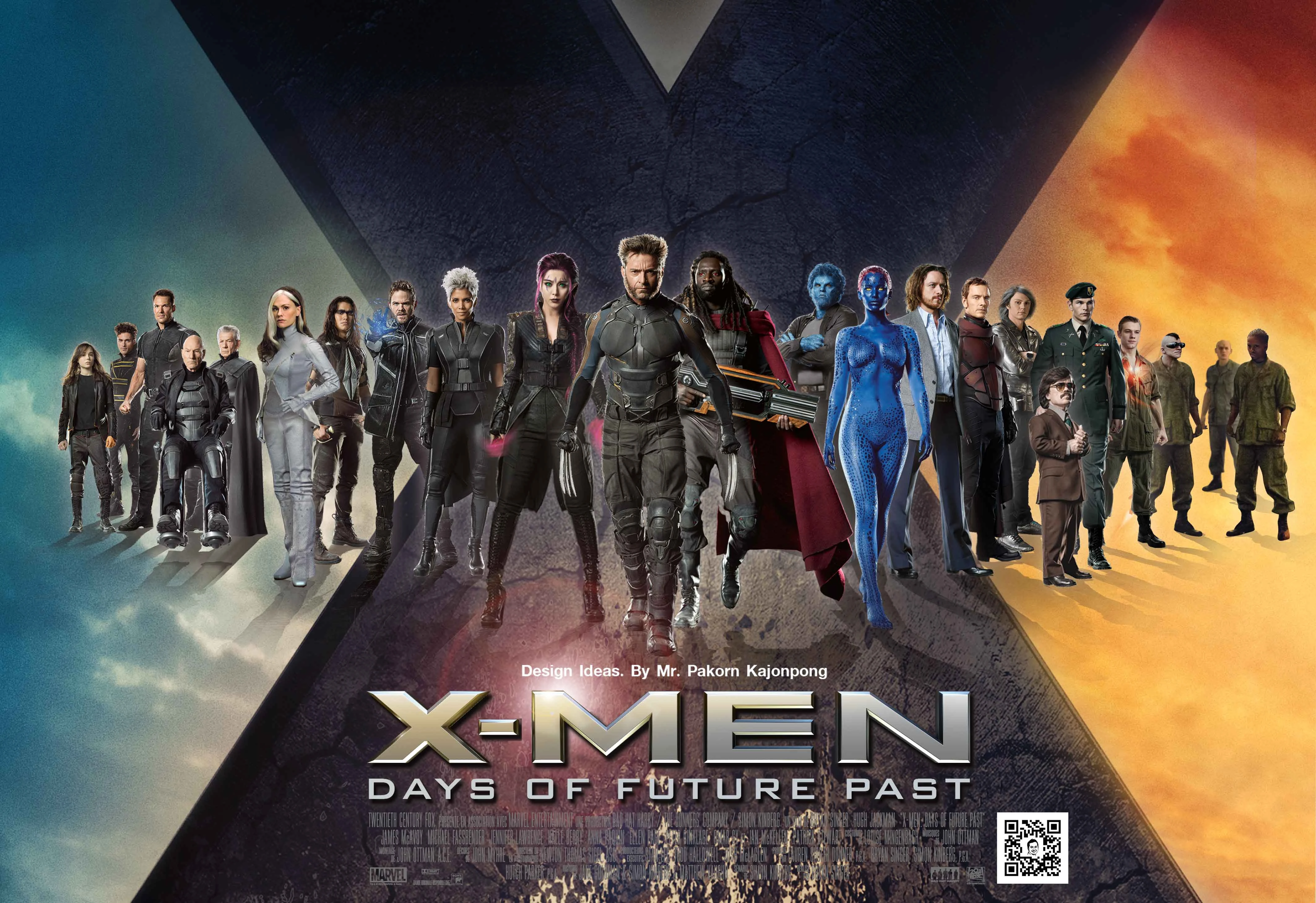
  • X-Men: First Class/Days of Future Past: I can’t decide which of these two films I like better. First Class was a stunning study in the dichotomy of opinion. Militants versus peaceful protests. Marvelous acting. Amazing story telling and perfect casting. Days of Future Past brings everything we loved about the first Bryan Singer ­X-Men movies and combines it with everything that made First Class such a revitalizing shot to the franchise. Patrick Stewart/Ian McKellan and James McAvoy/Michael Fassbender Xavier/Magneto relationships and actor choices are phenomenal. Oh and Quicksilver. Terrific…
  • Captain America: First Avenger/Winter Soldier: I thought I’d HATE the first Captain movie. A hero known as a goody-goody just couldn’t be appealing could he? Yes he can. You cheer for him because though he becomes a hero he does it for the right reasons and uses his abilities in the right way. WWII sci-fi story WITH Hugo Weaving as Red Skull?! Oh and Hayley Atwell. Yeah. Worth it. Winter Soldier is the Bourne story. Good guys may be bad…old villains may be able to help… Action packed and one of the tightest stories I’ve seen on screen in a while.

Yes that’s not all of them but those are the ones that find their way onto my Bravia the most. I’m not telling the entertainment world anything it doesn’t already know…but those seeking inspiration don’t have to look far with this material out there.

Bad Teacher May Deserve a Sequel

Bad Teacher
Diaz and Smith in a bar. Photo from: aceshowbiz.com

I rarely think a movie needs a sequel, but Bad Teacher is on that short list. The movie, starring Cameron Diaz, tells the story of a lazy, irresponsible teacher who is beyond materialistic and selfish. I’ve seen this movie dozens of times on TV, but recently I watched the unrated extended version. After that, I knew why it needs a sequel – in a good way of course.

  • It’s a good comedy. There have been some pretty good ones over the last few years, but most modern comedies try to shock the audience or gross them out (eg. excessive vomiting). However, Bad Teacher is funny because of the dialogue. Sure, there is one bathroom scene and it can be a little immature, but the dialogue and conflicts are well written. It is pretty adult but not over the top or trying to disgust you.
  • Fun, distinct characters. The people make or break it. The story can be solid, but if the characters suck, the movie will. Bad Teacher has a great cast who feed off each other, and in many cases, opposites attract. I’d love to see these characters together again. Aside from Diaz, the movie stars:
    • Lucy Punch (crazy but good teacher who cares about the kids), Jason Segel (cool gym teacher who likes to smoke weed), Justin Timberlake (preppy, geeky substitute teacher), Phyllis Smith (teacher and the best best friend ever), and John Michael Higgins (dolphin-loving principal).
    • Diaz is terrible, but you can’t help but like her. She’s selfish, manipulative, mean, and horrible with kids. And it’s so funny. Smith is a great asset to the movie because she seems like the average teacher, but she’s fun and the most supportive person ever. People need to be that kind of best friend. Punch plays a great teacher – the kind who freak us out a little with their enthusiasm for learning – and I could so see Segel as a gym teacher in another life.
  • School environment. I really like movies that take place in schools, especially when they’re not dramas. Bad Teacher portrays the school life well. For example, Diaz receives a $37 gift card from the staff as a going-away engagement present. I was surprised by how well the actors play teachers, and I know a lot of teachers. The kids are great too. Noah Munck (Gibby from iCarly) and Kathryn Newton (teen girl in Paranormal Activity 4) are two students you may know.
  • The end. SPOILER alert! At the end of the movie, Diaz starts a new school year as a guidance counselor, doesn’t get the boob job, and is dating Segel, which is a cute match. It’s a very good ending because she is much better at counseling, but I want to see her in that role. Diaz as a guidance counselor would be awesome. Her advice is real. The kind of advice that’s sometimes hard to give and take (I give a lot of this kind of advice, so I can relate and appreciate it).
  • The sequel factor. The movie isn’t highly rated, so a sequel will probably never happen. However the end wraps everything up so well, if you enjoy the movie, you want more. That’s a good sign of a good movie. You watch it, enjoy it, and think I could rewatch that or I wish there was more. Good films make the audience want more.

If you like comedies or want to chill to a movie, check it out. It’s good fun.

Troop Beverly Hills: A Fabulous Flashback

Troop Beverly Hills
Photo by: drafthouse.com

Troop Beverly Hills is one of the most underrated girl power movies ever. The movie premiered in 1989, a year on the cusp of the ’90s before the Gulf War began when Hollywood was everything. It wasn’t just about the fabulous life of Beverly Hills residents, it’s a coming-of-age story about a group of girls, their troop leader, and the ultimate teen girl power movie predecessor to movies like Clueless and Mean Girls, both of which have similar themes.

I was 7 years old when this movie came out, and I have watched it dozens of times. As a little girl, it was one of my favorite movies because it gave me hope. I may not be rich or a wilderness girl, but I know – and did then – how to adapt and survive.

Reviewers and critics are often hard on this movie, but it’s worth a watch if you love three things: a good story, comedy, and a happy ending.

Here are my favorite things about Troop Beverly Hills:

Shelley Long – I’ve probably never seen another movie she’s been in, but I knew her from Cheers, so I recognized her at a young age. She’s over-the-top, super girly, and a little whiny. But she is a fantastic mother. As a mom, it’s hard not to respect a woman who never gives up and does everything she can to care for her daughter and troop. Long plays a loving and unconditionally accepting woman who goes above and beyond, no matter what obstacles she faces. She’s a great role model.

Unity – The movie brings together a diverse group of girls – both in the background and ethnicity – and shows how anything is possible when you work as a team. Sometimes we women struggle with female relationships because many times women are overly competitive, sneaky, and too cutthroat. Several “girl” movies deal with girl-on-girl crime, but Troop Beverly Hills shows that no matter what problems you have or how different you are, when woman (or people) come together, great things happen. It adds the team factor.

Relatability – Underlying themes include the struggles of divorce, neglectful parents, coming-of-age, money, power, politics, and fashion. It’s a great mother-daughter movie, although I bet there are some great dads out there who would enjoy it as well. When the movie came out, my parents were on the verge of divorce, so I related with Phyllis (Long) and her daughter Hannah (Jenny Lewis) the most. I could understand how the mom and child felt, and even today I bet there are thousands of kids who could do the same. It doesn’t matter how much money you have or what life you’ve lived, the theme of wanting a fulfilling life, sense of accomplishment, and love are something most of us always want.

Fun and Innocence – Sure there’s profanity, but it’s not overly done and used in the most passionate times. It’s a wholesome story that addresses serious issues in a fun, innovative way. Some of the fashion is ridiculous, the dialogue is smart, and there aren’t any shock scenes. I miss movies that work off the story instead of trying to amplify it for shock value. I miss movies with little if no CGI and good acting – movies that take a good story and characters and create a great movie. There are no overly dramatic scenes, and when there is drama, it is often followed with comedy to keep it lighthearted. We could all use a little more fun and innocence in our lives.

If you haven’t seen it or it’s been awhile, you should check it out. And feel free to share your thoughts in the comments below. We love to hear from you!

Worst Horror Movie: Dark Corners

Dark Corners is one of the most confusing movies ever. The only way I could write this was to start from the beginning and work my way to the end. If this post doesn’t make sense, have no fear because it’s a byproduct of the movie. I haven’t lost my mind. Dark Corners will leave your brain clogged and lost. And you may well ask yourself at the end, Why did I watch that? What was the point? Wtf just happened?

For these reasons, this is my worst and most hated horror movie. Here’s the breakdown (contains spoilers):

The opening: The movie starts with an old woman in a rocking chair listening to her answering machine. Next scene is a chick in a church who’s ranting to a friend she can’t find. She sits down to smoke a cigarette and falls asleep sitting against the altar. Because she’s narcoleptic? She wakes up to find her friend slaughtered on the altar, and then she is killed.

Reality 1: The movie is split into to two different realities. You have real world and dream world. In real world, there’s a killer on the loose and blonde Thora Birch, who has nightmares, thus creating dream world. In real world, she’s trying to get pregnant, which serves no purpose other than to have a conflict in the “happy” marriage. She also visits a hypnotist to help her work through the nightmares.

Reality 2: Dark-haired Thora Birch is a train wreck. Most of the same actors are in both worlds playing different characters. Here, Birch is being stalked by what you discover is the serial killer. Oh wait, you can’t have the same killer in both worlds, right? Unless it’s Freddy, this is unacceptable. It is never explained how both cross over or why.

Randomness: There is so much random crap in Dark Corners. The two opening scenes come back into play but serve no purpose. There are things like a creepy kid standing on a car making throat-cutting motions and who later attacks dream-world Birch, but you don’t know why. There’s incessant phone ringing and alarm clocks that I found distracting, and a key Birch swallows in dream world. And without rewatching, I can’t tell you what the key unlocks. A creepy old woman in the doctor’s office tells blonde Birch not to sit in a chair in a corner, but again, you have no idea why. And the list goes on…

The End: Confused yet? Here comes the kicker. The serial killer stabs and mangles Birch in real world. Dream-world Birch ends up standing over real-world Birch as the husband walks in. It can’t be split personalities because he sees dark-haired Birch and real-world Birch slaughtered in her bed. So who’s the killer? The doctor. Yep, the doctor is dark-haired Birch in dream world.

Finally, it’s all over. The movie cuts and starts back over from the first time you see dream-world Birch, and it’s revealed that’s it’s supposed to be some form of Groundhog Day hell.

This movie is extremely frustrating and senseless. There are so many holes, and trying to figure out why or how anything happens is useless. I have watched this movie twice, and the latter may be my last time. You can argue with yourself about why things happen or try to analyze it, but it’s useless. There’s always a counterpoint that trumps the rational thought. I feel as crazy as the movie after watching it, and there has never been a movie that made me so angry after it was over. To those who watch it, good luck.

I’m glad it’s over.