
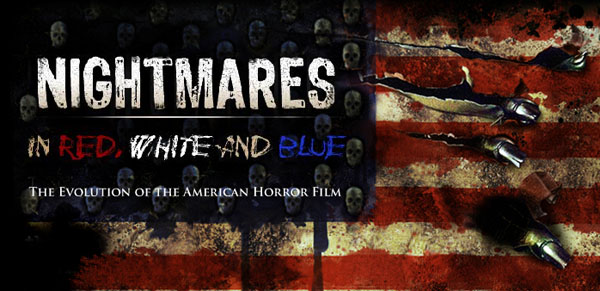
This week I came across Nightmares in Red, White & Blue, a documentary that discusses horror movies and the history that inspires them. Nightmares takes a Marxist approach to the horror genre and how these movies are influenced by history, and how society receives these events and horror movies.
The Government Inspires Horror
This is not a political view point. This is an observation from the movie. Since the 1920s, filmmakers have used horror to speak out against the government. According to Nightmares, people in power have been a symbol of horrific things: poverty, war, starvation, violence. Horror films speak out against those trying to harm us.
For example, in the 1920s, a “monster” may have been a disabled veteran. Government + war = disabled vet who appears as a “monster” to society. Horror filmmakers have also used government entities and events, such as Hitler’s reign and the Holocaust, as inspiration. Or Sci-Fi horror to speak out against government/alien conspiracy theories.
I learned a lot by watching some of the greats discuss their own experiences during these eras, and explain how they used horror to release their fears and tastefully speak out against them.
Evil Lies Within
In the documentary, John Carpenter says there are two types of evil: The evil out there (Universal monsters) and the evil within (eg: human ego and pride). Carpenter says, “it’s in our own human hearts. And that’s a harder story to tell.”
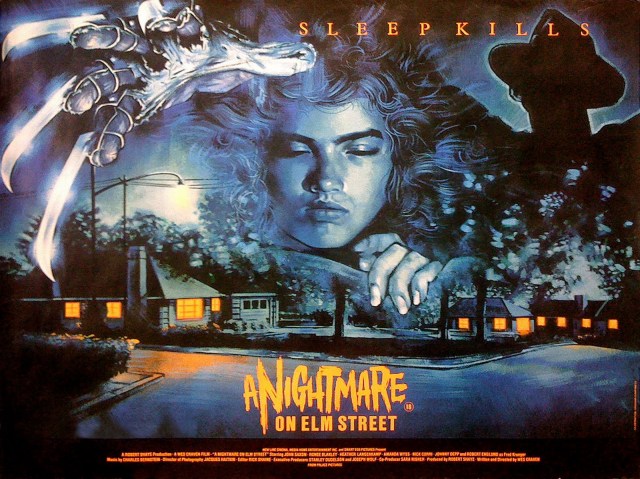
I found this interesting because if you think about your favorite horror movie, there is an inner evil within someone. Whether its a Mayor who’s unwilling to lose tourism money (Jaws) or a killer seeking revenge (Freddy, Jason, Michael), the evil lives within someone. The overall message is people are evil; anyone can snap; and that is scary.

Today’s Horror Punishes This Evil
This isn’t directly stated, but when Saw was mentioned, I realized today’s horror movies only set out to punish people. The horror genre stays true to its roots and speaks out against social wrongdoings, but instead of the attacking the government, now it feels like horror movies attack the people.
It Follows was one of the big movies in 2015, and the “monster” was an STD. It Follows punished those who are irresponsibly sexually active. The modern teen horror movie has turned into a digital stalker (Unfriended). Teens are punished for spending too much time connected and enjoying others’ humiliation via social media. Sinister and Insidious punishes the working parent. Instead of staying home to care for their kids, parents are busy with their own agendas or aren’t home. And the list goes on.
Other Highlights
I don’t want to give too much away, but you’ll probably see all your favorite horror movies mentioned. Nightmares in Red, White & Blue covers everything from the early 1920s to the mid 2000s. Many experts are featured, and they reveal why they made a movie or what message they wanted to share. Nightmares is fast-paced, and you’ll learn a lot about how American history influenced the genre and what people were feeling at the time.
PS: Nightmares in Red, White & Blue is free on Amazon Prime streaming right now. If you check it out, let us know what you think in the comments below!


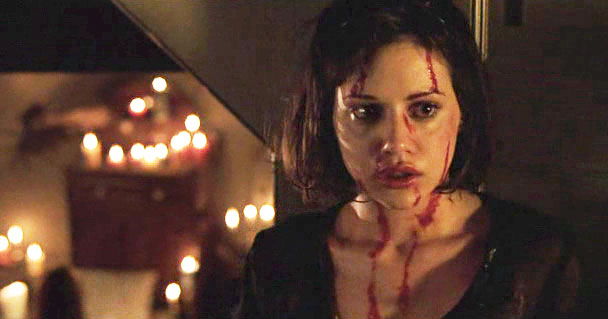

 Grindhouse theater was a big underground movement in the 1970s. Cheaply made, extreme movies of graphic violence or exploitation were all the rage, but rarely was one such film remembered beyond the double feature run time. In 1974, using the grindhouse model, Tobe Hooper took the formula beyond the late show with Texas Chainsaw Massacre a modern horror classic that has had as lasting impact on the genre as a whole as any other film. In 2003 Marcus Nispel released a remake of the classic that was instantly dismissed as unnecessary and far inferior to the original. Was this criticism justified? I’ll give some of the verdict away when I state no, it wasn’t and in many ways the remake expands on the original’s concepts making a quite a good remake.



 Revenant Publications