King’s On Writing: The Intro

Stephen King’s On Writing: A Memoir of the Craft is one of my favorite books ever. I’m on my second read and didn’t realize how much I enjoy his honesty and advise on writing, ideas, and life in general.

I decided to review it after one of our featured artists – Kevin Litwin – mentioned what the book meant to him and how it helped him as a writer. The light bulb went off, and I thought … what a great book to review!

So, here’s the intro. The book is not your traditional how-to write; it’s his story about what influenced him and how he got to where he is today. It’s not organized by chapters, rather sections that feel like stream of conscious but flow very well. Each section builds on one another, and you can easily read a couple of pages, laugh, and get back to life. You may not want to put it down though, so consider yourself warned…

I’ve always wondered what made famous writers famous. It’s not the writing quality (sometimes unfortunately), it’s not based on pop culture or what’s in style. Before everyone knew King, no one did. I’ve decided it’s the storytelling and its delivery.

With that said, here are some highlights and things I learned from the first 10 sections:

We tend to remember the traumatic events more than the good times. I’m sure psychologists would say because we are scarred and do not heal, they have more of a lasting effect. Maybe that’s true, and I definitely think it makes a writer better. Writers use that negative energy to tell their story and heal themselves.

We need the bad and the good. The hard times help us appreciate the good ones. They evoke emotion – negative or not – that we need to feel and act human. Artists have to have a muse, and no matter what, emotion is our muse. Certain things evoke the emotions we need, but at the core emotion fuels art.

Get ready to toughen up. I won’t spoil too much, but King refers to not being scared of literary critics thanks to a 200-pound babysitter farting on his face when he was a young boy. (Words wouldn’t scare anyone after something like that!) The point is if you plan to put yourself out there, get ready for people to talk about it. People love commenting – on everything.

Imagination is a wonderful thing. Think of some great fiction writers, Dr. Seuss, J.K. Rowling, Shakespeare, King, and think about what you love about their writing. It’s not because it’s grammatically correct or a best seller, it’s the creativity they put into the story. It’s their incredible imaginations flowing onto hundreds of pages that create a world for the reader. That’s imagination.

Be yourself. I’ve discussed this many times, and the more I learn, the more I realize how true it is. No one cares about your education or social class. No one cares where you came from or who you know. If you pour your heart, soul, and everything that is you into something, people will notice and appreciate you for it.

This week I challenge you to a writing exercise: Pick something that evoked a strong emotion – good or bad – and write about it. No one has to read it, just let the emotions pour out onto the page. What happened and how you really felt about it. Don’t be afraid. Who knows, maybe it’ll turn into something great!
Off the Top of My Head: Media Realism and Doom

Off The Top of My Head

There has been an odd move in video media to make things more “realistic.”  I’m not sure where this trend originated but having grown up in the 80s and 90s I find it more than a little troubling.  I have spotted a few trends that cross various kinds of media but I’ll use some specific examples to try and make the broad points.  There will be a few of these but I’ll start with one that’s been nagging me the most.  Realism in First Person Shooters.

DOOM.  Yes.  When I think 1st person shooters I still think of Doom.  In Doom you could about 8 weapons, you moved like you were wearing roller skates on a conveyor belt, and the rocket launcher fired out of the middle of your character’s chest.  But while playing Doom I don’t recall ever thinking, “You know what this game needs?  More realism.”  If I played Doom II and I could only carry a shotgun and a plasma rifle I’d be pretty pissed…  Likewise, to heal yourself all you have to do is run over various sizes of health power ups.  I’m not sure how much the game would have been improved by making me stop and actually treat my wounds realistically.

Yep firing a rocket out of the middle of my chest. What?

Fast forward to the modern FPS.  You are usually restricted to carrying a limited number of weapons, running makes the camera (and I use the word CAMERA) bob around like mad and healing somehow takes place just by hiding and not taking damage for a while.  It’s like people forgot how to video game…  All of this was done in the name of realism. Without getting into the fact that for some reason hiding behind a building and breathing until you regain color to the screen is a more realistic way of healing gunshot wounds than running over health packs, why did the industry feel this was necessary?  How does limiting the number of weapons I can carry improve the gaming experience?  How does making the movement look more like “actual” movement help the game play?  I never thought the movement in Doom, or even Wolfenstein, felt bad.  It felt like a video game and since that’s what I was playing it was a-ok.

The addition of seeing a characters hands filling part of the screen has greatly improved my gaming experience. Having NPCs do all the work helps too.

Even stranger is the idea that you can make something like this realistic, but not too realistic as that would be crazy.  How about one-hit kills?  I don’t know too many guys who can take a half dozen gunhits before crouching behind a wall and shaking it off.  How about completely limited ammo?  You have your primary weapon and a couple reloads.  Your secondary weapon and a couple of reloads.  You can’t interchange ammo and when you run out you’re SOL unless a realistic supply depot is nearby.  Or powder burns.  Or misfires.  We don’t see our characters eat very often.  Or go to the bathroom.  (unless it’s the Sims) but no one is clamoring for those additions.  Of course no one really clamored for the others either.

To me an FPS is essentially watching a wheeled humanoid, nearly impervious to wounds, with a Go-Pro on its head and a weapon for its right arm navigate an environment, shoot the other humanoids and make them dead.  There’s no adding realism to that really…  Or if realism MUST be added it shouldn’t be done so at the cost of fun.  I can’t remember having fun with an FPS made after 2006.  Of course the new generation of Modern Military Shooter fans will rend their garments and tell me why Call of Duty is far superior to Quake; and just looking at the shiny their case looks sound.  But when it comes to fun there’s no competition.  Give me the brown castles and 2D sprite enemies of Quake any day…  At least its level of “realism” makes sense!

Off the Top of my Head: Painting a Mars Attacks Martian


Off The Top of My HeadWorking on Citadel miniatures is generally a pleasure.  I’ve always loved model kits.  Like Hans Gruber from Die Hard I appreciate their attention to minute detail in small scale.  That being said the tiny size of some Warhammer models is slightly limiting.  You can’t paint extreme detail, well I’ll rephrase, I can’t paint extreme detail, as well as I’d like.

Needless to say the chance to assemble and paint a larger-scale model has been attractive.  No I can’t play a fun war game with them, but the hobbyist in me can appreciate it.

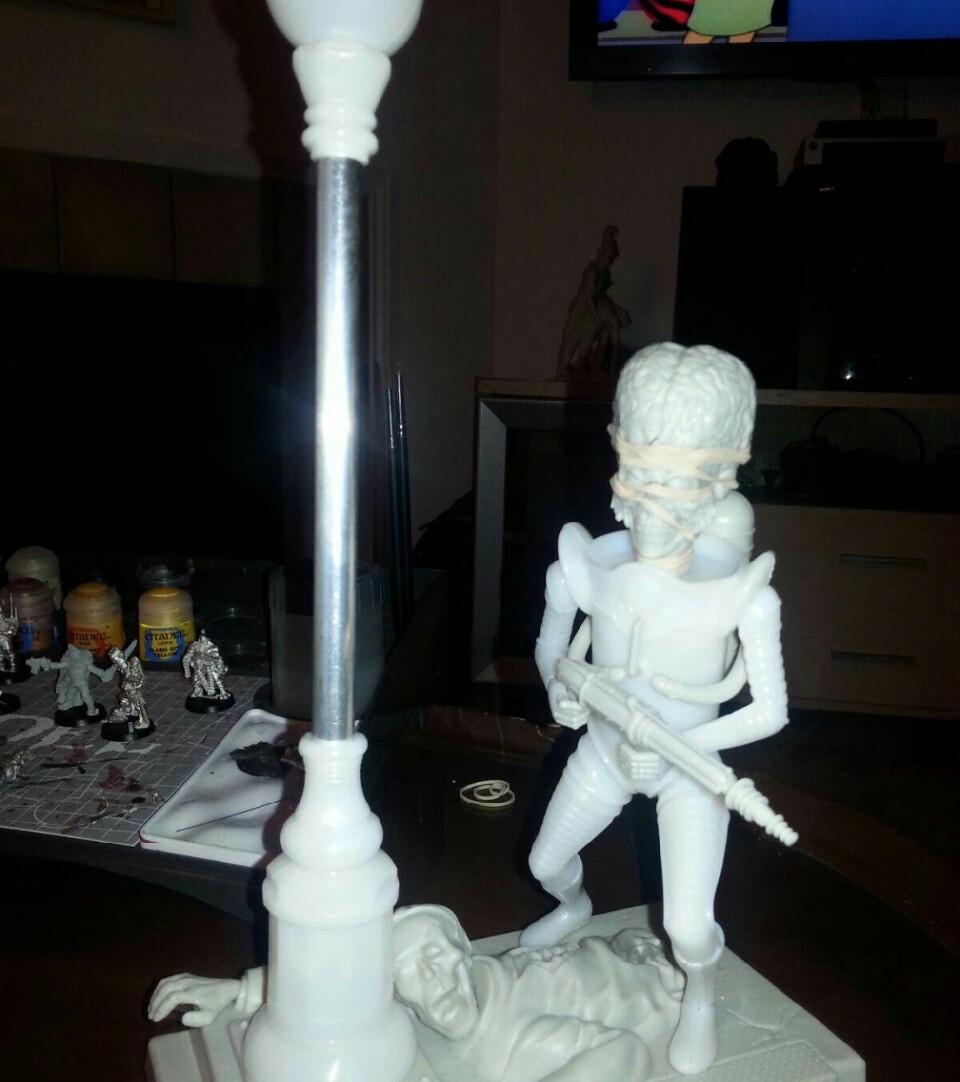
So when I found this great Mars Attacks Martian trooper model at a local store I grabbed it quickly.

He’s far larger than Warhammer models but I still used all those Citadel painting tricks I learned, base coat, wash/shade, layer, drybrush, effects method.

He was plain white plastic, with an aluminum lamppost. I primed him white before applying the base coat.  I had to rubberband his face to keep it together.  He looks like a Hellraiser Cenobyte…

PART_1412944246950

I left his nifty space suit un-shaded.  It looks bright and cartoony that way.

PART_1412944285618

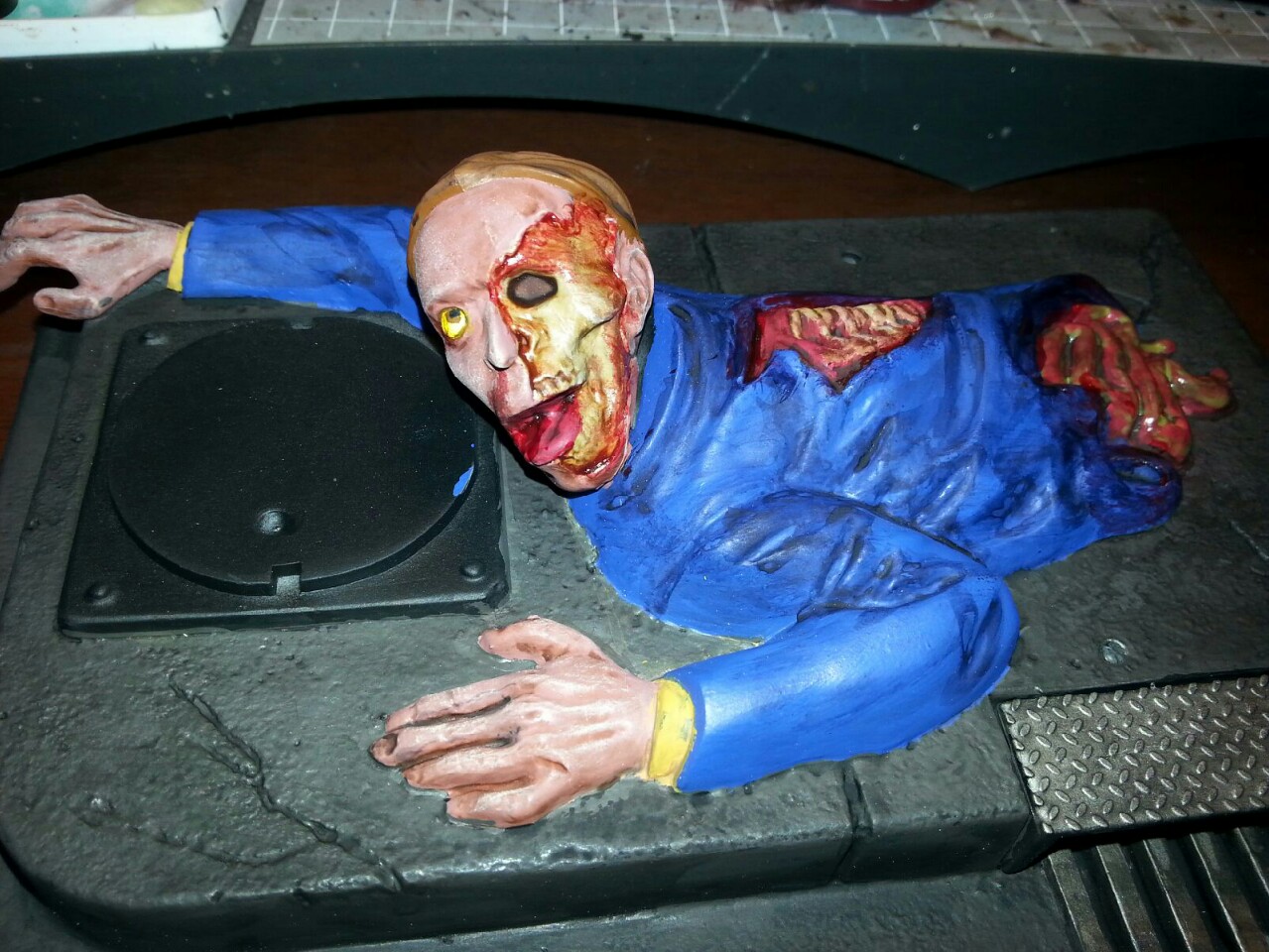
I loved his victim and it gave me a chance to use lots of effects paints in gruesome detail.

PART_1412944399313

His face and head were a bit hit-or-miss.  I thought I’d ruined it.  I actually used very watered down Emperor’s Children followed by watered down Fenrisian Grey.  Then I dry brushed Fulgrim Pink, Dechala Lilac, and Baharroth Blue in various layers to get the face correct.

20141007_224829 20141007_224806 20141007_224751

This guy was a lot of fun and gave me a good feel for what painting larger models will be like, especially since big centerpiece models seem to be the wave of the future in 40k!

Next back to my Sector Imperialis, and an even bigger painting piece!

Scariest Horror Movie: The Ring

The scariest horror movie depends on who you ask. What scares us most hits at our core and disturbs us. That’s the beauty of the horror genre: it can appeal to the most simple or complex fears, and cause us nightmares and uneasiness.

For my scariest movie, I chose The Ring. I watched this movie in 2002 and was fine, or so I thought. I watched it pretty early at night, but when it came time to fall asleep, it was impossible. Every time I closed my eyes I saw Samara. Her image was burned into my brain, and when I did doze off, I’d wake up immediately thinking she was in the room. I stayed awake all night and refused to watch it again.

The Ring well
Photo by: deviantart.com

Determined to face my fear, I rewatched it this weekend. I’m glad I did because I was fine, or so I thought again. I couldn’t figure out what freaked me out so much the first time. However, I realized as I heard the closing credits, I didn’t watch the last 20 minutes. Right before Samara appeared, I found myself keeping busy and only listening to the movie. She still scares me.

And I’m still not sure what about her bothers me so much. My heart races and my palms sweat thinking she may crawl out of my TV. She’s just scary.

It occurred to me that it’s not the movie that scares us, it’s the things in the movie. When scared, we tend to focus on the one or two things that make the entire movie scary. So, here’s a quick list of my scariest things in horror movies, which make these my scariest movies:

  • Clowns – As cliché as it sounds, I’m terrified of them. Thanks to watching IT, my lifelong fear stems from watching this movie as a child. It’s also interesting that I can look at Pennywise for short amounts of time but not Samara.
  • Clap game – The Conjuring‘s clap game freaks me out. I will never play that game and have become superstitious about it. My mind thinks if I play it, it will serve as a Quija board and conjure some demon or evil spirit.
  • Ghosts – Thanks to Paranormal Activity 3, ghosts make me a little uneasy. I’ve been around them throughout my life, but when the kitchen furniture falls to the floor, that was it. My comfort level diminished.
  • Rats/mice – This fear stems from childhood trauma, but movies such as Graveyard Shift and Ratatouille (yes, the kids movie!) make my skin crawl. I refuse to watch them and yell at anyone who doesn’t warn me of a rat scene first.

As we close out the Halloween season, we at RevPub hope everyone had a safe holiday and weekend. Here’s to costumes, candy, good friends and scares, and we hope you enjoyed our favorite time of the year!

Best Horror Story: Rats in the Walls

I’m going to take a departure from movie reviews and do something a little different.

Films and TV shows rely on visual and audio to frighten. Either something looks creepy or out of place and unsettles the viewer or an unusual or a loud noise is used to startle the audience.

The written word however is more malleable. It has to rely on mood, tone, and the use of description or dialogue to let the reader’s imagination frighten itself. It’s because of this that written works can often be far more scary than anything you can watch or listen to.

One that in particular got to me is H. P. Lovecraft’s Rats in the Walls.

I will try not to give it away which will be difficult because I will have to try to say why it is scary without saying what happens. The brief story set up is as follows:

Narrator/protagonist Delapore leaves his home in Massachusetts (a place his family settled after being run out of their ancestral home) but returns to his family estate, Exham Priory, in England where the locals are unhappy of his return. During his stay in the old house he hears a sound like rats scurrying through the walls and his cat responds to them as well. He has dreams throughout the story featuring strange demon-like beings overseeing fleshy humanoid creatures, and these dreams become more clear as the story progresses. After following the sound of the rats to a stony cellar Delapore and a group of adventurers explore the dank caverns beneath the priory and find the horrors within.

What is truly unsettling is the tone and the flashes of imagery used to uncover the history of the Delapore family. The story starts slowly, in the deliberate pace used by Lovecraft in all his writing. Unlike the more famous Call of Cthulhu or the more in-your-face Herbert West Reanimator this story doesn’t even sound like a horror story in the beginning. He establishes the character of Delapore. We learn of his family, his son, and his reasons for returning “home.” The tension builds as he spends more time in his family estate. As you plunge into the cavern and more and more is found out the darkness takes hold and the story is told in primal flashes and in maddening staccatos. I think of this story like Berlioz’s Symphony Fantastique where a slow, sometimes curious pace leads up to a conclusion that rips you into vertigo as discordant strains make your hairs stand on end.

I truly think it’s the best horror story I’ve ever read, better than anything earlier or anything more modern. It’s imagery that will stay with you after you’ve read it. Lovecraft told you what was there…but your own mind gave it life to haunt the darkest places in your thoughts for years to come.

Best Horror Sequel: Halloween 2

The best horror sequel stumped me: Friday the 13th part 2 or Halloween 2? Jason or Michael? Ginny or Laurie? Both are classic sequels to classic slasher movies. Most everyone recognizes the hockey mask or white William Shatner mask. I have seen both an equal amount of times and enjoy watching both every year. So, what’s a girl to pick?

In the end, Halloween 2 wins in my book. It was a week-long thought process that led to the decision, and in order to tell you lovely readers why, I must discuss both movies. If Halloween 2 is the best, Friday the 13th part 2 is runner-up. Here’s why:

Opening credits – From the very beginning music, the camera spans deep into the blank, black pumpkins eyes – dark holes if you will – which symbolizes Micheal’s character. Evil, dark, hollow. What I didn’t realize was that this foreshadows the point of view throughout the movie as the audience sees the killings more through Micheal’s’ eyes than in the first one. From the start, you already know things are going to be a little different.

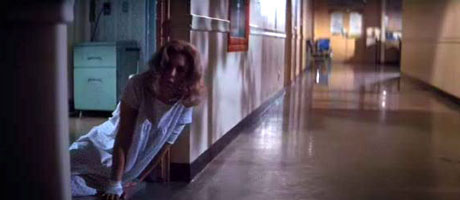
The time frame – Halloween 2 takes off from the exact moment the first one ends. There’s no waiting, no anniversary, nothing to trigger it. The first one might as well have ended with, “To be Continued…” This is pretty cool because not many, if any, good horror movie sequels take place the same day/night, continuing the story. This adds a different element because as you think it can’t possibly be worse for Laurie, it gets much worse and a whole new cast of characters will become victims as the manhunt continues. The setting is also different. Halloween 2 takes place in the hospital where Laurie is taken, whereas Friday 2 is set at a camp again. The setting almost makes it feel like a different movie and not a sequel based on the setting change alone.

Micheal’s development – In the sequel, he pops up and stalks his victims more. It seems like a game to him, and he becomes a better killer. In Friday the 13th, Mrs. Voorhees is the killer, and Jason appears in the sequel to avenge his mother, which does take the story to the next level. However, he seems to already know how to kill, whereas Michael develops the game of killing. He becomes a predator instead of just a slasher.

The final girl – Both final girls are epic, however Laurie deserves a deeper admiration because she is a teenager. We often forget that Laurie (Jamie Lee Curtis) is 17 years old because she looks much older. Ginny (Amy Steel) is in college and studying Psychology, so she has the upper hand on Jason. She knows behaviors and how to manipulate Jason, even if only for a short time. Laurie struggles more and has no idea why things are happening. You see her broken, tired, and weak, yet she has the energy to survive and fight back. She’s already beat him once but has to continue to fight him. She is a stronger final girl.

Photo by: jennyshouseofhorrors.blogspot.com

If you haven’t watched this yet, I recommend you pop some popcorn and watch all four to compare and enjoy. Both are fantastic sequels, so you can’t go wrong!