Un-Mastering Luck: My First Warhammer Fantasy Battles Games

Napoleon once said that genius was the mastering of luck.  Anyone who plays miniature wargames knows just how difficult mastering luck is…

I played my first Warhammer Fantasy Battles games over the past weekend and saw just how difficult luck really is to master. As I said in the last post I prepared a small ogre army for an escalation league at my local Games Workshop store.  I’d never before played Fantasy except for a few little games using the store sets of Island of Blood that weren’t designed to be competitive. My Games Workshop store is surprisingly fresh.  A lot of new players are there so it was nice to go in to this without some of the more negative kinds of players (or the know-it-all, “hurr hurr, look at the noob” types) and it was a really positive experience.  I invited friends to come watch me lose and I thought I’d share the experience.

I showed up on a Friday night and only a couple people were there.  The other player present was also new, and he brought his Skaven army.  The store manager got his rule book out and we played our tiny 250 point game.  I used 8 ogres in two 4-group units, all with additional hand weapons.  This put me at 248 points and lots of attacks.  My opponent took a big block of clanrats with shields and spears, and two bases of rat swarms.  He went first (whew….brought them closer into my charge range!) and I did as expected and charged right into those clanrats.   Ogres on a charge are brutal, impact hits, sixteen attacks, and four stomps.  It was a close round of combat but the ogres won through the weight of their charge.  Because of his “strength in numbers” special rule he had a mighty leadership TEN.  Now I should say I have a history and tendency to roll like crap (you’ll see that in my battle the next day) but I think my lack of luck was catching.  He rolled two sixes!  Failing his leadership test.  He then proceeded to run away 5 inches.  I chose to pursue, rolling a six, catching and eliminating the only viable unit on the field.  I definitely did NOT out play him in my first game.  With only 250 points very few tactical choices are there.  But through pure luck the first game was a win.  And a nice intro to the game mechanics.

I then played the manager’s dark elves, him playing as an NPC.  Though I smashed his witches (even though I’d received their crazy charge) but ran into a wall on his executioners.  I did enough damage on them that even he said he got a bit nervous, but all their elf rules did me in.

The next day I returned for his zombie tarpit challenge.  80 zombies versus my 250 points of ogres.  I chose to make one big unit and smashed into the zombies.  I ended up taking them out in 5 turns, but only had three ogres left by the end.  I realized I would have been smarter to leave them in two units, hitting the zombies on their flank with the second group.  I would have had one extra attack per ogre.  Four extra impact hits (at least…I COULD have rolled a 10+ on my charge) and four additional stomps.  It may have been over in 3 turns…

Later that day I played a kid who had dwarves.  A unit of warriors and a unit of longbeards.  I needed an 8 to make my first charge against the warriors…and rolled two TWOS.  So I received the charge instead.  I made my charge against his longbeards, and surprisingly crushed them into flight.  Here’s where I made tactical errors.  There was only one longbeard left, his standard bearer.  I chose to run them down, which I shouldn’t have done.  I ran them down and moved 9 inches away from my beleaguered other unit.  My other unit of ogres, having lost the combat with the dwarf warriors and fleeing, fled an epic 11 inches.  Then failed their next leadership by rolling a TEN.  My epic bad rolling coming to light again.  His dwarf warriors turned to my unbroken unit and I chose to march them up a hill rather than reform.  I really should’ve reformed, as his next turn would’ve brought them easily into charge range and probably a quick combat after all the impacts, attacks, and stomps.  Since I moved them away, they had their backs to his dwarves and received a flank charge.  Despite this I still killed four dwarves and received zero wounds.  

Unfortunately for me, due to combat resolution math, we tied and his musician broke the tie.  Once again I failed my leadership test (because I’m awesome like that) and fled only to be caught and destroyed!  Him won a clean victory.  All my dice throwing proving just how little of luck I had mastered… my inexperience and the good thinking of my opponents proving to be a deciding factor.

It was a blast to play, win or lose, and I learned some good lessons.

1) Ogres…don’t forget your fear check.  I never had anyone roll for fear ever.  It’s a long shot against elves or dwarves but better to try than not to try.

2) Don’t forget impact his and stomps.  Even with only four ogres in the rank that’s at least four impact hits (D3 per ogre due to the ogre charge rule if you roll a natural 10+) and stomps are four additional attacks.  

3) Ogres are attacking beasts and can soak up lots of damage. Even at speed six it’s best to try to get the ogres back into combat as soon as possible.  Maneuvering with Skaven or Beastmen might be a good choice, but with just three ogres it is always best to try and get them back into doing damage.  It’s what they do best!

I’ve heard that GW is planning to drastically change the landscape of Warhammer Fantasy Battles due to its flagging sales.  Just getting into it now, this makes me quite sad.  I love the complex simplicity of it.  The small rules that turn into big results, and the great fun of throwing gobs of dice and taking off scores of models.  As much as I love 40k, it’s a very different kind of wargame and I’m hoping, no matter the changes they make, the game play will always be welcome on gaming tables.
King’s On Writing: Writing Is Work

Writing is work
Photo from: http://www.auwrites.org

Stephen King knows how hard it is to be a professional writer. I’m sure some of you also relate because you are published or at least have stayed up until 3 a.m. to write a good paper that was due next morning. And it wasn’t easy either.

In sections 19-24, King discusses his earliest work – think editor of The Village Vomit, not Carrie. As he talks about his first jobs, stories, and articles, there’s an important message here: Writing is hard work. It takes dedication, persistence, and passion. In order to succeed, you need these things and support from those around you.

Here are some other highlights:

  • After The Village Vomit debacle, King’s school guidance counselor hooked him up with a paying writing job as a sports writer. While reading, I remembered guidance counselors. What happened to them? I had one in high school who I spoke to once when I was in trouble, and she didn’t guide me to do anything. Do they actually do anything now? King’s counselor did exactly what he was supposed to do; he kept him from causing more trouble and fueled his creativity. He got him a job, encouraged King’s passion, and provided guidance. Other than family, this may have been King’s earliest support system.
  • Do you have an editor? If so, you’ve had your writing ripped to shreds. It’s what we do when we have to. Every professional writer has an editor who makes them a better writer. Journalism and English majors can tell who the exact professor was. And as a writer, you take it. I’ve been in both places, and they’re both hard. The best thing to do is learn from it and not take it personally. It’s not personal, it’s the process. If you don’t want an editor, then start a blog, but if you write professionally, remember to handle criticism well and hone your skills.
  • You may have to work a day job or crap job. King’s first real-paying job was dyeing cloth at a mill. His schedule was long and tedious, and anyone who has had to work while going to school gets it. It’s hard work, but it makes you strong and you appreciate the good jobs that come your way. I could relate most to this because I worked full time, went to college full time, and had a family to support. Looking back, I have no idea how I did it, and I hope I never have to be that exhausted again. However, it was worth every minute. I’ve learned so much, and a good work ethic isn’t something you can buy – it’s a natural ability.
  • And it’s that natural work ethic the drew King to his long-time wife Tabitha (aside from her gorgeous legs and “raucous laugh”). This is where the support system comes in. Every artist, whether a writer, painter, musician, designer, needs support. They need to be loved and have someone to love. Sometimes you need a push, and only that person can provide it. For example, many King fans know Tabitha rescued pages from Carrie from the trash and pushed him to finish it. Every artist needs someone to believe in their work.

We’d love to hear about your writing experiences, including those naggy editors and good guidance counselors, in the comments below!

Sources of Inspiration: The Majesty of Marvel

Marvel Movies – How to do a Comic Universe Right

I’d like to drag the world kicking and screaming from Batman worship for a bit and snap everyone into reality. He’s kind of a bore and to quote Ben Yahtzee Kroshaw, he’s always the dullest character in everything he’s in. That expands to most of his movies (not his 90s animated series though which was GREAT) and DC in general seems to make movies that are so severe and so serious with themselves they are difficult to really enjoy.

Marvel on the other hand somehow gets it exactly right…and I find their expanded universe on film to be an extreme source of inspiration.

I haven’t really been in to reading comics since I was about 20. I think it’s a valid creative art form but many of the stories at the time were so hashed and re-hashed I felt I’d seen a lot of the best there was to offer. I’ve seen a few here and there since and even read some newer Judge Dredd material but nothing captured me like the Fatal Attractions and Age of Apocalypse stories in the 90s.

But Marvel MOVIES have been doing just about everything right recently. From the great X-Men franchise which, despite a single rocky entry, has had its ship righted and full sail since the excellent First Class to the absolutely stunning achievement of the Infinity Wars story they’ve been building up to for years now.

I can’t remember any other franchise in history that has crossed so many stories, so many characters, and so many genres to tell what will end up being one, super, super-hero story. Furthermore, Marvel has the wherewithal to know NOT to make every movie a super hero story. DC hasn’t gotten the hang of that… Even at their best with films like The Watchmen DC’s tone is such a drag it’s hard to say the movies are “fun” to experience.

They can be space stories, science fiction stories, fantasy stories, social justice stories. Marvel turned the entire “comic book” genre on its head with these movies. Even critics who often excoriated films based on this so-called ”childish” material, now have found how broad and operatic these narratives can be.

For me, I see how even minor stories, LIKE Guardians can be utterly re-invented and turned into something we’ve never seen before, and even better than expected. How a universe can be moulded to fit a medium, and how vast a universe can be…even when only experienced in 120 to 180 minute blocks. I’ll list a few of my current personal favorites below:

  • Guardians of the Galaxy: It’s better than the Avengers. That’s right Joss Whedon lovers… It’s better. More fun. More action. Clever without being snarky, funny without being brash. It’s heart but doesn’t wear it on its sleeve. It’ll even bring a tear to your eye. It’s everything we LOVED about Star Wars minus everything we hated about it. No melodrama. No choppy writing. Everything fits, and everything works. I watch it more than any of the others.
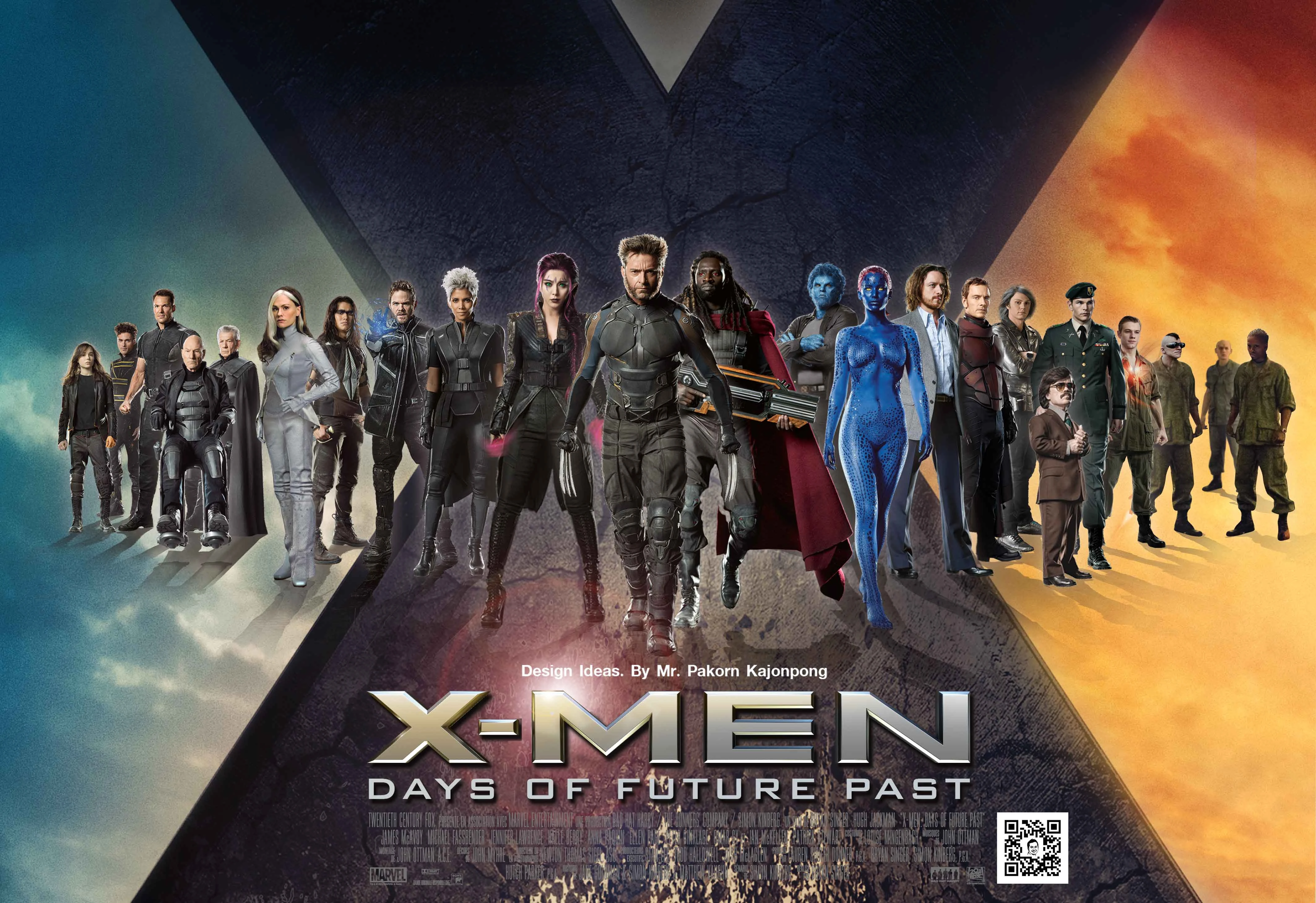
  • X-Men: First Class/Days of Future Past: I can’t decide which of these two films I like better. First Class was a stunning study in the dichotomy of opinion. Militants versus peaceful protests. Marvelous acting. Amazing story telling and perfect casting. Days of Future Past brings everything we loved about the first Bryan Singer ­X-Men movies and combines it with everything that made First Class such a revitalizing shot to the franchise. Patrick Stewart/Ian McKellan and James McAvoy/Michael Fassbender Xavier/Magneto relationships and actor choices are phenomenal. Oh and Quicksilver. Terrific…
  • Captain America: First Avenger/Winter Soldier: I thought I’d HATE the first Captain movie. A hero known as a goody-goody just couldn’t be appealing could he? Yes he can. You cheer for him because though he becomes a hero he does it for the right reasons and uses his abilities in the right way. WWII sci-fi story WITH Hugo Weaving as Red Skull?! Oh and Hayley Atwell. Yeah. Worth it. Winter Soldier is the Bourne story. Good guys may be bad…old villains may be able to help… Action packed and one of the tightest stories I’ve seen on screen in a while.

Yes that’s not all of them but those are the ones that find their way onto my Bravia the most. I’m not telling the entertainment world anything it doesn’t already know…but those seeking inspiration don’t have to look far with this material out there.

Sources of Inspiration: Black Library Audio

Black Library Audio Books and Audio Dramas

During my high school years I became fascinated with early 20th Century culture to such an extent that I used to check out from our local library recordings of 1920s radio broadcasts and shows.  I loved the genre and it feels like something that has become lost as we’ve become a more screen-based society.

When I heard that Black Library produced audio dramas and audio books it immediately piqued my interest and I tried one.

The first one I bought was Raven’s Flight by Gav Thorpe as it was the most prominently displayed on the website at the time.  I wasn’t sure what to expect, as I’d listened to audio books before where it is merely an author or a celebrity reading the text.  In some cases, as with some Star Wars books the reading was accompanied by sound effects as well.  In the case of the Black Library audio books and dramas it is far more like the radio shows I found as a teenager.  They are acted rather than read, the sound effects are integral and take place during the performance as though you were listening to a film rather than watching it.

audio1

Since then I’ve obtained all of the audio dramas that sounded the least bit interesting and I’ve never heard a bad one.  There have been one or two where the plot took a turn that made me less of a fan of it, but none have been poorly made, badly written, or subpar in performance or production.  As last time I’ll list some of my favorites and/or favorite aspects of them, again in no particular order:

Chosen of Khorne by Anthony Reynolds: This one had such an impact I spent weeks drawing a picture related to it.  Chris Fairbanks’ performance as Kharn is incredible, the story is tight, and the production is excellent.  I’m a staunch 40K loyalist and even I loved this traitors’ story!

Trials of Azrael by CZ Dunn: As a Dark Angels fan I have a lot of options for audio dramas but this one has remained my favorite.  While it has a few plot questions, the resolution and acting is so good I can ignore them and just enjoy it.  Plus Dark Angels story + Chris Fairbanks as Kharn + Pandorax campaign make it extra appealing.

The Garro series by James Swallow: One of the best series and follows on from the Horus Heresy novels (Flight of the Eisenstein to be specific).  Garro, former battle captain of the Death Guard now servant of Malcador the Sigillite has a number of excellent stories and some of the best-produced dramas I’ve experienced.  Toby Longworth if by far my favorite voice talent in the Black Library audio drama pool and his Garro is tight, grizzled, and fiercely passionate about his cause, even when it runs counter to his masters’ goals.  By all means listen to them in order but Sword of Truth remains my favorite.

Veil of Darkness by Nick Kyme: I’m not an Ultramarines fan nor am I a Cato Sicarius fan but this story is one of the best.  Very well acted (Sicarius has a youthful arrogance to his voice that matches the character perfectly) and with one of the best single-stories I’ve heard it has been in my car’s CD player a number of times since I first gave it a listen.

Caiphas Cain – Dead in the Water & Caiphas Cain – The Devil you Know by Sandy Mitchell: Toby Longworth strikes again turning in a tremendous performance both as the elder Cain narrating his adventures and the youthful Cain experiencing them (as well as all kinds of characters in between) mixed with the great production, Sandy Mitchell’s wry writing style comes off perfectly and provides an excellent complement to the written character.

The Sigillite by Chris Wraight: This one is actually two parallel stories, one told in flashback the other taking place as the same character discovers the importance of his previous actions.  Once again Longworth shines, this time as Malcador, giving him a voice full of power, age, weariness, fear, and awe.  It’s a remarkable story.

Censure by Nick Kyme: A Horus Heresy story about Sergeant Aeonid Thiel and his experiences on his return to destruction-ravaged Calth.  He faces not only the remnants of abandoned Word Bearers but the environment itself.  His penal legion companion and he have an almost Lethal Weapon level of interaction.

Deathwatch: Mission Purge by Gav Thorpe: A wonderful single-story of a Deathwatch inspection led by Captain Artemis himself on a rogue trader’s ship.  Of course everything goes wrong and the motley xenos hunters have to fight their way out of danger.  It has a very unique feel and one of the best climactic music stings I’ve ever heard…

The Glorious Tomb by Guy Haley: A surprisingly moving story from the perspective of a fatally wounded Black Templar kept alive to continue his fight for centuries from inside a dreadnought.  You hear his confusion over the passage of time, his distance from the outside world, his pain and mental anguish.  It extremely potent and very well performed…you guessed it Toby Longworth is back to give one of the most powerful performances I’ve heard to date.

Shorts:

  • Warmaster: An amazing soliloquy. The now fallen Horus justifies his actions to a silent audience.  If I had to do a reading for an acting class I’d choose this one.
  • Veritas Ferrum: a small story-driven by the main character of Durun Atticus as he navigates his strike cruiser Veritas Ferrum into the catastrophe as Isstvan V. The performances and productions shine again as wily tactics and loss of humanity take center stage.
  • The Eightfold Path: Chris Fairbanks as Kharn in the fighting pits. It’s Kharn narration for 13 minutes and as glorious as one would expect.  Worth it just for his rueful bloody laugh if nothing else.
  • With Baited Breath: A Raven Guard captain finds a dying guardsman and listens to his story. Great deeds…

There are countless others that have been spun repeatedly in my various CD players and queued into a playlist on my various devices.  If you’re a new 40k fan these stories are EXCELLENT for mood and storytelling; setting the tone for the Grim Dark in a way more accessible than some weird people may find the dense omnibuses or the numerous, long-running series.  For established fans they are a great way to hear well-known stories brought to terrific life with care and thoughtfulness.

Black Library Audio Link!

Bad Teacher May Deserve a Sequel

Bad Teacher
Diaz and Smith in a bar. Photo from: aceshowbiz.com

I rarely think a movie needs a sequel, but Bad Teacher is on that short list. The movie, starring Cameron Diaz, tells the story of a lazy, irresponsible teacher who is beyond materialistic and selfish. I’ve seen this movie dozens of times on TV, but recently I watched the unrated extended version. After that, I knew why it needs a sequel – in a good way of course.

  • It’s a good comedy. There have been some pretty good ones over the last few years, but most modern comedies try to shock the audience or gross them out (eg. excessive vomiting). However, Bad Teacher is funny because of the dialogue. Sure, there is one bathroom scene and it can be a little immature, but the dialogue and conflicts are well written. It is pretty adult but not over the top or trying to disgust you.
  • Fun, distinct characters. The people make or break it. The story can be solid, but if the characters suck, the movie will. Bad Teacher has a great cast who feed off each other, and in many cases, opposites attract. I’d love to see these characters together again. Aside from Diaz, the movie stars:
    • Lucy Punch (crazy but good teacher who cares about the kids), Jason Segel (cool gym teacher who likes to smoke weed), Justin Timberlake (preppy, geeky substitute teacher), Phyllis Smith (teacher and the best best friend ever), and John Michael Higgins (dolphin-loving principal).
    • Diaz is terrible, but you can’t help but like her. She’s selfish, manipulative, mean, and horrible with kids. And it’s so funny. Smith is a great asset to the movie because she seems like the average teacher, but she’s fun and the most supportive person ever. People need to be that kind of best friend. Punch plays a great teacher – the kind who freak us out a little with their enthusiasm for learning – and I could so see Segel as a gym teacher in another life.
  • School environment. I really like movies that take place in schools, especially when they’re not dramas. Bad Teacher portrays the school life well. For example, Diaz receives a $37 gift card from the staff as a going-away engagement present. I was surprised by how well the actors play teachers, and I know a lot of teachers. The kids are great too. Noah Munck (Gibby from iCarly) and Kathryn Newton (teen girl in Paranormal Activity 4) are two students you may know.
  • The end. SPOILER alert! At the end of the movie, Diaz starts a new school year as a guidance counselor, doesn’t get the boob job, and is dating Segel, which is a cute match. It’s a very good ending because she is much better at counseling, but I want to see her in that role. Diaz as a guidance counselor would be awesome. Her advice is real. The kind of advice that’s sometimes hard to give and take (I give a lot of this kind of advice, so I can relate and appreciate it).
  • The sequel factor. The movie isn’t highly rated, so a sequel will probably never happen. However the end wraps everything up so well, if you enjoy the movie, you want more. That’s a good sign of a good movie. You watch it, enjoy it, and think I could rewatch that or I wish there was more. Good films make the audience want more.

If you like comedies or want to chill to a movie, check it out. It’s good fun.

Sources of Inspiration: The Black Library

Sources of Inspiration

With a new year and the hope of my own creative wellspring finally pouring forth I thought I’d take the time to examine some of the sources for my creative inspiration.  This week I’m starting with a humbling catalogue of the Grim Dark (and world of fantasy) that is the Black Library.

Named after a library of esoteric and powerful knowledge, Games Workshop’s publishing wing is a remarkably diverse and impressive publishing enterprise.  From gothic sci fi, to rousing action, and from grim brutality, to raucous humor, the Black Library offers something for everyone, and indeed I was a fan of the stories prior to partaking in the table top game that spawned them, my first novel being the Assault on Black Reach which I purchased shortly after buying the starter set of the same name.

I find the worlds depicted by the Black Library authors to be deep and complete.  Everything has layers upon layers and builds atop decades of history already put into the stories and characters within.

Some of the authors are terrific, some are quite good and the same can be said for the quality of the stories they tell, but I can honestly say I’ve never read a bad one.  Merely some less impressive than others.  I thought I’d give a breakdown of some of my favorites, broken down by broad type and in no particular order of superlative.

Favorite Series

  • Horus Heresy by Various: Simply some of the best science fiction you’ll read anywhere. The series is vast and deep, providing a prequel view of some of the famed characters you may do battle with on the tabletop.  The first four novels are sequential and could have been printed on pure gold leaf they are so ostentatiously brilliant.  Want to know how the whole thing started?  Here’s how.  And if you don’t feel a pang of tragedy at Isstvan something is broken in your soul…
  • Caiphas Cain by Sandy Mitchell: Can the grim dark future be wry and funny? With a rakish and self-serving (at least according to him) hero like Commissar Cain you beter believe they can be.  Sandy Mitchell (aka Alex Stewart) created a hero both likable and slightly devious.  He’s altruistic and at the same time totally self-obsessed, told in the first person (with commentary footnotes from another reader, Inquisitor Amberley Vail) it’s marvelous at giving a personal obscured perspective on things.  The series takes him from his humble beginnings seeking a quiet posting away from danger to all over the galaxy fighting every kind of enemy on every front.  Each novel is different and each one spectacular.  If you need a laugh and great adventure, pour yourself a glass of someone else’s best Amasec and open a Caiphas Cain book.
  • Last Chancers by Gav Thorpe: Gav Thorpe is my personal favorite Black Library author and his take on the penal conscript legion of Colonel Schaeffer one of his best works. I read the whole thing at night during a week-long trip to Chicago and loved every bit of it.  The first novel is by far the best, but by the time you reach the third book’s rousing conclusion you really have a chance to look back and see how far these characters have come.

Favorite Short Stories/Novellas

  • Yarrick Chains of Golgotha by David Annandale: This novella/short story is simply stunning in its narrative. From the capture of the imposing Commissar Sebastian Yarrick by his arch nemesis to his exciting attempts at escape, this one has you hooked from the beginning.  When you get to the end and see just HOW dangerous his infamous and nefarious captor really is to him and the Imperium it’s hard not to start the book over and read it all the way through again.  I know I did.  Very few books can make me say, “Ohh…whoa” out loud like this one did at its conclusion.
  • Survivor by Steve Parker: The tale of a young boy surviving in the ruins after an ork invasion. It’s a great story with a sharp narrative, but the reveal of the boy’s identity makes it even more powerful.  A short read but one that definitely sticks with you.
  • Dark Vengeance by CZ Dunn: Some 40k players are all about the win. Others are all about the story.  I’m in the latter category and this story is a great example of the game brought to narrative.  Released to coincide with the 6th Edition starter set, Dark Vengeance tells the story of the characters and armies you get with that box.  Not only that but you get a relatively realistic portrayal of how a battle between these two armies can usually play out on the table; who lives, who dies, who’s valuable and who’s just a pawn.  A great place for beginners who are just getting into the game with the starter set!

Favorite One Offs/Unique

  • Fifteen Hours by Mitchel Scanlon: This one’s tagline got me: “Basic Training: Four Months. Planetary Transportation: Seven Weeks. Life Expectancy…Fifteen Hours.” I loved this book.  Not only is it 40k World War I style, but it’s also 40k told small.  Not great heroes or famous battles, just one of trillions of guardsmen and one of millions of battles.  The story doesn’t revolve around our heroes and neither do the events.  We merely see a vast war through their very small scope.  It’s All Quiet on the Western Front with orks and lasguns and simply a terrific read.
  • Deff Skwadron by Gordon Rennie & Paul Jeacock : A 40k comic about ork fighter pilots. It’s as good as it sounds.  Let’s face it orks are funny and brutal.  Their single minded desire to fight and kill is highly entertaining and this comic captures that mood both in a great set up and magnificent orky-art.  If you read no other 40k comic definitely check this one out.
  • Headtaker by David Guymer: It’s not ALL the grim dark! This fantasy story revolves around my favorite fantasy battles character.  With all the betrayal and backstabbing you’d expect from skaven…Queek Headtaker leads his armies, fighting against his allies as much as his foes…and showing everyone who really is the most clever rat in the under empire.

Next week I’ll tackle the audio drama/audio book arm of Black Library which is definitely worth its own separate study!

Black Library Website