The Best Film of 2015: Mad Max Fury Road Part 1

Oscar season is almost upon us and even though I don’t really believe the awards themselves or the furor that surrounds them are typically worth it, this year something did occur that brought some interest back into the awards for me. Normally the academy selections are the typical Citizen Kane pretentious or “Oscar-Bait” style options; dominated by dramatic roles and established directors these are the films you can tell from the trailers are aiming for Oscar. In 2015 however something strange happened. The best-reviewed film and dark horse money maker wasn’t from the big-star, known-director, Hollywood awards factories, but from a series previously known for its camp over-the-top styling. This year Mad Max: Fury Road was nominated for multiple awards, including best Picture and Director.

mad-max-fury-road

Ever since I saw the film I’ve been saying it is the best film I’ve seen in a decade, perhaps of the 2000s. Everything about it is marvelously subtle, layered, and complex while maintaining an overall structure that is simple. George Miller made a movie that is as shallow or deep as the audience wants it to be. For those wanting purely shallow action, Fury Road provides that from minute one and almost never lets up during its run time. For those wanting a deeper experience…there has rarely been a movie in recent memory offering such intense world-building and character development, but without cramming into the audiences face with forced scenes and exposition.

For the next three weeks I’ll be looking at why Fury Road became the most unique film of 2015, why it was so highly reviewed, and why I believe it deserves to win (though it almost certainly and sadly won’t) every award for which it’s nominated. Starting with the basics: The Characters.

Creating Story Through People – The Characters of Mad Max: I’ve heard complaints that the plot to Fury Road is paper thin. Anyone who believes this apparently only saw the surface and somehow missed the dozens of plots upon plots built into the incredible world Miller created for the movie.  Most of these center not around the main story idea but the individual stories each of the main characters tells as the narrative progresses. It’s the kind of character development and storytelling other writers, even ones I respect, only wish they could accomplish. Here Miller does so with remarkable clarity and subtlety; again allowing the audience to get as little or as much as they want from them.

mad-max-fury-road1

Max Rockatansky: This was the role that made Mel Gibson but it has found new life in Tom Hardy. Those familiar with Mad Max’s story (like me those of us who grew up with the films) will be interested to see how the character has both changed and remained the same. Everything we need to know about Max’s history is given in a brief opening narration and during guilt-ridden hallucinations he experiences during the film. The opening narration is the only directly spoken exposition in the movie (exposition not masterfully woven into the dialogue or actions) and it is told so artfully it doesn’t feel like exposition. Max has been reduced to a man of solitude and instinct. He wants only to survive at this point. He’s helped people in the past and either paid for it with his own pain and torment or failed and watched them suffer. Now he exists on his own, wanting nothing to do with the awful world around him or its people. It’s interesting to see how his back story has changed from the original films. In the first Mad Max he is still a road cop in a post-apocalyptic world. His wife and infant are killed by a motorcycle gang, causing him to go on his revenge spree. Here we see an older daughter run down by massive vehicles mixed in with other characters who torment Max for not saving them. Veteran Max fans will wonder if Miller has altered Max’s back story or, given the method and appearance of these flashbacks, if Max has simply twisted his own history over the years of isolation. Max’s plot is one interwoven throughout the rest of the story. He experiences it, he doesn’t drive it. I’ve asked in previous posts, who are we in this film? In Fury Road we are Max. Miller constructed him to be our nameless, silent protagonist. The one through whom we act while surrounded by dozens of other more unusual and animated characters.   Max is the perfect protagonist. He isn’t “born special,” he’s not a chosen one, he doesn’t gain any super powers. He’s not the best at everything and more than once meets his match. Max just has an overwhelming will to survive, and that carries him through and makes him a hero. During the story Max finds his voice and even his ability to trust again and, maybe even achieves a little…redemption. Despite what some audiences claim he IS the main character. He has simply been moderated to be less extreme, and therefore more relatable than anyone else in the movie.

mad-max-fury-road2

Furiosa: Even before I saw the film I heard nonsense controversy of how the movie was pandering to feminists because of Max’s perceived reduced role and new character Furiosa’s expanded role. This isn’t the case (and even if it was George Miller can tell any story he wants…to those who say Mad Max has always been a “guy film” whatever that actually means, I’m forced to quote Jim Sterling, “I think they forgot who run Bartertown…) but Furiosa, played wonderfully by Charlize Theron, is definitely the most compelling new character I’ve seen on film in ages. She is a female Max, but Max prior to his self-imposed isolation. She still wants to help others, and if it hurts an awful warlord in the process even better. Furiosa is loaded with character. She’s a one-armed trusted lieutenant, or “imperator” of the main villain, The Immortan Joe. She steals his precious wives from him in an effort to take them to safety and at the same time severely cripple him and his evil empire. Her actual motivations are left mysterious beyond the obvious “rescue the wives” surface story, however you can tell there is more to her and her story with Joe. She, like Max, is tough, resourceful, thoughtful, and wily. Furiosa isn’t “treated” like actions films treat women. She isn’t a victim, nor is she the cliched tough girl.  In a terrific piece of equalizing gender roles, her sex is completely ignored. She’s not a woman, just Imperator Furiosa, respected and feared by her crew and Immortan Joe’s Warboys. Her fight scene with Max is one of the best I’ve seen in ages, it’s fast, vicious, and again removes all gender roles. Furiosa is brutal and heartless during the scene, and tries her hardest to kill Max, only being prevented by bad luck and Max’s deception. Max, for his part brutally fights back, with only the last vestiges of his “good guy” mentality preventing him from killing her when he has the chance. Furiosa’s back story is told in vague comments, but you can tell it’s there, written behind the scenes, and portrayed with pain and smoldering anger by Theron. Audiences showed up for the Mad Max name…but left marveling at Furiosa.

mad-max-fury-road-the-immortan-joe-hugh-keays-byrne

The Immortan Joe: Joe is possibly one of the most intimidating villains of the millennium (I’ll have to update my post on the subject…) Portrayed by Hugh Keays-Byrne (who incidentally also portrayed “Toecutter” the main antagonist of the original Mad Max) Joe is both mysterious and over-the-top. His motivations are clearer than anyone’s, he wants his wives back because, like all kings he wants a healthy male heir, but his back story is very much left to visual cues and inference. He’s aging, but has various life-support systems and armor mimicking strength, so he is both weakening but powerful. He is adorned with medals and carries scepters of office, insinuating military background. Joe runs the Citadel, how he came to power is a mystery during the film (expanded in the comic series, however) and why he holds so much sway over the population and even the other warlords is clear, literally: Joe controls the water and like his escaped wife Toast the Knowing states, “Because of that he controls all of us.” Joe’s role is interesting because as he leads his war party in the chase to retrieve his wives, he clearly wants to be as merciless as possible…but can’t simply blow away Furiosa and her war rig because he doesn’t want to kill his most precious resource, his brides and their potential healthy sons. He’s odious in his mentality and appearance, making him one of the most effective villains in recent memory and his relentless at-all-costs pursuit of Furiosa and Max quite literally drives the movie. He will never stop hunting them, so our need to escape with the protagonists is both dire and seemingly hopeless. A terrific narrative needs a terrific villain and The Immortan Joe more than fits the bill.

js62928600

Nux: Perhaps the most interesting of all is the warboy Nux portrayed by Nicholas Hoult. Nux starts as a dying “half-life warboy,” one of Joe’s countless soldiers. It’s because of Nux and his desire to die gloriously that Max gets involved in the first place, hooked to Nux’s pursuit vehicle as a mobile IV. Nux’s arc, however, transcends even Max’s or Furiosa’s. He begins as a single-minded fanatic of Joe’s invented cult, spouting the scriptures and fervent in his belief (more about the cult next week…) but through just one action, when Joe’s escaped wife Capable shows him kindness, perhaps for the first time in his life, he sees a whole new world. In many ways Nux is the manic side of the audience’s experience of this world as Max is their film’s relatable surrogate. Nux represents the typical resident of a dusty, desolate world, where anything different or remarkable, even if brutal or horrifying, is considered wonderful. During the story we see him go from fanatic warboy, to obsessed soldier, to hopeless outcast, to sympathetic ally. His story is in many ways the most compelling and has the most stark and interesting path. If you aren’t a fan of Nux by the climax of the film you weren’t paying attention at all…

mad-max-fury-road-wives

The Five Wives: Miller designed them to essentially be one unit of five each with distinct personalities and roles. The Splendid Angharad (Rosie Huntington Whiteley) is their very-pregnant leader, Capable (Riley Keough) the second in command and most diplomatic of them, Toast the Knowing (Zoe Kravitz) tough, resourceful, and unyielding in her desire for freedom, The Dag (Abbey Lee Kershaw) mysterious but perceptive and sardonic, and Cheedo the Fragile (Courtney Eston) the youngest and most easily led but who finds her independence on the journey. These characters could have easily just been a mere McGuffin for the plot, instead Miller created distinct roles and even arcs for each. The sacrifices and small stories of each, as they either give everything during the journey, learn about the world or themselves, and/or find a place they never knew they could have tells a story even beyond one of escape. Their story is perhaps the most hopeful and they make the most profound statements of the film and give important messages to modern society: “You Cannot Own a Human Being” and “Who Killed the World?”

Miller characters go far beyond what is typical for modern action film. They are complex without endless, needless, artificial dialogue-based exposition and they all have their own stories tightly interwoven with the main story. Next week will be a look at the main plot and the incredible depth with which the world was created.
History Meets Horror in Nightmares in Red, White & Blue

This week I came across Nightmares in Red, White & Blue, a documentary that discusses horror movies and the history that inspires them. Nightmares takes a Marxist approach to the horror genre and how these movies are influenced by history, and how society receives these events and horror movies.

Nightmares Red White Blue Review
Photo: dvdtalk.com

The Government Inspires Horror

This is not a political view point. This is an observation from the movie. Since the 1920s, filmmakers have used horror to speak out against the government. According to Nightmares, people in power have been a symbol of horrific things: poverty, war, starvation, violence. Horror films speak out against those trying to harm us.

For example, in the 1920s, a “monster” may have been a disabled veteran. Government + war = disabled vet who appears as a “monster” to society. Horror filmmakers have also used government entities and events, such as Hitler’s reign and the Holocaust, as inspiration. Or Sci-Fi horror to speak out against government/alien conspiracy theories.

I learned a lot by watching some of the greats discuss their own experiences during these eras, and explain how they used horror to release their fears and tastefully speak out against them.

Evil Lies Within

In the documentary, John Carpenter says there are two types of evil: The evil out there (Universal monsters) and the evil within (eg: human ego and pride). Carpenter says, “it’s in our own human hearts. And that’s a harder story to tell.”

I found this interesting because if you think about your favorite horror movie, there is an inner evil within someone. Whether its a Mayor who’s unwilling to lose tourism money (Jaws) or a killer seeking revenge (Freddy, Jason, Michael), the evil lives within someone. The overall message is people are evil; anyone can snap; and that is scary.

Nightmares Red White Blue Review
Photo: Huffington Post

Today’s Horror Punishes This Evil

This isn’t directly stated, but when Saw was mentioned, I realized today’s horror movies only set out to punish people. The horror genre stays true to its roots and speaks out against social wrongdoings, but instead of the attacking the government, now it feels like horror movies attack the people.

It Follows was one of the big movies in 2015, and the “monster” was an STD. It Follows punished those who are irresponsibly sexually active. The modern teen horror movie has turned into a digital stalker (Unfriended). Teens are punished for spending too much time connected and enjoying others’ humiliation via social media. Sinister and Insidious punishes the working parent. Instead of staying home to care for their kids, parents are busy with their own agendas or aren’t home. And the list goes on.

Other Highlights

I don’t want to give too much away, but you’ll probably see all your favorite horror movies mentioned. Nightmares in Red, White & Blue covers everything from the early 1920s to the mid 2000s. Many experts are featured, and they reveal why they made a movie or what message they wanted to share. Nightmares is fast-paced, and you’ll learn a lot about how American history influenced the genre and what people were feeling at the time.

PS: Nightmares in Red, White & Blue is free on Amazon Prime streaming right now. If you check it out, let us know what you think in the comments below!


The Jem Movie: Universal Got What They Deserved

Jem and the Holograms 2015 had the third-worst opening in box-office history. That’s a pretty hefty price tag and epic fail for Universal, and my response is: They deserved it.

As a woman in my 30s, I was delighted to hear they were going to make a movie of my beloved childhood idol. You see, I was obsessed with Jem and the Holograms when I was a girl. I had the dolls, car, outfits, cassette tapes and books. My mom and I dressed up as them for Halloween.
As an adult, I have even watched a few episodes online. They are not as appealing now, but my taste in music has improved and I expect more. However, I still enjoy them.

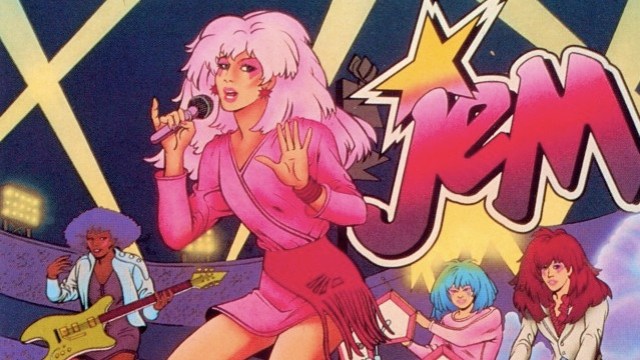
jem-and-the-holograms
quirkbooks.com

That is why I refused to see this movie after the trailer was released. Jem’s story was not a heart-felt, coming-of-digital-age story. The original Jem series was about glam, fashion, music, and relationships. There was drama, adult themes, mild cartoon violence, and flawed heroes. It was an 80s cartoon! These cartoons brought real-world issues to kids in a fun way. They were not politically correct. They did not try to make you feel warm and fuzzy. Many 80s cartoons simply taught kids how to deal with conflict.

Instead of rebooting the cartoon into an animated feature or sticking to some of the original story, Universal decided to modernize – aka bastardize – it. I will never see the movie, so I’m going to have to bash the trailers. Here are my biggest problems with the movie and why it failed:

  • A YouTube star. Because the world needed or wanted that? No.
  • It was a teen story. Jem and the Holograms and The Misfits were not teens. They were adults. They partied, had adult relations, and experienced adult conflicts. The cartoon showed kids how to deal with mature problems and relationships.
  • Universal chose the wrong audience. Who was the audience for this movie? It was women between the ages of 30-40 and possibly their moms. This age group is nichey, but there are roughly 157 million women born between 1980 and 1990 (US Census Bureau). That was the audience. As someone in that audience, I can say that a movie made about Hole vs. Babes in Toyland would have been more accurate to Jem and catered to the audience.
  • The music was awful. Again, audience. My generation still listens to Joan Jett and Guns N Roses. We still love hairbands and bad-A chicks. Not pop stars.
  • Identity crisis. Jem did not have an identity problem. She knew who she was. She was a rockstar superhero with a secret identity. She was not a troubled teen trying to find herself or hide and from the world. You would think with the superhero trend right now, Universal would have been smart enough to make that angle work. Here’s an idea: A female Scott Pilgrim-type movie. That would have been gold.
  • The costumes. If you’re going to “modernize” an 80s cartoon/movie, how does it make sense to have them play a keytar? The makeup and costumes looked like a Hunger Games rip off. In fact, I get a very Capitol feel from Juliette Lewis’ character and Hollywood from the trailer.
  • Synergy was Eve from Walle. And a projector that played home movies at that. The original Synergy was an 80s supercomputer built to alternate reality. She created holograms – hence the name – and could change their appearance. Synergy transformed reality, allowing them to have a different identity.

And there you have it. I accepted a live-action movie, and for a moment, was excited to see what Hollywood could do with my childhood idol. When I realized I could not relate to the story and characters, and they butchered it, I vowed to never see it. I would not watch this movie if it was my only form of entertainment. I will never support it. And Universal should pay close attention because 157 million women apparently felt the same way.

Originals and Remakes: Horror Films that Need a Modern Remake

We hope you’ve enjoyed our October Original vs. Remake series. We had a blast comparing them, and we hope you’ve tried at least a couple!

We also understand many have grown tired of the remake trend; however, a few horror movies need a remake. Whether getting back to classics or bringing light to underrated movies, we wanted to conclude the series with something a little different. Theses movies could and need a modern remake:

James’ Picks:

The Cabinet of Doctor Caligari (1920)

The original film in 1920 was a silent German expressionist masterpiece borne out of the inter-war period in Europe. It is a story told from the perspective of one character and actually has a twist worth something (if you haven’t seen it I won’t spoil it here). The main plot revolves around a mad doctor, Caligari, who uses a sleepwalker, Cesare, to murder for him. It is shot with painted shadows, twisted imagery, and a warped perspective as the narrator shares his own mentally distorted view of what happened. I can imagine this film, shot by a talented director using practical effects (Edgar Write I’m looking at you..) for a modern audience relieving some of the abstract and abbreviated storytelling prevalent in the silent era. There was a 2006 remake, but one, true to the original, of wider scope and scale would do this amazing classic justice.

White Zombie (1932)

I first saw this film in a zombie-thon when I was a teenager. It came on with Romero pictures and was distinctly out of place and, for me, unusual. As an adult I’ve come to appreciate just how fascinating this film is and how great a remake would be. It focuses on Madeleine and her fiance Neil. A wealthy plantation owner, Charles, is also in love with Madeleine and enlists a voodoo mystic (played here by the glorious Bela Lugosi…someone would have to up their game to play this role) Murder Legendre (though his name is not really heard in the film except for maybe one piece of dialogue). In a great scene we see Murder use his powers to turn Madeleine into a voodoo zombie, a status of wakeful hypnosis fully under Murder’s control. What would make this a great remake? Well getting back to the original voodoo zombies, powerful zombie masters, great characters straight from the origins of horror (Dr. Bruner is Van Helsing in all but name.) A great modern remake could, again, fill in a vague story from the dawn of horror cinema and bring this tale to a modern audience. Plus it would introduce people to how the zombie legend originated. Let’s face it, the flesh-eating zombie thing is kind of done, whether it be from unknown causes or disease or whatever they cook up. Let’s put some magic back in zombie movies and tell a great classic story in a new way.

Raven’s Picks

Cherry Falls (2000)

Brittany Murphy Cherry Falls
Photo from: scare-tactic.blogspot.com

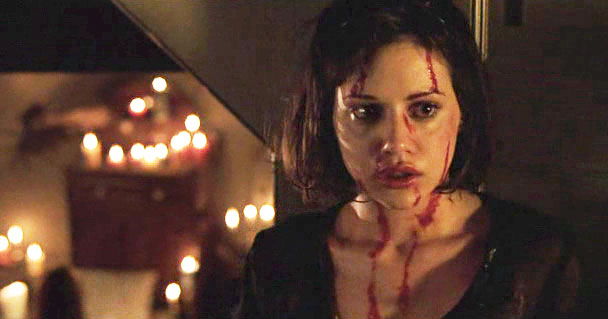
Cherry Falls ranks as my favorite teen slasher. However, many have never seen or heard of it. I realize that a remake would seem a little insensitive to Brittany Murphy, but I bet she would be honored knowing this movie received the attention it deserves. There are two reasons why Cherry Falls needs a remake. First, it was never released in the U.S. I’m guessing Hollywood thought it was too influential, as the storyline suggests teens must lose their virginity to survive. If America’s youth are that easily influenced, it’s time to look at the parents. Second, we haven’t had a good teen slasher since Scream 4, and that was in a series. I can’t remember the last good teen slasher. Hollywood needs to stop making crap that no one wants to see and get back to basics. Cherry Falls had an original storyline – gasp! – and serves horror well, as it’s dark, funny, gruesome, and entertaining. The horror film industry needs to cut back on CGI ghosts and jump scares, and get back to making movies that rely on a good story and actors.

Cabin by the Lake (2000)

Cabin by the Lake
Photo: youtube.com

Cabin by the Lake – a USA Network-release – is gold. In fact, good luck finding a DVD copy under $40, and you can find a lower-quality version on YouTube. Judd Nelson plays a writer/serial killer, and Hedy Burress is a fantastic final girl. Nelson not only kills them, he has created an underground garden of victims deep in the lake. The movie is funny, suspenseful and entertaining. A Cabin by the Lake remake would bring back a theme that has disappeared: the crazy writer. I mean a writer who is unbalanced and disturbed on his/her own, not one driven crazy by a supernatural force. The original story is different and refreshing, and again, it would be nice to see Hollywood get back to basics. I enjoy horror movies for a number of reasons, but entertainment value tops the list. Minus a few, modern horror movies are no longer entertaining. They focus too much on mood and CGI, and not enough on the story or character development.

If done correctly, all of these remakes would get Hollywood back on track, and introduce new and forgotten stories and elements to modern audiences. We hope good screenplay writers out there will pay attention!

We’d love to hear what movies you think could use a remake or reboot! Feel free to tell us in the comments or on social media.

Original Vs Remake: Texas Chainsaw Massacre

Grindhouse theater was a big underground movement in the 1970s. Cheaply made, extreme movies of graphic violence or exploitation were all the rage, but rarely was one such film remembered beyond the double feature run time. In 1974, using the grindhouse model, Tobe Hooper took the formula beyond the late show with Texas Chainsaw Massacre a modern horror classic that has had as lasting impact on the genre as a whole as any other film. In 2003 Marcus Nispel released a remake of the classic that was instantly dismissed as unnecessary and far inferior to the original. Was this criticism justified? I’ll give some of the verdict away when I state no, it wasn’t and in many ways the remake expands on the original’s concepts making a quite a good remake.

The Plot: The plot for both of these movies is iconic and simple. A group of teenagers on a desolate Texas highway pick up a hitchhiker who derails their trip, which is further derailed when they make a stop and run into a bunch of crazy locals and a chainsaw wielding madman known as “Leatherface.” The set up in both movies is simple enough to set up the future events and doesn’t really get in the way of the brutality later on. The differences are the hitchhiker picked up in the original is a psycho who later turns out to be one of the groups harassers and in the remake she is a victim of the crazed townsfolk who commits suicide in front of them, foreshadowing the despair the group will soon feel.   Both set ups work in their environments and time periods without dragging the story down too much.

The Characters:

The Original – The original movie features the lead teens, Jerry his girlfriend Pam, Kirk, Sally, and Sally’s brother Franklin. The maniacs are the hitchhiker, the Old Man, the Grandfather, and Leatherface. The villains in this movie turn out to be cannibals, kidnapping people to cook and eat them. Their house is disturbing and just their interactions are unsettling, even before you know the depths of their depravity. The problem is, with the possible exception of the Old Man and Leatherface when he’s in kill-mode, I have a hard time thinking of a group of more annoying characters to appear in a single film. This is especially true for the hitchhiker, whose “unsettling” appearance really just grated endlessly on my nerves and Franklin. Franklin is the most unpleasant character this side of Joey the chocolate bar kid in Friday 13th: A New Beginning with the difference being how much Franklin appears in the film. His petulant attitude and aggravating persona is one of my biggest problems in the film. His brutal chainsaw death makes it almost worth dealing with.

The Remake – The characters aren’t altogether outstanding or memorable, but they aren’t nearly as overwhelmingly annoying as in the first film. They also feel slightly less like cartoon caricatures but certainly fit all the clichés. We have the troublemaker guy Morgan, the good guy who’s a bit of a renegade Kemper, the tough guy Andy, and panicky girl pepper, and the straight-laced (aka “final”) girl Erin. They have some nice, if unnecessary backstories among them, like the engagement between Erin and Kemper and the “getting pot” plot line (which the same director appears to be obsessed with as it also makes an even more central appearance in his Friday 13th remake) but they add to a bit of world building and depth. The villains are where this film really shines. The creepy towns folk aren’t anything as extreme as the cannibals in the first film, they’ve been brought a bit more “reality” by making them just cruel, disgusting, evil people. And it is in the remake villains we find the greatest character in both films, and no not Leatherface . We’re talking R. Lee Ermey as Sheriff Hoyt. His character is easily one of the best in modern horror history. Certainly since the new millennium. He’s cruel but funny, you hate him but can’t wait for him to get more screen time, and he’s quotable as hell.   Ermey easily steals the show from everyone, including Leatherface. This is no mean feat considering this film features the extremely lovely Jessica Biel running around in the world’s greatest costume through a lot of water.

R Lee Ermey Steals the show in the remake.

What Works and What Doesn’t:

The Original – What works best in the original is what they didn’t show. For a movie with such a terrifically gruesome title there is very little gore. The sites are desolate and the kills all implied. This is something modern horror would do well to get back to. Watching a massive man in a skin mask appear from nowhere, crack someone on their head and watch them spasm as he drags them off screen and slams a metal door is extremely effective. Even the chainsaw massacring isn’t graphic, showing things in silhouette, or slightly out of frame. What doesn’t work to me is stylistic taste… There is a ton of repetition in this film. For example: “Hit her Grandpa!”-Sally Screaming;-Grandpa drops the hammer. “Hit her Grandpa!”-Sally Screaming;-Grandpa drops the hammer. “Hit her Grandpa!”-Sally Screaming;-Grandpa drops the hammer. Scenes of people laughing or acting weird cut to close ups of victims screaming or gasping go on and on. Also there are several times the movie has somewhat of an “art house” feel where we slowly just look at sets or scenes. And it has the same problem I had with Dawn of the Dead where stalling is used to increase tension, as someone staggers around or reacts painfully slowly, which has the effect on me of frustration rather than tension building.

The Remake – The tone and environment of the remake are well done. It actually feels just as desolate but like a more “real” place. My mother, who was stationed in Texas, actually said driving around back country Texas roads you see all kinds of places like that and people who could fit in here.   The characters also seem more real and the situation, where a hitchhiker commits suicide in their van after they pick her up, immediately heightens tension and gives the kids a reason to be stranded. Leatherface is actually much more intimidating this this film and the chase in the final quarter of the film is one of the best. Erin is also a much more resourceful and likable character than Sally, as she fights hard, tries to save friends, and makes sacrifices to get away while trying to stop the evil of her pursuers. The flaws are so cliché the fact that I’m pointing them out is cliché… Characters are dumb, and do lots of stupid things. Cars don’t start or fall apart. There are a number of cheap jump scares, including the classic possum-in-the-locker trick, and the kills aren’t as creative and a little more “torturey” than the effective implied violence of the original. I will say they do seem to “fit” the world so there doesn’t seem to be as much Saw-style exploitation.

The Verdict: I’m prepared for this and steeled myself for the backlash… I prefer the remake. The original reminds me of Star Wars. It’s a progenitor of things to come that people have a nostalgic attachment to pushing its value beyond its actual quality. Horror fans think they are supposed to like it, and it has a number of merits. But like I said in my Dawn of the Dead review “liking” a film is visceral. I find the original unpleasant to watch, not because of the content but because of its execution. Many filmmakers have praised its style for being “raw” but to me it feels “sloppy,” and while I understand this was a stylistic choice popular in the early to mid-70s it isn’t one I personally am a fan of. With the repetition, painfully unlikable characters, shrill sound design, slow pace, and dirty execution I find the original a better film to “study” than enjoy. It’s interesting to see a genesis of ideas and what came out of them but not one I’d sit and watch more than once. The remake took the great ideas of the original and made a fun modern horror movie. It’s tense, well-shot, well-acted, and adds new elements while staying true, never trying to one up the original and honoring it where it can. For those who hate the remake I say give it a watch with new eyes and enjoy it without prejudice. It’s a great horror movie and well-deserving of the Texas Chainsaw name.

Halloween: Original vs. Remake

We hope everyone had a happy and safe Halloween! Another holiday has come and gone, however we had so much fun and great conversations about this topic that we’ve decide to extend it another week. We also want to thank everyone for reading and discussing horror movies with us all month. It is my pleasure to review this one, and heads up, I could talk forever about this one!

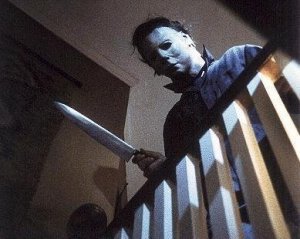
Michael Myers 1978
Photo: http://halloweenmovie.wikia.com

Halloween – The Original

Possibly my favorite movie from this era and definitely in my top five in the genre, John Carpenter’s Halloween is a classic. This was one of the first – maybe even the first – slasher movie I saw as a kid. I don’t want to gush and seem like a fan girl because I do poke fun at a few things too. So, here are a few of my favorite things about the original Halloween.

False Sense of Security: From the opening scenes, the audience sees this is a quite little suburban town. The teenagers are decent kids who party, but most teenagers do. The younger kids are excited about Halloween, and there are lots of shots of trick-or-treaters, trees, streets and houses. As the movie unravels, you feel sympathy for these townspeople. They have encountered a tragedy and evil that may defeat them and destroy their little town. You wouldn’t expect an evil force, and the original takes you from all those wonderful Halloween memories you have to fearing Michael Myers. It takes you on a roller coaster of emotion and disrupts what should be a fun-filled holiday.

Pure Evil: Myers is pure evil. It’s that simple. Some people are just born with an evil that consumes them. Whether you believe in this theory or not, the original Halloween did. There was no backstory. You do not know why Myers was a killer, and I never cared to know. I just accepted the “pure evil” within him because it was believable. He never says a word. He just punishes and kills, and that’s what makes him more threatening to me. Evil motivates him, and if you aren’t scared of evil, then what does scare you? The evil serves as a supernatural force, which is much harder to control than a person. It’s unpredictable, reckless, and illogical. The idea that you can’t control it is more effective from a horror standpoint and leaves you uneasy throughout the movie.

Jaime Lee Curtis: My pick for the top final girl. Curtis set the bar for final girls. She’s played several strong female characters over the years, and Halloween helped her establish that career role. In Halloween, her character is smart, responsible, fun, and studious, however she also smokes pot and hangs out with her friends. She is a normal teenager who becomes tormented by Myers. Her character was developed very well, and you follow her through her ups and downs. She was strong and weak; she fought and cried. She was a woman survivor. Curtis is and always will be Laurie Strode.

Michael Myers 2007
Photo: filmedge.net

Halloween – The Remake

I don’t think I saw Rob Zombie’s Halloween in theaters, and if I did, I apologize to who I saw it with! We’ve talked a little about re-imagining movies – such as A Nightmare of Elm Street – and that’s what Zombie’s version is. He took the original and built on it. It wasn’t a true remake because he added and changed a lot, and Zombiefied it as only he can do.

I have a few issues with this version, but as a stand-alone horror movie, it’s pretty intense.

No security: As an audience, you never feel safe watching this movie. Zombie takes you from a highly dysfunctional lower-class family, to an asylum, then back to the dysfunctional family. There is nothing pretty in or about this movie. As an audience, it’s difficult to feel shocked about anything that happens because you almost expect it. It’s predictable. Whereas in the original, the murders are a tragedy because terror invades a small quiet town. You get to know the town as a whole, instead of Myers. I don’t agree with Zombie’s choice because Myers and his life are terrifying enough. He strips all innocence from the beginning. And if you take away the town’s innocence from the beginning, you take it away forever and leave no hope.

The backstory: I appreciate a little backstory, but I feel the first half of this movie is way too long. Zombie refuses the idea of “pure evil,” and make Myers a product of his environment. Coming from a dysfunctional and abusive household, Myers snaps. Then he is so consumed by loss and hatred, it turns into evil. Comparing the two, I prefer the original idea, however I accept that modern audiences need this backstory. They want to know why, and they have to see progression. If Zombie had shortened it 20 more minutes, I think most people would not complain about the length. Reviewers seem split down the middle about this – you either love or dislike the backstory – I side with the latter.

Laurie Strode: Once Myers escapes, Halloween 2007 turns into a respectful remake. Scout Taylor-Compton portrays Strode’s character well, and she stays true to the innocent good-girl type. Her character is modernized, and for the purposes of the remake, that’s okay. However, audiences don’t really know her. The emphasis on Myers is so heavy, Halloween 2007 lacks teen character development, which should be as important as Myers’ story. In the remake, Strode doesn’t stand out above her friends, and she is not the only final girl. It’s a disservice to the character, and I wonder if Annie (Danielle Harris) survives because the first franchise kind of screwed her over.

Final Thoughts

Zombie does keep a lot of the original details, which shows he wasn’t trying to outdo the original Halloween. Myers dresses up as a ghost with the glasses, Zombie uses the original score, the masks are the same, the girls resemble the original girls, etc. It is gruesome and bloody, which I can take or leave. I also expect that from Rob Zombie. I enjoy the movie much more once Myers escapes, but the violence and kill scenes feel too long. For that reason, I can’t watch this movie often because it borders torture instead of quick-slasher fashion.

The verdict: The original. I watch it every Halloween night, and it is perhaps a perfect slasher movie.

Feel free to share your thoughts in the comments!