How to Survive a Hostage Horror Movie

A dear friend said to me this week, “No one would keep you as a hostage.” We shared a good laugh and knew she was right. NO one would be able to keep me as a hostage. I’m a nightmare – moody, mouthy, and opinionated – and meanness comes very natural to me.

We discussed what I would do in a horror movie hostage situation. Think Saw, Hostile, Texas Chainsaw Massacre. These movies have a psychopath or group of them who take “innocent” people hostage and torture them until death. Have no fear, though – with these tips, you may survive or at least die sooner!

*we don’t guarantee it, though.
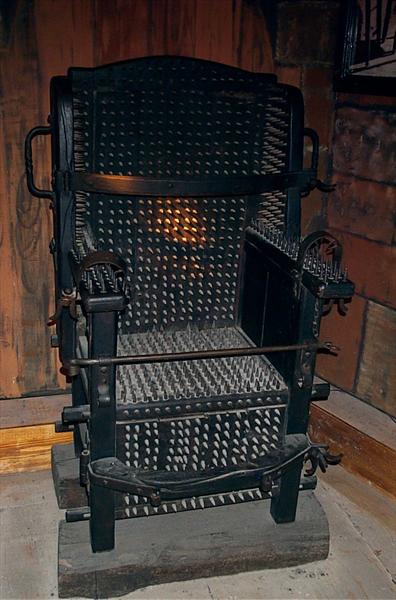
Torture chair1. Demand they kill you. We’ve learned over the years in horror movies that begging for your life doesn’t work (thanks JB). Crying and pleading gets you no where. The killer already knows you are a human being and they want to take your life – thus the reason you are in the situation. They don’t care. Instead, force them to kill you. Show no fear in death, and you may actually survive.

2. Relate to them. No one ever survives because they tell the killer how great their life is or how much they have to live for. In fact, it probably makes your killer want to torture you more because they don’t have the same things. They want you to share the pain. Instead, talk about how much your life sucks. Dig deep, too. Look for things like your mother didn’t love you, sibling rivalry, broken hearts, the things that really scarred you. We all have them. It may be therapeutic for you, too.

3. Call them out. Killers enjoy watching you suffer, so don’t. If they cut off your finger, say you have seven more and give them the bird. If they make tiny incisions, ask if that’s the best they can do or to give you the knife, and you’ll do it. If they hit you, tell them your grandma hits harder. Get inside their head and make them doubt their ability. Either it’ll amplify their own insecurities or they’ll kill you faster – either is better than being tortured.

4. Get personal. You don’t know why they’re a psychopath, so test the waters. Ask questions such as: did your mommy not love you? Did your daddy beat you? Did your true love see you for the crazy psycho you are and bail? Or maybe he/she ran off with your brother, sister, best friend? Ask in the most mocking tone possible and find the reason. Use it against them. Be nasty.

5. Show emotion (but don’t cry). Be angry, degrading, and forceful. Yell and mock them. Mock them A LOT. Call them a drama queen, say things like awe…you poor thing, no one loves you (in your best baby speak). Or when I get out of this chair, I’ll show you how to torture someone. Feel it! Doing this will accomplish one of two things: defeating them or receiving your death wish.

Most of us don’t want to be tortured to death, so the best option is to avoid it. You may get away. If so, grab a manageable weapon and beat or hack them into oblivion. If not, going quickly is a better alternative to suffering for days, maybe even weeks. Keep in mind that you’ll never be the same, and if you do die, you can come back as a vengeful spirit and haunt them into eternity.

A Love Letter to Psych

I received some bad news this week. To most, this may seem silly or dumb, but to me this was momentarily Earth shattering. Wednesday night, Psych announced this would be the last season. Five episodes left, and they’re done.

I cannot express how much this hurt. I have followed a show since day one, and I wasn’t even sure I would like it. It originally followed Monk, which was a hard show to follow. I loved Monk, and Psych looked a little too goofy for me. Oh, was I wrong.

I’ve wanted to review Psych or at least talk about my favorite episodes for awhile, but it never felt right. I hold it so close to my heart that it’s hard to put into words. I never felt that I could express why this show is so awesome or why it means so much to me.

Therefore, I’m writing my love letter to Psych. I can’t write this after the final episode because I will be a bumbling mess, and sometimes you have to ram an issue head on and never look back. I hope you enjoy what the show means to me…

  • It always makes me laugh. Unless you know me well, this isn’t easy. Psych never lets me down, and it always cheers me up. I have rewatched every episode dozens of times, and I laugh every time. There’s no rhyme or reason to it – sometimes it’s a facial expression, sometimes a one-liner, or even a nickname for Gus. The show isn’t afraid to be silly, and it embraces randomness. We need to laugh often, and Psych brings me happiness in the darkest times.
  • It’s my escape. I’m a full-time everything and work a lot. I seldom have free time, much less undisturbed alone time. Psych is that for me. I don’t want to be talked to or interrupted; that’s my hour to lose myself and relax. I binge watch to get lost and go to a place that’s simple and familiar. I can shut out the rest of the world and not think.
  • It speaks to my generation. So few shows aim at my age group, and the ones that do are very nichey. Psych covers everything from horror movies to wrestling to 80s movies to 90s pop culture. It’s almost impossible to get every reference, and you can rewatch them and pick up new ones. My favorites are the tributes to horror movies (Tuesday the 17th, The Devil in the Upstairs Bedroom, Here’s Lassie, etc.), and I’m not ashamed to say I have watched Tuesday the 17th every Tuesday the 17th since the episode aired, no matter what.
  • It’s love. When you truly love something, you should show it. I have a pillow, hoodie, two sets of PJs, slippers, bobble heads, two pineapples, etsy models, all seasons on DVD, and a shirt. Most of those were gifts, but my friends and family know that Psych is a straight path to my heart. I’m mildly obsessed and proud of it.

Psych pillow

With that said, I will miss the show terribly, but I will always cherish it. Psych has made me laugh, cry, and scream for joy. I want to thank the cast and team who made a great show – one that I have looked forward to for the last eight years. I wish the cast and crew all the best, and hope they continue to brighten up the world. It is with a heavy heart that I say goodbye, but as Chaucer said, “There is an end to everything, to good things as well.”

Writer Etiquette: Professional vs. Unprofessional

Once in a job interview I was asked, “What do you think is the most important part of customer service?” My answer: Manners. You’d be amazed how far ‘please’ and ‘thank you’ get you.

Often we talk about writing tones, ideas, styles, and rules, but what about etiquette? A dear friend and co-worker asked me if I had ever posted about my code of conduct, which are the rules I follow when writing for someone, and sometimes, myself.

The idea intrigued me, so here’s my breakdown on the differences between professional and unprofessional writers when given an assignment. These are things I keep in mind every time I’m dealing with anyone in a professional client/employee relationship.

Professional writers:

  • Meet the deadline. Ok, things happen, and everyone knows that, so it’s probably ok to be late every now and then – when things actually happen. A good writer will do their best work and meet the deadline, unless there is a real excuse (death, emergency, crashed computer, etc.).
  • Thank the client for the assignment. When you accept the work, you should thank them for hiring you. It shows you care about receiving work and you don’t just expect it.
  • Go above and beyond (not in word count though). Writers who solve their own problems and deliver a good piece are gold. I exhaust every form of research before I ask for help, and I let them know what I’ve tried, so it saves them time, too. This also applies when receiving feedback and edit requests. We all have to tweak things, and these writers do so quickly and change whatever needed to make the assignment better.
  • Do not procrastinate or over commit. Good writers will decline an assignment before they will accept it and turn it in late. Also, if you start early, you can solve problems quickly.
  • Let someone know there’s a problem. Once the calls are made and the research is done, you may have questions or need someone’s help reaching someone. These writers speak up to make sure they turn in the most accurate work.

Unprofessional writers:

  • Cop an attitude. Keep in mind there are millions of writers out there, and the number keeps growing. You can and probably will be replaced if you are rude in emails or on the phone.
  • Lie/make excuses. Some writers lie and make 100 excuses on why they are late. Editors know if you “have something come up” every assignment – you’re either not on your game or don’t care.
  • Back out at the last minute. This is my biggest pet peeve. I could never accept an assignment and just not do it. It’s inconsiderate, rude, and highly unprofessional.
  • Don’t have initiative or problem-solving skills. You should never ask your client a question that can be answered by a quick search. I believe people can ask stupid questions, and they should expect smart ‘a’ answers in return.
  • Think they’re irreplaceable. Writers who think they are “just awesome” and cannot be replaced entertain me. I’m a writer in my free time, and I know we’re a dime a dozen. A little ego can get you a job; anymore than that can keep you from getting one.

It’s in your best interest to behave admirably and make people want to hire you. We’re all trying to get our stuff out there, therefore acting like a professional may set you apart from others when tone and style just aren’t enough.

Feel free to share your tips and thoughts below!

Slimed: Nick’s History – Part 2

“What’s the point of being safe? Let’s be raw…We hoped our irreverence and the voice we were speaking in would inspire kids.” – Will McRobb, “The smartest guy in the room at Nickelodeon”

And inspire they did. As promised last week, we’re going to dive back into Slimed! An Oral History of Nickelodeon’s Golden Age, a fun book that tells the story of the network’s heyday.

So, why was 80s-90s Nick so great? At the time, it was edgy and different. All of the shows were completely different from one another, and sometimes they had little-to-no budget to make it all work. It wasn’t pretty sets and people; it was real kids doing real things. Kids played and competed in healthy ways, got dirty outside, made fools of themselves – and it was good.

Back then, Nick’s mission was to be “the network for kids”, and they succeeded by raising a generation of people who love cartoons and still have a great sense of humor (well, most of us). It wasn’t politically correct, and it wasn’t afraid to address real-world issues. If you ask anyone who grew up in the 90s if they had a favorite Nick show, they’ll say yes. They’ll probably list a few. In fact, I own all available seasons of Are You Afraid of the Dark, Salute Your Shorts, Hey Dude, and Clarissa Explains It All.

Here are a few more highlights from the book:

  • Characters – I found it interesting that certain actors are very different from the characters they played on the show. For example, Joe O’Conner and Elizabeth Hess, who played Clarissa’s parents. O’Conner played a very laid-back dad, whereas Hess played the more rigid, health-conscience mom. Their interviews showed that O’Conner was kind of uptight, and Hess supported Melissa Joan Heart and her controversial career decisions.
  • Child Actors – We hear so much about child/teen actors cracking from the celebrity-status pressure. I was relieved to read that most of these stars turned out well. Many of them have families and normal lives, and some continued their acting career and stayed in the business. There are a few that seemed to struggle, but that’s life, and considering how big Nick was in the 90s, it’s nice to know stardom didn’t ruin their lives.
  • Doug – I’ve always wondered why Doug moved to Disney, and the book tells the story. The show wasn’t the same; it was almost too cutesy and lost what little edge Doug had (compared to other Nick cartoons). I didn’t continue to watch it, and if I wanted Disney, I’d pop in a movie. Nick knew how to do cartoons.
  • Ren and Stimpy – Did you know the creator was kicked off his own show? I’m not telling the full story – because you’ll want to read the book – but it involved money, censorship issues, and a controversial episode called Man’s Best Friend, which was banned. The episode is now available on DVD, and after doing some digging, I don’t see the big deal. There are way worse things on now in content and quality.

I hope you’ve enjoyed the review and check out the book. It’s worth the read!

I also want to send out a special shout-out to the author Mathew Klickstein who messaged us this week and thanked us for our review. It helped restore my faith that some people are just so cool. Happy reading!

Slimed: Nick’s History – Part 1

Ah… slime. I’ve been watching people get slimed on TV for most of my life. It’s gross, slippery, and green. It’s a staple of the best kid’s cable network, Nickelodeon.

Last year, I read Slimed: An Oral History of Nickelodeon’s Golden Age by Mathew Klickstein. I wasn’t sure what to expect, but I was very excited to get a behind-the-scenes look at my favorite shows and characters I watched while growing up.

I’ve had a few people ask if they’d like it. My answer is this: If you loved Nickelodeon in the 80s and 90s, yes. I don’t want to spoil TOO much because there are some doozies and surprises – some even shocked me. There was a lot of drama, hurt feelings, good times, and of course, slime.

This week I’m focusing on the random things that stuck out, and next week I’ll get into the drama – and there was a lot of drama. But, let’s keep it light and have some fun!

  • Scott Webb was one of the early creator’s of the network, and he’s described as “bleeding orange”. He was diagnosed with an eye disease early on and became legally blind. It didn’t stop him though, and with his team, they did some amazing things. If you look at some of the sets and designs, it’s pretty inspiring that a blind man helped create that.
  • You Can’t Do That on Television was one of the most controversial kids shows ever. I remember my mom banning me from this show, but I watched it at other people’s houses (sorry, mom). But, after reading all about it, I can see why she did. It was dark. It was raw. For example Barth’s Burgers joked about cutting human meat into burgers. There’s no way they would get away with that today!
  • Many of the kids wore their own clothes. If you go back and watch the shows, you can see the ones that were really low budget (You Can’t Do That) and the ones that weren’t (Clarissa). They recruited a lot of kids from Canada and had them as they were. At one point, they gave a kid $100 bucks for clothes and said buy whatever. If you know Nickelodeon today, you see a big difference because everything is modern and trendy.
  • The kid actors were schooled on set. There were several tutors and relatives who helped out. One lady was a hearing-impaired foreign language teacher, and many of the actors talk about how crazy it was because she could read their lips and tell whether they were speaking the language correctly.
  • The crews really cared about the kids. They talk about not using focus groups and talking to the kids instead. They made sure they were safe and educated. And it’s interesting that most of them ended up becoming regular adults with jobs and families; they didn’t get into drugs and partying and blow up the press.
  • The story of slime. I definitely don’t want to ruin this, but I’ll give you a hint. It was an accident, and the original idea started with rancid food. Alan Goodman, a writer and creator, says that the problem with slime today is that “grown ups got a hold of slime and made it pretty.” It wasn’t pretty back in the day.

Be sure to read next week as I talk about characters, the drama behind Doug and Ren and Stimpy, and the mess that went down when it all changed!

Music: More Than One Voice

RavenRantThe Voice. American Idol. The X-Factor. Three shows with one common theme: singing.

As reality shows about singing competitions flood our culture, it made me wonder what happens to all those people who do something equally, if not more so, important: play an instrument. Why don’t they get the same hype and attention?

I read about music programs getting cut. My son and most of our friends don’t play instruments. Music is not just a good voice and “the look”. Music gets inside you, moves you, and there’s very little as sexy as a good bass line or guitar solo. We need to get our kids off the electronic devices and away from popular TV, and show them there’s more to music than a voice. As Paul Adelstein says in Be Cool, “everyone can siiiing.”

Over the last couple of weeks I’ve come across several talented kids – thanks, YouTube – and I’ve been blown away by how well these kids play. And they’re playing some complicated stuff. I’ve seen covers of TOOL, System of a Down, Iron Maiden, and many more. (Yes, I’m sticking with metal because that’s my favorite). These kids put in the dedication and work to cover some great metal songs, all of which were written by well-practiced, adult musicians.

So, take a few minutes and check out these videos. If a random song about a fox can get 300M+ views on YouTube, these kids deserve three-times that. Enjoy and spread the love!