Most Underrated Horror Movie: 1408

To continue this week’s discussion, I picked a movie that viewers either love or hate, 1408. There is no middle ground. People either give it one or seven to eight stars, and here’s why:

Many reviewers complain it’s not scary enough; the story drags; too many jump scares; not enough blood and guts; it’s not The Shining (of course not because it’s not); and the complaints go on…

1408 (2007) starring John Cusack and is based on a Stephen King short story. As many of you know, Hollywood doesn’t always do a great job with King’s stories. Many B- and C-list actors star in them, so the acting is pretty awful sometimes, and the special effects are often cheesy and cheap.

The movie 1408 is different. Although it only scores a metascore of 68/100 and 78% (audience 61%) on Rotten Tomatoes, don’t let that deter you. This is a great horror movie, and yes, it is a horror movie. It classifies as psychological horror and tries to do more than scare the audience.

Why is it underrated?

Those who did not like this movie didn’t get it, or it was simply not their thing. It’s a psychological thriller, which means the scares come from and warp the mind. Demonic creatures do not climb on ceilings and serial killers do not stalk teenagers. The movie, and the room specifically, uses our darkest moments and personal demons against us.

The best things:

I am a little bias because of three things: Samuel L. Jackson, Tony Shalhoub, and Stephen King. I love all three of these gentlemen for various reasons, so any project that includes all of them automatically wins brownie points. Jackson has a classic line and delivers it only like he can, “It’s an evil $%&*ing room.” Shalhoub plays a slimeball agent who gets Cusack into the room despite all odds. I can’t help but love Shalhoub in those roles. Then there’s King – one of my favorite writers.

Secondly, the story is refreshing and different. In 2007, we had a decent variety of horror movies premiere including 30 Days of Night and lots of sequels like Hostel Part II, 28 Weeks Later, and The Hills Have Eyes 2, and the epic Paranormal Activity. Aside from PA, most movies have been done before or rely on the predecessor’s success. This is where 1408 was different. It was a haunted hotel room that took Cusack’s nightmares and turned them into reality. Imagine being locked in a room with the things that haunt you the most. This is that movie. It forces you to imagine yourself in that situation and makes you think.

Reviewers also complain it’s another King movie about a writer. Guess what? King is a writer, and he expresses himself in his stories! King finds hotel rooms creepy, and puts his own fears and discomforts into the story. In fact, there are direct lines from the short story in the movie. And that is why he is the master he is. Any writer who truly pours their heart and fears into something writes more than just words on a page. They write a masterpiece.

What horror movies do you find underrated? Share them in the comments below!

Artist Spotlight: Kevin Litwin

Happy October! To kick the month off, we’re spotlighting Kevin Litwin, author of Crazy Lucky Dead and a number of great short stories. Be sure to check him out and like him on Facebook at Crazy Luck Dead!

RevPub: How long have you been writing, and why do you enjoy writing horror?

I’ve written professionally for 20 years but have only penned my dark “psychological torment” short stories for the past four. I don’t really classify my stories as horror, which to me evokes images of slashing, blood, and guts all over the place. Cutting a character on the face so they’ll see that scar in the mirror for the rest of their life…that’s what gets my interest.

RevPub: Who is your favorite author and why?

I rarely read – wish I did – but my favorite author is Edgar Allan Poe, and a major reason is because I received a book of Poe short stories for Christmas a few years back and loved it. Until then, I hadn’t read a book since The Great Gatsby in 1994. Oh, I recently read Stephen King’s On Writing, which has good tips for any writer. It made me quit adverbs.

RevPub: What is your favorite piece you’ve written and why?

I like several – Murder Day, Thankless, To Son, To Daughter come to mind – but perhaps my favorite is The Adam’s Apple, one of my first efforts. It’s written from the perspective of a cat, even though cats creep me out.

RevPub:If you could be any fictional character, who would it be?

I recently read Mary Shelley’s Frankenstein. Being that big monster would be kinda cool, and I’m 6 foot 5 anyway. Plus, I look good in a suit coat.

RevPub: What scares you?

I watch those Swamp People alligator hunter shows on TV, so I hope to never come across any gator. Snakes I can also do without – maybe all reptiles bother me. Not much else does.

RevPub: What does a writer need in order to write horror? Any advice for those wanting to write in the genre?

I keep saying that I don’t read much, but I do occasionally search the Internet to find bizarre, murder/suspense-related scenarios that occur in this big world. In addition, I used to be a newspaper reporter and covered a criminal/police beat, and I recall several life-in-the-shadows stories from those days.

I just keep my eyes and ears open. For example, I thought of a story called Blind Date while eating lunch outdoors at a Florida restaurant that fronted a canal, and that became the setting for the story. I also give credit to my parents, who always corrected us kids whenever we used incorrect English growing up. That might have led to my English degree, then my interest in writing. Thanks, Sylvester and Patricia.

And for any writer, having a good editor is vital. My editor is actually this interviewer, Raven Petty, who always edits my short stories before they post, helping to turn my proverbial swine into pearls.

Halloween and RevPub: New Merch Available

Hi everyone! As you may know, the RevPub team loves Halloween. The horror movies, costumes, trick-or-treating, ghouls and gothiness — it’s our favorite time of year. To celebrate this year, James created some great new merchandise! There are T-shirts, pillows, stickers, posters, phone cases and more, so be sure to them check out by clicking on the images below or visiting our Red Bubble site.

Red Bubble is offering 15% off on hoodies with the discount code HOODIE15, until Monday, Sept. 30 at midnight. Here’s one you may want to checkout:
revenant publications hoodie


Also, coming in October, we’re reviewing the best and worst horror movies (our picks), so don’t miss out. Great things are coming, and here’s to a happy October!

fig,white,mens,ffffff

Slime pillow


slim ipad casezombie slime


New Technology? I’m Better Off Without It

RavenRant
To Whom It May Concern,

I proudly admit that I activated my first smartphone about two months ago. I also admit I own CDs and DVDs and buy them new when something good comes out. Sure, I have an mp3 player and stream from Amazon, but at the end of the day, I pop in a CD to relax or drive. I receive A LOT of grief about my practices, and people try to argue why their way is better. Well, this week I’m setting the record straight: I’m actually better off than they are. Here’s why:

The smartphone: Ok, they’re not that smart. The text features auto-fill incorrectly so often, I turned mine off. The batteries do not last a full day unless you buy an extended one; they constantly work to connect to wireless or 3 or 4G; and you have to buy separate heavy-duty cases in case you drop it. And if you do, you usually have to replace it. They are also harder to use because you navigate to what you need, whereas with a flip phone, you just flipped it open and away you go!

My flip phones were awesome. Nine-key texting that auto-filled (usually correct). It seems I’m always at a computer, so why do I need to be connected all the time? And when I’m not working, I’m not connected. It’s a well-deserved break, and I’m good with it. No one should be connected all the time. When I dropped my flip phone, I dusted it off and continued using it. No cracked screens, no replacing, and they were more affordable. How much money have you spent on phones the last two years? I’ve spent $30.

Digital music: The difference is compression (thanks, James). The files are compressed (made smaller) so they can fit on the device. Guess what? The sound quality suffers. Most probably don’t realize it, but there is quite a difference in a CD in the car and plugging in your iPhone to listen to music. There’s real bass and clarity. Also, sites go down, devices break and get lost, and believe it or not, the Internet could one day not be there. I’ll still have my CDs though, so I don’t depend on a cloud network or connection for music. Being able to share music so easily is definitely awesome, but we should still buy CDs.

Streaming videos/movies: Same concept. If the connection is slow or there’s bad weather, it spins and buffers and tries really hard to work. But sometimes it doesn’t. With a DVD, you don’t have to worry about it. You place it in the device, and it works – assuming you’ve not abused it, of course. What if Amazon or Netflix takes a movie or show off? You don’t get to watch it and may have to buy it anyway. When you buy a DVD, it’s forever yours.

E-readers and tablets: I love the idea of these, but I prefer hard-copy books for one reason: They are easier on my eyes. I read an average of 30 hours a week, and eye doctors have proven that screens are terrible on your eyes, and cause eye strain, neck pain and headaches. Reading a hard-copy doesn’t cause that damage. You can read in any position and don’t have to worry about glare from the screen or sun. There’s no charging a book, and it won’t break. Once you’re done, you can pass it on or donate it – everyone wins! You don’t have to spend money on special glasses or protectors, and I read faster with hard copies. I bet screens actually slow you down.

To all of you who argue with me about my ways, there’s my argument. I don’t have everything at my fingertips, but walking into the other room or across it is good for me. I don’t lay around or sit for too long, and I enjoy more peace of mind than most I know. Given the choice between connectivity and peace, the latter will win every time.
Feel free to comment below, and I look forward to hearing from everyone!

10 Script Writing Tips

Earlier this year, the RevPub team volunteered to read scripts for a local film festival’s screenwriting competition. As we approach our second year as readers, I wanted to share some things I learned about screenwriting while reading the good, the bad, and the ugly.

1. Keep it simple. I cannot stress this enough. Don’t overcrowd your story with too many characters, locations, or plots. Think about some of the best movies and what makes them the best. Most good movies focus on one or two main characters and a handful of minor characters, and their story.

2. Don’t describe the characters in great detail. This is what the crew is for. The casting director will pick who plays what, the costume designer will dress them, the actors will bring the characters to life. Only mention physical appearance if it’s essential to the story.

3. Select a central location and work around that area. Scripts that bounce from place to place drive me nuts. It’s hard to remember where the characters are and why they are there. Pick a central location, and use the area around it, but try to stay central. For example, if it’s set in a school, keep it at the school – not the school and all the kids’ homes.

4. Start with a bang. Scripts that set the scene for paragraphs on end will bore the reader. Begin the script with action or something interesting that immediately grabs the reader. Set design will create a scene, so you don’t have to ramble about what it looks like. If it’s a forest, for example, just say a forest. We know what a forest looks like.

5. No stupid dialogue. I cannot tell you how many times I groaned reading dialogue. Dialogue should move the story along, not slow it down. The things said should be important for character and plot development, and each character should have their own voice. Keep it conversational, but make sure what they say is important to the plot.

6. Remember everything matters. I once had a professor say everything in a movie had a purpose. As I’ve watched movies since then, I realized he was right. Every prop has a purpose. Every character needs a reason to be there. Every word should serve a purpose and not just fill space.

7. Avoid adjectives and adverbs. One of the worst lines I read was “[Katie] flings her dainty wrists haughtily.” Enough said.

8. Balance dialogue and narrative. The best writers used both and not equally. It depends on the story, and both are important. Make sure you aren’t rambling on or slowing down the story with either.

9. Have people read it. Give it to your friends and family before finalizing it. Have them read the first 20 or 30 pages, and get their feedback. If you’re on the right track at 20 pages, the rest should be fine. Also, have a proofreader read it to ensure correct spelling and grammar – these errors can distract the reader and show the writer doesn’t care enough to fix the little things, so they probably won’t accept feedback well.

10. Have fun! Have fun writing, and let your story come to life.

You’re Next and the Family Reunion

Most of us have been there. You’re about to meet your significant other’s family for the first time – the parent(s), sibling(s), and maybe even their significant others. It can be pretty stressful because you want them to like you and feel like you fit in. After all, once you meet that special someone, you become part of their family.

What if you met the worst family ever? In 2011, a gem of a horror movie came out entitled You’re Next. The premise is pretty simple: An estranged family reunites to only serve as a hunt for three paid killers. I won’t go into the little twists and turns, but fair warning, this post contains spoilers!

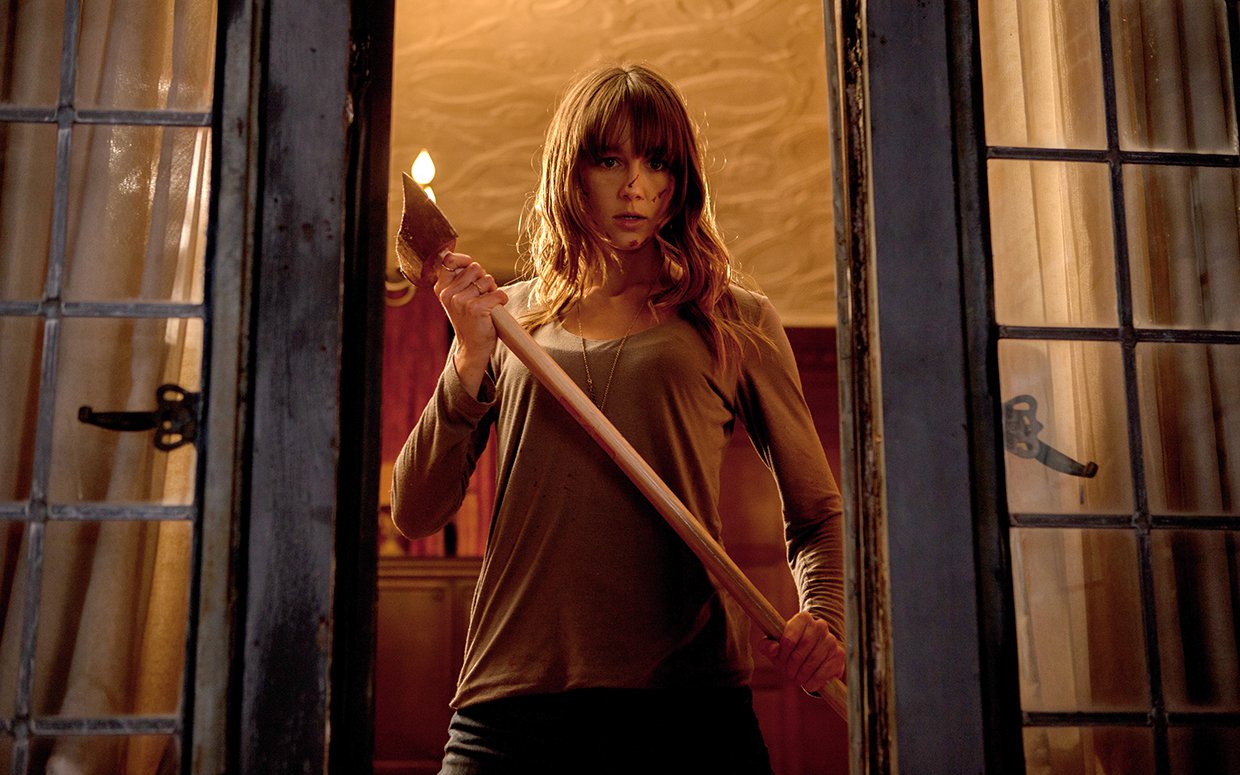
I love this movie for two reasons: the family dynamics and the main character, Erin (Sharni Vinson), who reminds me of what Katniss Everdeen would act like at 28 years old in the same situation.

The movie’s trailer misleads the audience to think this is a home-invasion movie, and I once heard it was supposed to resemble The Strangers. Not even close. If you like traditional slasher movies, you’ll enjoy this gorefest. It’s not scary in the least. You’re Next is a slasher movie with multiple killers, one with good reason, and she’s creative.

Here’s the family breakdown:

2 parents + 3 sons + 1 daughter + 3 significant others

  • Parents have a distant, practically loveless relationship.
  • The siblings hate each other.
  • The daughter is the princess, the sons are jealous of each other and tolerate her.
  • Everyone argues about stupid stuff and judge one another, even though they all have problems and baggage.
  • The siblings never say a single nice thing to one another.
  • What’s better, this family is normal by today’s standards. They represent most families in present-day America (aka not perfect).
Photo by soundofmusic.hubpages.com

And I wanted them all to die. Aside from Erin, the entire cast deserved to die due to either stupidity or sheer a-holeness. They are horrible people in the ways they treat each other, especially the two brothers who plan the “let’s kill our parents and siblings to inherit all the money” idea.

Thankfully, Erin survives by taking the “bad guys” out. She’s smart and sweet, but doesn’t mess around. She takes control of the situation, and truly wants everyone to survive – until she finds out the truth. Then she doesn’t care; she only wants to survive, and she effs them up. She uses what’s available and gets out alive. She is the classic final girl.

you're next
Photo from parade.condenast.com

Before attending a family reunion, here are the takeaways:

  • Ask your significant other if they’ve been raised in a survival camp.
  • Don’t invite them if a) they have and b) your family hates one another.
  • If you hate your family that much, just stay away. It’s better for everyone.
  • If you must gather, then don’t stay in a big house with lots of windows and doors. That’s what hotels are for!