Writing for Web: Style

Beethoven had style. He was one of the most famous composers and pianists in the world, and I quote a dear friend who said Beethoven was, “the heavy metal of classical music.” This week I attended Beethoven’s Ninth Symphony at the Schermerhorn Symphony Center and was inspired to tie in the experience into this week’s topic.

Style is different from grammar. It’s not about comma rules and parts of speech, it’s about consistency and professionalism. Felder advises Web writers to create a style guide or use a well-known one. Which style you use depends on your audience, but I recommend the following:

The Associated Press Stylebook and Briefing on Media Law (for articles and reviews)

The Chicago Manual of Style (for articles and reviews)

MLA Handbook for Writers of Research Papers (for scholarly writing or research-based projects)

The Elements of Style (creative writing or any of the writing types above)

This may seem like a hefty list of sources, but pick one and stick with it. However, proofreaders should be fluent in all of the above to make themselves more marketable and knowledgeable.

So why is style important?

Imagine sitting in the symphony hall. The musicians and chorus members are wearing whatever they could find. Some are in sweatpants, others in gowns, some are wearing bright neon shorts, and others have flashy jewelry. The audience is so distracted by the performers’ attire they are not able to focus on or appreciate the music.

This is what readers experience when reading content with inconsistent style. In one sentence you may see website, in another Web site, somewhere else 7, then seven. If you are inconsistent, your readers will think you are indecisive and unprofessional. Where there are inconsistencies, there is chaos.

Now imagine the symphony hall where the female musicians are in white tops and black bottoms, and the men are in tuxedos. The chorus above them is dressed all in black, and everyone is performing in perfect harmony. You not only have organic flow, but the main focus is the music not the wardrobe.

Most companies need and have a style guide to keep readers focused on the content and product. This also shows you care about the content, therefore, you care about your audience’s ability to understand it.

Another topic Felder discusses is personal style. This is important because you want your readers to connect with you. So, before you start writing, answer these questions first:

1. Will you use text lingo? Will everyone know what the emoticons and acronyms mean?

2. Are clichés okay? What age group are you targeting? Will they understand the meaning if you use them?

3. Is profanity acceptable? Many writers agree this is only okay in creative writing and projects.

4. How will you address your audience? Will you write to them or about them? For example: one must write well in order to succeed OR you must write well in order to succeed.

Once you address the questions and start to create a style guide, you are ready for the world to see your personal style. It doesn’t matter how cool, trendy, or professional you are; if your readers have to work to understand you, they won’t come back. Remember to keep it simple, and make your content the best it can be. We can’t all be Beethoven, but we can show our audiences we care what they think.
Writing for Web: Writing Succinctly?

For the first time since reviewing Writing for Web, I disagree with much of what Felder discusses in chapter 7. Reviews and discussions wouldn’t be as interesting if we agreed all the time 🙂

In the chapter Writing Succinctly, Felder explains her tips for achieving tight, easy-to-read content that your audience will enjoy. A few of her tips suck the fun out of using language, and if you follow these tips 100 percent, your writing will read like a book report.

I assigned a win or fail rating to each tip as you go through these. They are all important, but use your common sense and own style. That’s what’s most important.

Tip 1: Stay Focused

Win – Read your content and ask yourself, “What does that sentence mean?” You will feel the flow as well to ensure you’re not rambling.

Tip 2: Be Positive

Fail – If we were positive all the time, the world would be boring. Some of the best content, movies, art, etc. are not positive and provoke debate. Sometimes you have to be negative. Where would the Internet be today if people were always positive?

Tip 3: Trust Your Reader

Both – Don’t over explain something or break down every sentence. Although, in technical writing you have to. You know your audience, so trust your instincts.

Tip 4: Choose Anglo-Saxon Words

Fail – Felder recommends using simple, one syllable words over French or Latin/Greek counterparts. For example you would use ‘end’ instead of ‘finish’ or ‘conclude’. This takes the fun out of the language, and if your writing is clear and entertaining, it doesn’t matter what words you use. If you fine-tune your work for meaning and intent, your audience will understand and appreciate it.

Tip 5: Eliminate Excess Words

Win – Take out unnecessary words and find shortened words. Read your writing aloud, and you will hear what you can cut/change. Examples are: that, got, has gotten, all of a sudden.

Tip 6: Keep Verbs Alive, Cut Adjectives and Adverbs

Win – Avoid ‘to be’ verbs. Review the post for Chapter 2 if needed, and remember that descriptive words are not always needed, nor do they make your writing better.

Tip 7: Don’t Use Arrogant and Snooty Words

Fail – Some words Felder uses as examples are: indeed, certainly, of course, and exactly. These are not snooty words, and writers who use these are not trying to be better than their audience. Keeping these words may not tighten your writing, but if you lose your voice or personality, what’s the point? Just be yourself.

Tip 8: Avoid Happy Talk and Sales Pitches

Win – Don’t be over-the-top nice or try to sell your readers. If you follow tip 3, you should trust your readers to see through you and think you are fake. People want to enjoy reading, not feel like you are trying to buy or patronize them.

Tallied up, the score is 50/50, and I will continue to use ‘indeed’ and ‘question’ if those words fit the bill. Don’t forget, you are the final judge.

Writing for Web: Interactive Stories

I was excited this week when I discovered my post would be about links.

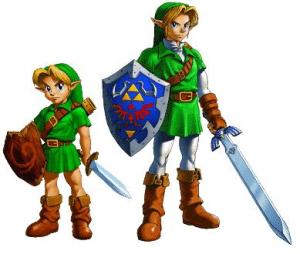
A picture of young Link and adult Link from Zelda Ocarina of Time
Photo by: darklink1279

Not these Links, but these links:

AVGN Theme on The Legend of Zelda: Ocarina of Time

Links help make content more interactive and can often save you time by explaining something for you. The chapter is entitled Writing Nonlinear, Interactive Stories, and the focus is on managing content and link strategy.

Due to my recent work projects, I already knew a little about links and was surprised Felder did not explain how to add links to drive traffic on your site. The basics are all there, but I am going to add a few tips that will help with search engine optimization and increasing traffic on your site. That’s everyone’s end game, right?

Do:

  • Link to relevant information. Make sure what you are linking to fits in your article or story.
  • Write meaningful text for your links. This is especially important in SEO.
  • Use keywords in the link that are in your article or story headlines. This helps search engines find your content.
  • Try to keep users on your page instead of sending them elsewhere.
  • Open links in new windows. You want your readers to come back!
  • Keep the link text brief.
  • Test links periodically to ensure they are working and accurate.

Don’t:

  • Send your readers off site unless you need to, or bounce them all over the Internet.
  • Link long phrases or sentences.
  • Link a link. Be sure to write out what it is.
  • Explain your links. Good Web writing will allow you to work them into the copy.
  • Add shovelware. This is linking content from another medium such as a print product without customizing it for the Web.
  • Overdo it. Too many links will annoy your reader.
  • Make it a page-turner. A page-turner refers to a user having to scroll a lot or go to multiple pages for information.

Feel free to browse our Inspiration and Resources page for an example of how to use links in your copy. Most importantly, keep your reader in mind at all times, and ask yourself: Would you want to read the content on your site?

Writing for Web – Adding Sound

Have you ever visited a site and music immediately began playing? I don’t know how you feel when that happens, but I hate it. I will go back and visit another site, or quickly grab the info I need and bail.

I was afraid this chapter would be dry with technical language or encourage the idea of using sound upon entering your site. However, I found that the same rule applies with sound as it does with images and movement: sound needs to have a purpose and move the story along.

Felder does a good job of explaining the process for adding sound — from idea creation to recording tips. She even explains how to create a pop filter to get rid of those nasty pops and cracks from microphones to use during podcasts.

This week instead of summarizing the chapter, I want to share a Korean ghost story. This story correctly incorporates images, movements, and sound.

The comic is imaginative, beautiful, and creepy. I have seen it several times and am still uneasy every time I read it. It is one of my favorite stories I have read recently, and you will notice everything I have discussed in the last few weeks applies. This is a great example of what to do and how to do it well.

This story is a webtoon, which is an animated comic strip that is available online. I warn you, this webtoon is not for the faint of heart. If you do not like scary things or are not an adult, I would proceed with caution. If you don’t believe me, check out their warning before you read it. I hope you enjoy it as much as I do!

Bongcheon-Dong Ghost (by Horang)

Writing for Web – Adding Motion and Video

Until this post, I had never created a Power Point presentation.

When I was in college, Power Point was just making its way to projector screens everywhere, and I preferred a more hands-on approach. I only gave a few presentations, and I liked to use music and handouts so people didn’t have to take notes. There were only a few students who used a Power Point, and I was amazed at their project.

Chapter 4 discusses adding motion to your posts in the forms of video, slideshows, animation, motion graphics and software simulation. This chapter was easy to understand and read through without being overly technical or making the reader have too many “Oh…” moments. There is a lot of important information in this chapter, and Felder recommends lots of tips for effectively adding motion to your writing.

Here are the important tips to remember about motion in your posts:

  • Know what you want to say. Write a script, make a story board, or simply brain storm ideas on post its or napkins.
  • Have a beginning, middle, and end.
  • Keep it short and simple.
  • Think of your audience. What do they want to see? How can you make it interesting? Is it fun?
  • Ask for feedback, and take constructive criticism while remembering you make the final decision.

With these items in mind, I created a quick Power Point slideshow of the people behind Revenant Publications. I hope you enjoy my first attempt at a Power Point, and feel free to leave comments in the reply section below!

Revenant Publications Power Point

Writing for Web: Working with Images

I love pictures. You can capture some of the most beautiful moments and powerful feelings through a camera lens. In Chapter 4, Felder explains the dos and don’ts of using images in your Web writing and applies the same rules as writing. Images need clarity, meaning, and spark.

Before adding images to your writing ask yourself these questions to ensure you are making the right choice:

  1. What does the image to your reader?
  2. Is the message clear, or does it have mixed meaning?
  3. What is the tone and and mood of the image? How does it make you feel?
  4. Is the image simple, or are there too many things happening or in the background?
  5. Will this image alienate anyone in your audience?

Running through this checklist will help you pick the best images for your writing, whether they are pictures, graphs, clip art, illustrations, etc. The most interesting tip I learned was images with embedded text (text on the image) do not translate into ALT text. The ALT text is actually disabled, which means people with poor Internet connections or blind Internet users will not be able to hear or receive the image in any way.

This week’s assignment is to tell a story using one image and words. Once you read mine, try writing your own using just one image and see how creative you can be. It’s a good warm up if you’re into creative writing.

True Independence

I sat down in the seat and melted into the warm black leather. The salesman started the engine, and my heart raced at the rev and slight vibration of the engine. We backed out of the parking lot and headed down the street.

He told me how well it drove, how nicely it handled, and how tight the steering was. All I thought was I cannot wait to learn to drive this car. This perfect, black two-seater that I promised myself after I graduated from college. There was one problem: it was a six-speed manual and I didn’t know how to drive one.

Later that night, I tossed and turned in bed. I barely made enough to pay my regular bills, but I wanted that sports car. I wanted something that was mine, something I could pay for and show off. It wasn’t practical, but the desire to own it was an itch I could not scratch.

The next day, a friend went with me to sign the papers. I decided I could afford it and would find a way to make it work even though I had a family. When the papers were signed, I hopped in my Cavalier while my friend drove my new car, and I followed behind it to my house.

The black Nissan 350Z purchased after college graduation.
The 350Z one year after signing the papers. I love the way the sun glistened on the paint that day.

After two long weeks, and a lot of frustration, I learned to drive the car. Over the next year, I became more confident and made slight modifications to it. It was the most expensive thing I had ever bought myself, and it was the first thing that was truly mine. I was the only one on the title, and I was the only one who paid the note.

Now, five years later, it’s mine. It is my baby batmobile, my Z baby, and still a symbol of my independence as a hard working, strong woman. I am judged because it isn’t a family car, and I still do not care. I will drive this 350Z, revving and launching whenever I can, until it cannot go anymore.

This is not just a car. It’s a promise to myself that I can do anything I set my mind to; I have and will continue to succeed.