Dawn of the Dead: Original Vs. Remake

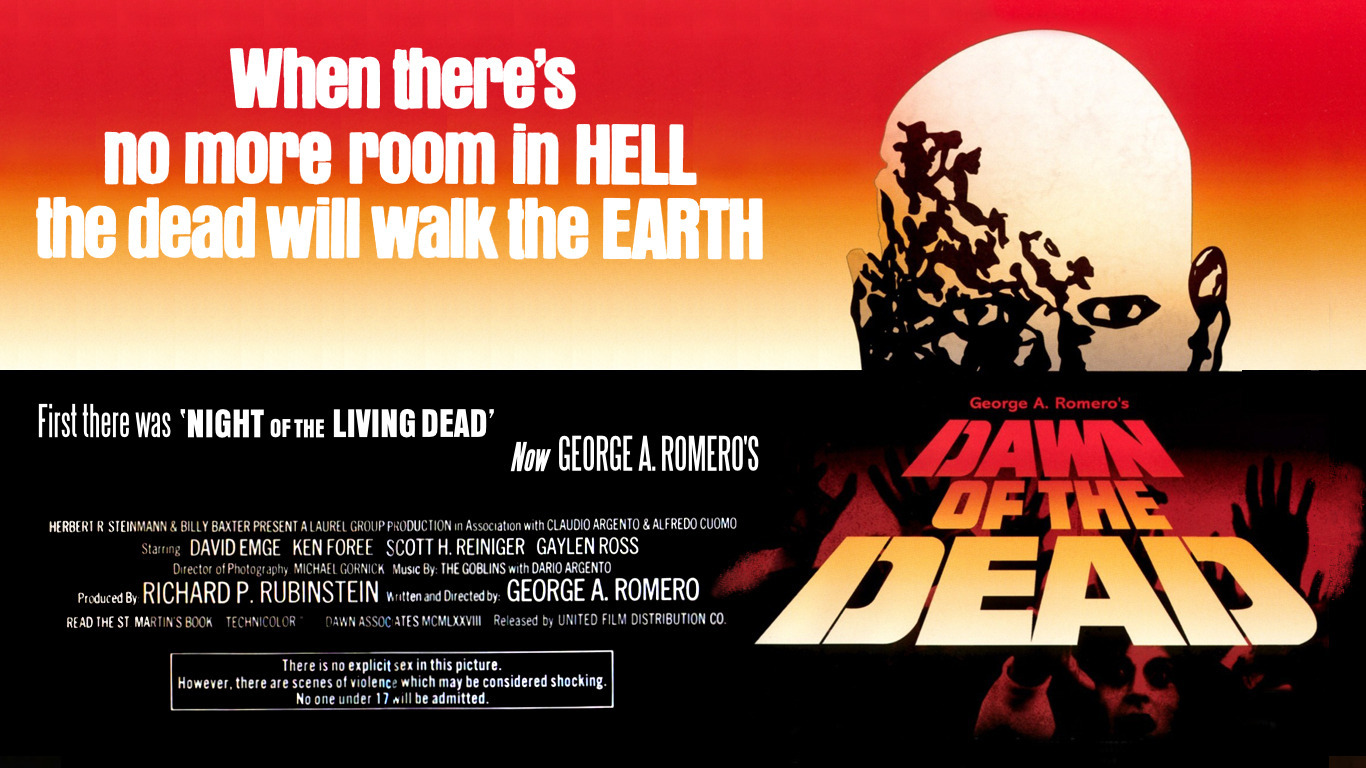
Few horror movies have been as influential on pop culture as George Romero’s Dead films. Though he started with the small, but revolutionary 1968 film Night of the Living Dead it was his follow up Dawn of the Dead in 1978 that made a greater impact on the future of zombie entertainment. These movies established the undead flesh eating zombie on film (then mostly referred to as “ghouls” in the culture) and interpersonal conflict between the human characters we follow during the story. It was Dawn however that created the idea of urban/suburban survivors scrounging for supplies and trying to subsist in a zombie-ravaged post-apocalypse. Over the years Romero’s first three zombie films developed a rabid cult following and the first film was the subject of a near perfect remake (directed by special effects guru Tom Savini) in 1990.

In 2004 a remake of Dawn of the Dead was released, directed by former commercial director Zach Snyder in his first feature film. Immediately the cult based around Romero’s original work rebelled, but as audiences, even die hard horror audiences, began to see the film it became clear this wasn’t just a cash-grab remake but, like Savini’s, one very much in the spirit of the original film.

Dawn of the Dead (1978)

The original Dawn of the Dead took what worked from the tight and focused Night of the Living Dead and expanded it into a broader world. It trades the isolated farm house for a suburban shopping mall, though it maintains the idea of a small group banding together. There is a lot that works and some that doesn’t, but it still makes for an entertaining film.

The Good:

  • Characters: With such a small cast you get to know and care about the main group of characters. Gaylen Ross and David Emge as the news broadcast couple are effective as neophytes who want to survive but don’t start out with everything it takes. Scott Reiniger is great as a SWAT member who actually cares about what he’s doing but realizes the cause is lost, and Ken Foree steals the show as Peter, another SWAT member who ends up as the defacto leader thanks to his cool head, forceful personality, and common sense. Even when annoying you genuinely like them and want them to survive the horror.
  • Location: The suburbs shopping mall and how they use it is remarkably effective and part of what ended up being the most influential. It’s the first time we’ve seen regular people scavenging for survival the ruins of the old world.
  • Effects: The zombie and gore effects are terrific. Some of the more gruesome zombies look truly gruesome. Given the age of the film, a lot of the practical effect really do hold up and as they are practical effects make a big impact on screen.

The Bad:

  • Tangents: The film lacks the focused intensity of Night, which behaved as a short wild ride. It meanders from SWAT raids to redneck hunts. Sometimes the scenes feel unnecessary and given the length of the film you wonder how many of the extraneous scenes and montages need to be in there as they can kind of take you out of it.
  • The Stupid: There is a LOT of stupid in this movie. From characters that behave in incredibly dumb ways to enhance artificial tension (by not being able to get their keys or forgetting a bag) to entire sequences that really take away from the mood. While zombie movies tend to agree other people can be more dangerous than zombies…rampaging bikers riding through the mall hitting zombies with pies is a tonal left turn. And to me is a massive black mark on an otherwise great narrative arc.

Dawn of the Dead (2004)

Surprisingly the remake actually follows the intro of the original Night of the Living Dead more than Dawn. A 10 minute build to set up the world and events is followed by a plot-punch in the face as the zombies take over. It takes what the original film did, stripped some of the goofier stuff, and added a bit of modernization to make a great progenitor for modern zombie horror.

The Good:

  • Characters: AGAIN the characters are the strongest part of the film. The larger cast starts with principle character Ana played by Sara Polley, and later adds Ving Rhames, Mekhi Pfeiffer, Jake Weber, Lindy Booth, and even Matt Frewer in supporting roles. The cast is bigger but each character feels as though they have a purpose and you care about their outcomes, whether you want for them to make it or to be brutally shotgunned. My favorite is Michael Kelly as CJ. You initially hate his character but as the story progresses he ends up being one of the best. A testament to the writing and performance. Ken Foree does a cameo saying his famous quote from the original as does Tom Savini, appearing as a sheriff. And he is one cool mofo.

  • Sound Design: There is an old saying that sound design is something that you don’t notice unless it goes wrong. The original made some odd sound and music queues, from western-style bullet ricochets to silly music stings. The remake is spot on in sound design and the ambiance is incredible because of it. The musical design is absolutely terrific, the Johnny Cash intro, the Richard Cheese montage, and the Jim Carroll outro are stand outs. Zombie cries are eerie and combat impact is brutal. Notably the zombie baby is pretty freaky…
  • Narrative: Written by James Gunn now of, Guardians of the Galaxy fame, from Romero’s script, the story is, if anything, stronger than the original. We grow with characters and hope for their success. As their various trials and tribulations unfold we invest wholly and are gutted with each death. It’s hard to think of a modern zombie movie with so many effective individual story subplots, arcs, and resolutions. It might be missing some of the anti-consumerism of the original, but Romero’s handling of that subject was a bit ham-fisted to me anyway.

The Bad:

  • Modern Zombies: I’m not a fan of modern zombies and this movie is one of the first that made the undead zombie stronger and faster than the living. Biologically alone this makes no sense at all and fast zombies just feel added to create a better sense of danger. I think the sheer number and ferocity of humans who want to eat you is bad enough without making them move like extras in a kung fu film.
  • The Downer Ending: One of the best aspects of the original film is it has a positive ending. While things aren’t looking great overall, characters show resolve and conclude this chapter of their narrative with a little positivity.  The character we all invested in the most comes through in the end. Modern horror likes to let the bad guys win or end on a note in minor key and Dawn 2004 does this. While the ending is ambiguous you do discover the plan you’ve invested in is in at least some way a failure. It is a decent ending but I’d have liked to see something good for the characters we’ve been built up to love.

The Verdict:

Some thought has to be given to the impact of the original but enjoying a movie is a visceral feeling and I actually prefer the remake. While both movies have great benefits I feel Romero’s relatively guerrilla style made for a film that is less well made and the story didn’t quite have the effective edge of the remake. A lot of this hinges on the climax, as we I feel the remake benefited from having the zombies as the primary cause of the climax rather than a bunch of roving Hell’s Angels. As I said in my Nightmare post a remake can work if you give it to a good writer/director. Zach Snyder, unlike a lot of directors who came from TV and music videos (I’m looking at you Samuel Bayer) is very good at telling a story visually (if he can be a bit cliché and overdone) and Gunn delivered an excellent story as he has proved he is capable of doing since. Both make for good viewing, if you want to see where modern zombie horror originated (millennials who think Zombie-Personal Drama started with The Walking Dead are about to learn something) the original Dawn of the Dead will show you that and give you a great story. For an exciting film with a better developed sense of what works and what doesn’t the remake wins for me.
Black Christmas: Original vs. Remake

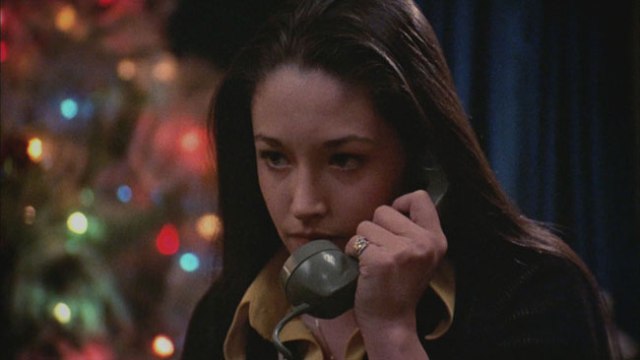
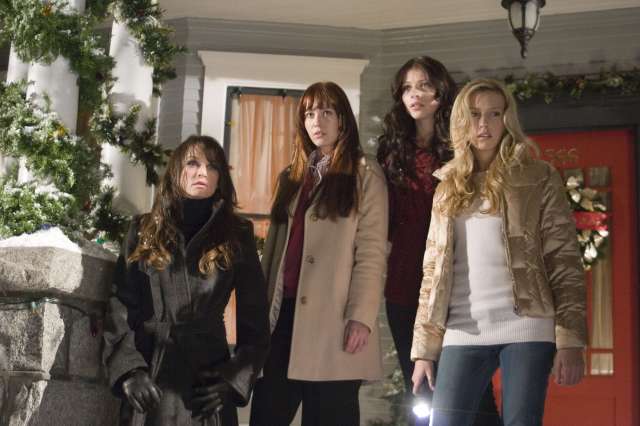
Having seen the Black Christmas remake several times, I had to review this one. In my experience, many young people have no idea these movies exist, and it has been lost in the slasher cannon. I also realize many longtime horror fans cherish Black Christmas, as it predates most slasher movies and is often credited as one of the first. For those who don’t know, the story is based on actual events and pays homage to the babysitter/man upstairs urban legend. You will hear, “the call is coming from inside the house,” which is pretty cool.

I have some mixed feelings about both movies. Essentially, the plot and characters are the same, and as you assume, it takes place during Christmas break. When you watch both, it’s easy to say, “Okay, that’s supposed to be so-and-so,” without much effort.

The remake is not well received, but that’s unfair. Black Christmas 2006 adjusted the original in a way audiences could appreciate and understand. For that reason alone, I feel it’s a near-perfect remake. It respects and enhances the original. If they kept the movie as is, modern audiences would have still hated it because the expected standard of good film-making has decreased dramatically over the last 40 years.

The Original Black Christmas

Black Christmas 1974
Photo: crypticrock.com

One of my favorite things about Black Christmas 1974 is the camera work. The movie is extremely well shot, and you see throwbacks to greats like Hitchcock. The audience also experiences the killer’s POV, as you walk through the house or hide in a closest as the killer. You may recognize this style in the original Halloween.

The character development is some of the best I’ve ever seen. One of the first differences I noticed was the original only uses a few main girls in the house, whereas the remake uses several – think three verses seven. Using fewer characters adds a more personal feel, and you get to know them in-depth. I did not love any one character, and at times, I felt like I was watching the Real World. Yes, you want the audience to care about the characters, especially when they are in danger, but the personal stories get a little tiring and slow down the action too much.

However, the characters are done extremely well and have distinctive stories and roles. The house-mother who keeps bottles of liquor around the house and the drunk sorority girl (Margot Kidder) who cusses a lot and discusses watching turtles and zebras mate add a fun element. There is a final girl (Olivia Hussey), but she is not quite the cutthroat fighter-type we have all come to love. Remember, this movie was released before there was such a thing as a final girl. The first half of the movie also has some very funny lines, props and scenes, and counters the drama well.

It does lack some things though. The killer has no real identity, which is a little frustrating because it feels random for no good reason. It completely lacks a back story, and many times when the killer calls, what he says is inaudible. The things you do hear don’t add anything special, and much of the profanity seems unnecessary. The original also takes you on a roller coaster with twists and turns, but it doesn’t wrap it all up well.

The Remake of Black Christmas

Black Christmas 2007
Photo: superiorpics.com

Black Christmas 2006 did something unique: it gave a much-needed back story. Having watched these out of order, I did not realize how much back story they added, but it works. The back story makes the killer more dynamic and interesting, and you can understand his motivation. I may receive some backlash for this, but if I had watched these for the first time in order, I would have been really confused as to “why?” after the original. You have to watch both to get a full well-rounded story.

The remake also completes the story. Spoiler: the final girl wins. The original ends like so many modern horror movies, leaving itself open to a sequel. The remake does not do this. There is a very clear plot arc, and it fills in the holes from the original.

New Black Christmas does go dark fast. The unnecessary shock factor ranks No. 1 as my least favorite thing about modern horror because filmmakers feel that if they slack off on a good story or, in this case, character development, they can add a killer making Christmas cookies out of his mother’s skin, and it works just as well. Wrong. Sure, I expected the remake to have more blood and gore, but some aspects make it seem like they were trying too hard. We don’t need to see him eat eyeballs or his mother because it adds nothing to the movie.

The verdict: Which is a better-made movie? The original. Which do I enjoy more? The remake.

We look forward to hearing from you if you’ve seen these, and if you haven’t, you should add them to your Halloween watchlist. Although, I watch them at Christmas time too!

A Nightmare on Elm Street: Original vs. Remake

In 1984 horror maestro Wes Craven created the characters, world, and lore of A Nightmare on Elm Street. The original masterpiece introduced Robert Englund as the iconic monster Freddy Krueger, spawned seven franchise sequels, turned New Line Cinema into a profitable new industry player, and launched the mainstream careers of its director and several cast members.

In 2010 a remake was announced, which surprised few as nearly every horror franchise was in the process of being remade. It attempted to establish new lore, Jackie Earle Hailey took over as Krueger, and it endeavored to re-launch the franchise as “true horror” rather than the comedy-horror many of the original series sequels tended toward.

Having main-lined the entire franchise I have to declare the remake to be an abject failure in its execution that, despite some very strong performances from its new cast, embodies every ounce of flawed thinking in Hollywood’s remake culture. To compare them I’ve tried to break down some broad concepts to analyze what works when it works and what completely fails.

Premise:

Wes Craven’s premise is simple enough to be summed up quickly: Teenagers from the Elm Street neighborhood in the town of Springwood are having nightmares that turn out to be fatal. The cause is determined to be a monster named Freddy Krueger, a child killer in real life who was burned alive by angry parents and now his evil continues to be visited on their children.

The remake premise is similar but added elements that strangely made it less effective. In the remake kids are having bad dreams that also turn out to be fatal. The cause here is determined to be that they all went to the same pre-school where there was a gardener, Freddy Krueger, who seemed to be good to the kids but several children claimed he was molesting them. The parents track him down based on the kids’ accusations and burn him alive in a factory. After he dying Freddy hunts down the kids from the pre-school who accused him and kills them in their dreams.

What makes Craven’s premise so effective while the remake falls short? Craven made some conscious choices on how he built his story. The town of Springwood was designed to be “pure Americana” essentially any suburban town USA. Elm Street was chosen as a ubiquitous street name (as Freddy says in Freddy’s Dead “every town has an Elm Street”). It’s remarkably effective because it makes the audience of mostly teens feel like it could be their street, their town, and any one of them. Furthermore Craven chose dreams as the killing ground because everyone eventually falls asleep. As much as you fight it you will sleep, you will dream, when you dream he’ll get you. Craven’s entire premise was universal and broad. It could be any of us.

The remake surprisingly narrowed its field of victims. It isn’t generic street and town USA, it’s a specific school and within that school a specific population. We see a photograph of the kids who are being killed in their dreams displaying who the victims are and will be. Since we all didn’t go to Badham Pre-School while Fred Krueger was there, this means the audience’s “fear” is based wholly on their attachment to the potential victims and they feel no subconscious threat to themselves. It puts a lot of pressure on the narrative’s characters…which is what is covered next.

Characters:

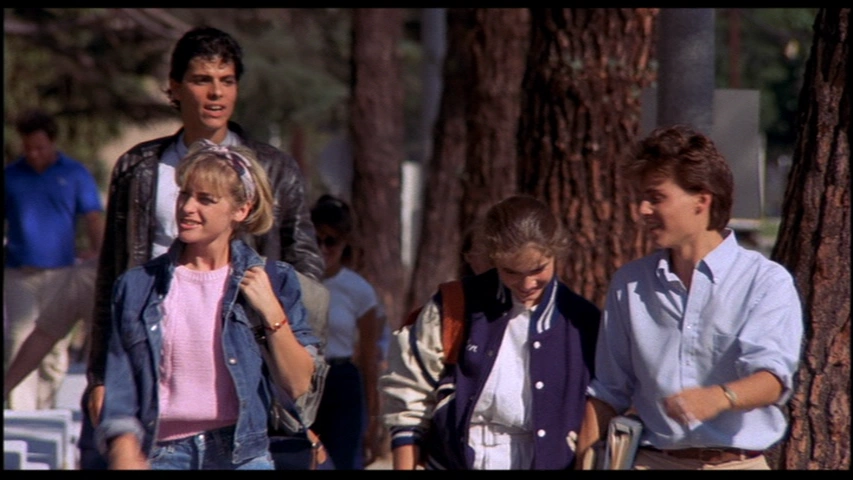
The four principle teens of Craven’s film in their first scene together. Through physical interaction and positioning in the frame you can tell a lot about each one and their relationships without dialogue.

Watching Craven’s Nightmare especially in the wake of Friday 13th and Halloween, it has a surprisingly low body count. Three kids and seemingly one parent. BUT, because of the way Wes Craven uses his characters we feel every death. We first meet Tina, a pretty blonde girl from a troubled home. Less than 5 minutes in we meet Nancy, her straight laced boyfriend Glen, and Tina’s roguish boyfriend Rod. These three characters are all introduced in one scene, relationships established through visual cues during plot-based dialogue revealing all the characters are having similar bad dreams. When, in a nod to Psycho, Tina dies in the first 15 minutes (still one of the most brutal deaths I can think of in a horror movie) we then follow Nancy as she shows resolve, courage, creativity, and self-sacrifice in fighting to keep herself and her friends alive; against parents who don’t believe her; and Freddy who haunts her dreams. As other characters die we feel their deaths. We’ve spent so much time with them, experiencing their development and their world we fear for them. When Nancy cries for Glen we’re there with her. When she faces Freddy we cheer for her. As for Freddy, what can be said? Robert Englund created what is probably the most famous and iconic modern slasher villain. Used sparingly by Craven, always in shadow or obscured, Freddy hunts his victims, stalks them, teases them…Freddy enjoys his work. We love his charisma as a villain but dread his sadism and applaud Nancy’s ultimate victory over him.

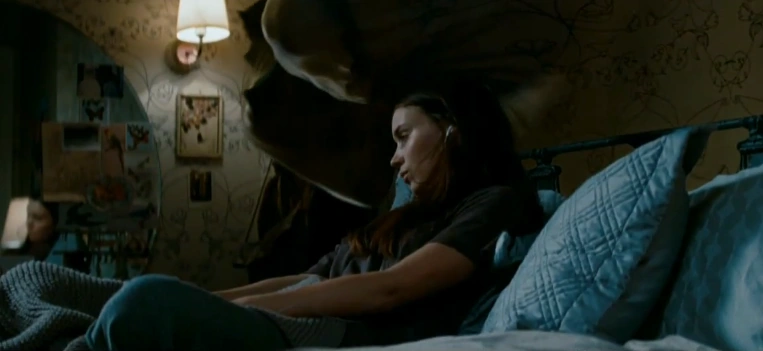
Kris, Jesse, and Nancy in the 2010 remake. It’s hard to find an image of the principle teens together as they never share screen time.

The remake attempted to follow many of the same concepts but made several serious mistakes. Kris, a character reminiscent of Tina, is the one we follow and invest in at first but for one third of the film, instead of ten minutes. When she dies thirty minutes in the audience now must re-invest in Nancy, with whom we’ve spent meager time as she’s had to split so much screen time with Kris. We meet Nancy in the opening scene but know little about her character since we’ve spent so much time establishing the original lead. Based on their interactions we don’t even know the relationship between Kris and Nancy. She works at the diner. Has had some bad dreams. She’s an artist. We know the kinds of things that might appear in an obit, but nothing about her personally. And with an hour to resolve the story we also have to establish why we need to care about her struggle. We also have Quentin (who through several lines of dialogue and a few scenes is established as having feelings for Nancy, these filmmakers really need to learn how to tell a story visually…) who we also meet early but then have to establish as well over the film’s last 45 minutes to an hour. Then we have Freddy. He’s darker and “scarier” supposedly but in making him more menacing they’ve sucked all his personality away. Jackie Earle Hailey does a phenomenal job with the character he has, but he lacks the foreplay of Englund’s Freddy. He doesn’t toy with you with the same glee or mind-bend your reality like Craven’s Freddy. They made him far closer to the characters Craven and Englund actively tried to avoid. By breaking up the story amongst so many “leads” Kris, Nancy, Quentin, Freddy, we never fully establish whose story we’re telling which is the final point.

Whose Story is this?

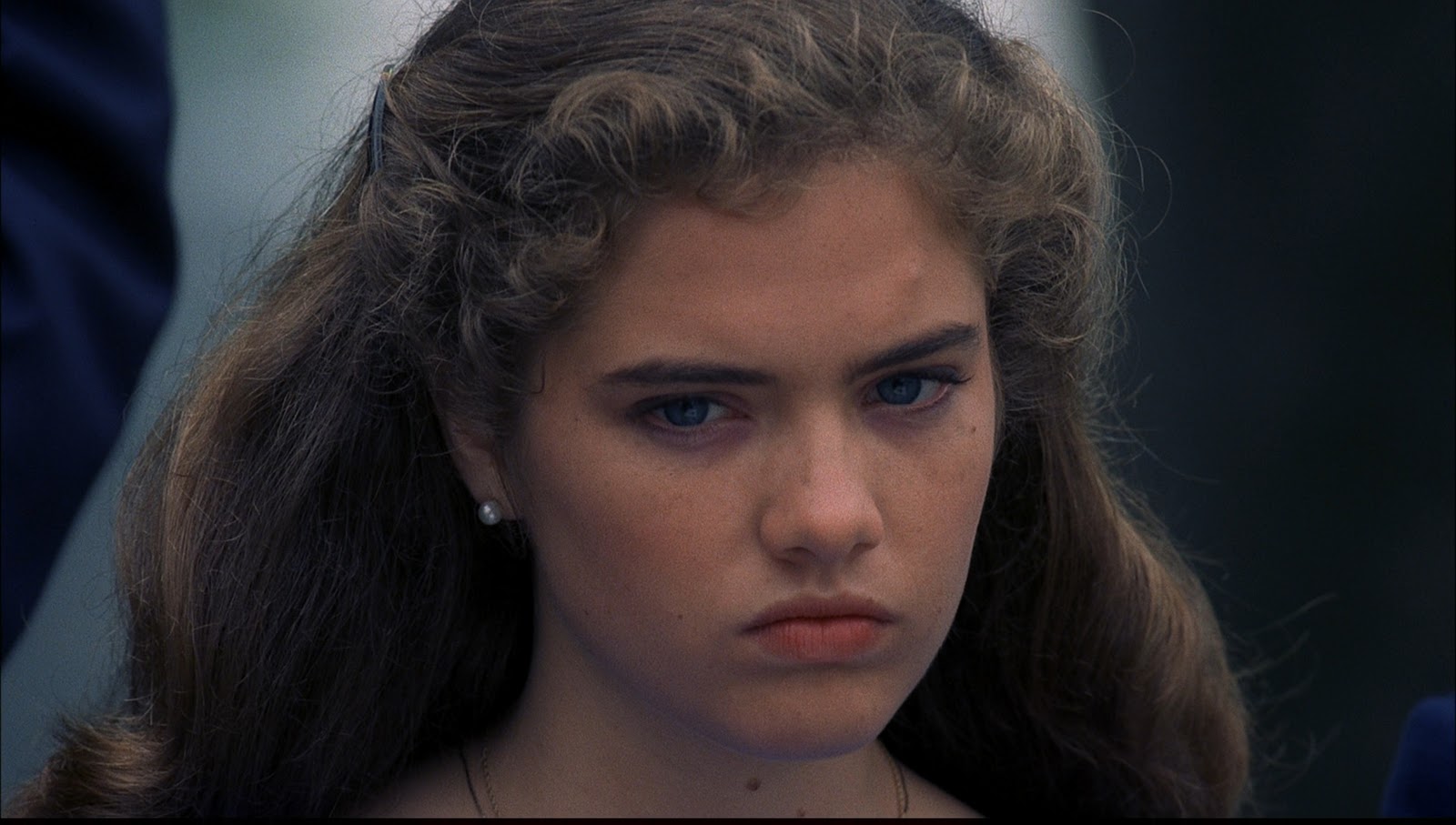
Looking back young Heather Langenkamp’s Nancy is one of the most admirable of all final girls. She’s smart, resourceful, a natural leader, and possesses an incredible will to survive.

Film historian Michael Jeck is fond of asking “who are we in this movie?” It’s a very effective way to analyze a story and see if a narrative works. So who are we in 1984’s A Nightmare on Elm Street? It’s easy. We are Nancy. It is her story. Even introduced after Tina, we understand Tina relies on her for courage and strength. Glen comes to her for leadership. Rod comes to her for trust. Nancy’s parents are troubled; her mom starts out in denial then drinks heavily once her admission of her role in creating Krueger. Her father is protective but distant and also has to wrestle with his role in murdering Freddy. So we identify with, follow, and admire Nancy’s narrative. As for Freddy? He’s a dark menace. His story is told so quickly and so late we never bother to ask how or why. What he can do and who he is has been established through earlier action so he’s a mysterious boogeyman and his backstory provides just enough information to make us hate as well as fear him.

“This is god…” Englund as Freddy Krueger.

Who are we in the remake? I actually don’t know and this is a major, major flaw in its narrative and design. First we’re Kris, searching for facts about her friend Dean’s killer. Then we’re split between Nancy and Quentin. Then we are told in depth Freddy’s backstory via flashback and narrative. So we as the audience are Kris, Nancy-Quentin, AND Freddy (the villain stripped of his all mystery) all at once. The result is a mess of a story with NO anchors for the audience. Its protagonists seeing things, describing the things they just saw or did, and repeating the premise concepts endlessly. Dare I say, the filmmakers had the seed of a courageous new direction and balked at the last minute. I remember seeing this film and theaters and thinking, “wow what if Freddy is innocent?” It would turn it into Freddy’s story as the character you identify with, the one taking his vengeance on the kids who falsely accused him and the parents who brutally murdered him. But when we reveal the kids were telling the truth, that he was a despicable molester…we definitely cannot identify with his story, so we’re yo-yoed back into Nancy and Quentin, whose characters lack so much conviction and mettle we don’t really want to be them either. Would I have liked an innocent Freddy? I’m not a purist so maybe/maybe not it would have depended on the execution, but it would have at least justified the remake…

Jackie Earle Hailey is an excellent performer and makes for a menacing Freddy, but his character is written with no additional traits beyond his rage.

Why Remake?

Iconic and eerie, achieved through practical effects Freddy stalks Nancy through the walls.

Why even do a remake of an iconic film? It’s a valid question considering how much of the industry relies on them. Modern remakes typically seem to be done to make money off the name, which is fine especially when given to writers and directors who realize what made the original successful and incorporate this into their own version. In A Nightmare on Elm Street 2010 this was its greatest failure. It doesn’t have any idea why Craven’s film was successful and scary. It was about characters we identify with and care about fighting a monster from which there is no escape. It’s told with deft visual style, frame-filling narrative, iconic scenes, and uses every single second of its 90 minute running time.

CGI Freddy stalking Nancy through the walls moves too much, animates too much, and loses the simple sinister edge of the original. It’s hard to be viscerally afraid of a cartoon.  A perfect analogy of everything wrong with the remake.

The remake only seems to focus on a killer in dreams and telling his back story. It establishes no characters we believe in, no iconic scenes save for those from the original gruesomely updated with CGI or severely hobbled by nonsensical construction (a nightmare in the bath ends up in the snow?!), and muddles the villain’s backstory with over-exposition and ambiguous motivation for his victims to remember him. It took a tight, focused narrative and turned it into a chaotic, careless monstrosity. If nothing else it helps prove why Wes Craven’s A Nightmare on Elm Street will stand as the magnum opus from one of the masters of horror and the 2010 remake a mere shadow of its effectiveness. Will the 2010 version ever achieve the same level of success and appreciation as Craven’s? Only in its dreams…

My Bloody Valentine: Original vs. Remake

Happy October, everyone! We’re excited to bring you our annual Halloween-themed posts for the month. For 2015, original and remade horror movies will go head-to-head, and we’ll try to pick a favorite. We hope you enjoy the reviews, and comments are always welcome!

My Bloody Valentine: Original (1981) vs. Remake (2009)

Photo: denofgeek
Photo: drafthouse.com
Photo: denofgeek
Photo: denofgeek


When the remake came out, I remember several bad reviews because they changed nearly everything. I can understand how purists would argue it’s terrible because so much changed. However, I think you have to look at it like a re-imagining, much like Zombie’s Halloweens, which is not always easy. With that in mind, I love these movies, and they deliver delightful horror fun in different ways.

Similarities:

I was surprised by how much I loved the original My Bloody Valentine. It has a solid story, strong characters, and is shot very well. The laundromat scene is probably one of the best kill scenes during this time period. The camera work in this scene has a monster-movie feel to it and increases your heart rate a little. The remake of My Bloody Valentine is just good slasher fun. It doesn’t take itself seriously, and when you watch them back-to-back, I don’t think the remake was supposed to. They did not intended to outdo the original, just modernize it for a new generation.

There really aren’t a lot of similarities. Sarah’s character is the same. They both use Axel’s name, and the Harry Warden story line is used. Both slasher movies are set around Valentine’s Day, and we can assume the killer gets away. That’s about it.

Differences:

These are what set the movies apart. The stories are completely different: they reversed the two main characters, the killer is different, etc. Here’s a breakdown:

  • The original focuses more on the “curse” or urban legend surrounding the holiday. For example, if the kids have the Valentine’s Day party, people will die. The killer moves the hearts upside down when he kills, and we see way more extracted human hearts. In the remake, the holiday is more of an aside, and the movie could take place any time of year. This allows the original to have more purpose, whereas the remake feels almost like a senseless revenge film.
  • Both take place in a small town, but the original has more of a close-knit feel. In the remake, the characters don’t seem to like each other. They back-stab, allow adultery, and just put up with one another. In the original, the adults hang together and watch out for the younger adults, and the YAs party together. There’s also an even mix of both age groups in the original, and you get to know the town. In the remake, you only get to know the younger adults, who act like their 50 instead of 25.
  • The remake is more scandalous. I’m sure this was done to appeal to 21-century audiences, and it works. As much as I love comradery, I enjoy watching Irene (Betsy Rue) chase the trucker down while completely naked. Tom (Jensen Ackles) locking himself in the cage is pretty ingenious. Sarah (Jaime King) trying to save the little skank sleeping with her husband is touching. The remake was also meant for 3D, which does not add a lot, but it adds a more fun element.

So, how to I rank them? It’s a tie for me. Both My Bloody Valentines entertain and rank high in my slasher movie cannon. For a solid film, watch the original; for a less serious treat, watch the remake. Either way, both are tons of bloody fun!

Prometheus (2012) – The Origins of Alien…or Something

Ok how to cover this film. I first even debated whether it deserved a place in an Alien franchise review series but as it was billed as a film in the same universe and directed by Ridley Scott, the director of the original Alien it has to have a mention… This movie is the strangest of the bunch as it not as tight and well written as Aliens but neither is it as poorly conceived or made as Resurrection. It is both fascinating and infuriating. So taking advice from my RevPub co-author I’ve decided to break it down into a couple of lists. The fascinating for the positive traits; the infuriating for the negative… Here we go…

Fascinating:

  • World Building: The look, atmosphere, and depth of the world of Prometheus like many other films in the franchise, is excellent. From ship and vehicle designs that look as though they owe more to function than style to the glory of alien technology, the design and execution is terrific. The overall look and feel of the film has both a grand scale that adds to the universe and a personal scale in which the characters interact.
There are some gorgeous and deep environments in this film.
  • Acting: The acting in the film is remarkably good. Noomi Rapace plays Dr. Shaw with excellent wonder, confusion, and betrayal and Charlize Theron is wonderful as the cold, businesslike Vickers. Stealing the show however is Michael Fassbender as David the android. Everything about him in this character is subtle. He is protective, charming, innocent, and menacing all at once. Fassbender is one of the actors who recently has been consistently outstanding in all his roles and David in Prometheus is him at his best.
Fassbender’s David almost single-handedly carries the film.
  • Potential: This movie had the potential to answer a good number of questions about what a xenomorph was and how they first came into contact with humans. I will underline potential because as we will see in the next section…and despite Scott’s decision to continue the franchise with further installments…it added nothing of real value to the history of the Alien universe and as Resurrection did transformed what was once an unfortunate chance encounter (as often happens in history) into some kind of “over-all scheme of fate” that immediately turns it into a more cliché narrative.

Infuriating:

Red Letter Media made an excellent recap of the film’s plot holes which you can see below. I’ll try not to hit too many of the same points but it is inevitable as any time you think too much about the plot you are destined to find more plot holes than you find answered questions.

  • Unnecessary Characters: Alien and Aliens both had closed casts, a small group introduced early who we grow attached to from their well-defined roles and portrayals and feel fear for as they progress through a dangerous narrative.   Other than Holloway, Shaw, and David none of the other characters really seem to serve much of a purpose. Even Theron, and I love Charlize, has no part in the narrative at all. She’s just there. The pilot and his crew who have a chance to really save the day really don’t do much either as even their kamikaze flight into the engineer’s ship was useless as it was later revealed the engineers had lots of ships. The Biologist and Geologist? They are just there to die. They don’t unwittingly unleash anything or cause anything. They’re just the first victims. Mr. Weyland’s character serves zero purpose beyond McGuffin for the mission and didn’t need to be in the film at all. Especially not in some of the worst make-up this side of a dinner theater. This could have been a very small cast, a half dozen or less, for all the roles that matter… And since Alien characters have always been the core of the story, having only three that impact the narrative was a big mistake.  Especially as said narrative is tissue-thin and holds all of the film’s heavy concepts like a wet paper bag

    Some of the main characters of the film…give or take a couple.
  • Highly…Illogical: There is nothing, nothing, nothing in this plot that makes the least bit of sense once you step outside of the theater and think. It isn’t helped by the absolute lack of any coherent plotline for what occurred prior to the humans’ arrival on LV-223, who the engineers are and their ultimate goals. The engineers created mankind…or something (though apparently not the rest of life on the planet? Maybe, who knows) but also created aliens. Or at least some kind of alien. Along with DNA-altering black ooze. For some reason. Weapons we think, who knows. But weapons for what? Against whom? I have to again paraphrase Yahtzee Croshaw, why would someone create a biological menace that could wipe you out as well as your enemies when, ya know a bomb has been historically effective. Why did they tell us how to get to LV-223? Especially when you find out they intended to unleash their black ooze…or aliens…or something to kill us. Why were we created in the first place? Were we weapons too or were we some kind of baby’s first engineer experiment? For more definitely watch the RLM video. The more I add to this list the more I just feel I’m repeating their points in a less-funny more rage-inducing way. But it’s cathartic…
Engineer seeding life on Earth. Or Something I dunno…
  • What was the point?: I went into this movie, as did a lot of Aliens fans expecting to see what the space jockey was and how he ended up on LV-426. I remember sitting in the theater and hearing that they were approaching LV-223 and thinking, “Wait…what?” So it isn’t the same planet. Then the engineer’s ship took off and I thought “oh that’s the one that crashed on…oh wait no it’s crashing here…so…” Other than a few items, the Weyland name, the proto-face-hugger-snake-in-the-ooze thing, the bigger proto-face-hugger-squid-thing, the proto-cone-head-xenomorph you see at the end, and a carving on the wall in the urn room (which yes was designed to look like the xenomorph egg chamber) it really doesn’t tell you anything about what a xenomorph is, what an engineer is, why either exist, or how they are really connected to the rest of the franchise. Apparently some other space jockey not in this movie also had an alien break free and crashed on a planet that humans also happened to find? I expected to see that engineer end up in LV-426 and wait for him to be found by the crew of the Nostromo. Not some other engineer interact with some other group of people on some other planet with no narrative connections to the rest of the franchise at all.
The Proto-Xenomorph.  Or Something.

And this is the film’s greatest sin. Even though I was admittedly curious about how the franchise originator, Scott, was going to explore how events on LV-426 eventually led to his 1979 masterpiece part of me kind of shrugs at the concept. One of the great strengths of the first two films is that there is a crashed ship there, with a large pilot who died a gruesome death carrying deadly cargo…and that’s enough. Once the rest of the story starts we never ask “well what was that and where did it come from?” It’s just part of the background, so well-crafted were the narratives and characters of the first two films. Now we will explain how it all came to be, and as we learned with Anakin Skywalker and Hannibal Lecter that always adds to the power of a story, right? Shedding light on the fascinating mysteries that make a complex concept complex?  No…it doesn’t, it does the opposite and removes mystique making a marvelous character or detailed world shallow and mundane. It is like pouring all the cereal out to get the prize at the bottom of the bag…you’ll never be able to re-package all that content in quite the same way again to make it fit as clean as it did before.

Scott said he was “done” with the xenomorph because there wasn’t any place else to take it and the audience had seen it enough. So the final question is: why does this movie have to be connected to them at all? The links are so tenuous it could’ve been its own franchise with no tacit mentions of anything Alien related. Hell Predator 2 (to be covered later!) has more intriguing connections to Alien than this movie. Except I probably wouldn’t have gone to see Prometheus without that connection…and more than a few are likely in the same boat which is probably why they made the attachment to the venerable Alien name.

I feel as though there is a good sci-fi movie here somewhere. The good characters are great, the design and the world are terrific, and the concept is intriguing. The execution however stands up to absolutely no scrutiny and despite its positive traits Prometheus is severely damaged by some of the most convoluted story-telling I’ve seen in a film. For that it gets an average two squid baby creatures out of five.

SquidThing

We’ll take a pause in the Aliens & Predator review series for October’s traditional Halloween Horror posts, but we’ll pick back up in November with my review of Predator one I’ve been dying to write.

The greatest single Prometheus plot hole analysis:


Alien Resurrection (1997): Put it Out of its Misery…

I saw this film when it first came out in theaters in 1997 and my love for the franchise, begun by my adoration of Aliens and fostered by various issues of the Dark Horse comic series and their novelizations, swayed my opinion of it at the time. I remember thinking, “well that was weird…” but not hating it.

I’ve seen it for the first time since 1997 and I can now unequivocally say: I hate this movie. I never thought I’d hate a film in this franchise but here we are. Alien: Resurrection.

With the events of Alien 3 killing Ripley as a character we were all surprised to see Sigourney Weaver back as the film’s star. Set 300 years after the events of its predecessor, Resurrection involves cloning Ripley. In the process they made a lot of errors, and in the latest version she has been mis-cloned and accidentally included some xenomorph material. It’s not a bad idea, but how these kinds of organisms can be cross-cloned is beyond me, and why it gives Ripley some weird alien attributes is even stranger. It’s the kind of idea that sounds good until you actually sit down to think about it.

Alien/Ripley Cross Clones. The only interesting part of the movie really…

The plot actually follows a very rogue-trader-esque (yeah I have to throw in a 40k reference in this series) crew who has been tasked with delivering some cargo to the military base where the Ripley cloning has occurred. Their cargo turns out to be some people in stasis who are to be used to hatch aliens.

I’ll pause here to mention this script was written by Joss Whedon who has since said it was the “execution” of the script that made the film so poor. I love Buffy and Avengers I liked Firefly even though I don’t share the internet’s obsession with it. I have to disagree with Joss. The whole concept is a mess from the ground up. Why advance centuries into the future again? Why make a Ripley clone that is part alien? Why include space pirates, though I think the reason for them is because Joss likes space pirates…which is fine and all but it doesn’t make them work in the movie. The tone, characters, and plot are so far removed from Alien, Aliens, and hell even Alien 3 it doesn’t even feel like the same series. To me it just shows even a great sci-fi writer like Joss doesn’t always come up with gold…

The space pirate characters are all relatively inconsequential. There’s commander Elgyn, his pilot girlfriend Hillard, their mechanic in a “wheelchair” Vriess, and the cool guy with dreads and two pistols, Christie. They also include Ron Perlman as Johner and Wynona Ryder as Call and it was during this movie that I realized that Wynona Ryder is actually really good in almost everything she’s in and she’s pretty underrated. That’s the only praise I can provide this film.

The other pirates exist essentially as bodies to be eaten up and provide some 6th grade “whoa that’s cool” action sequences where people pull guns out of their coats and shoot the place up in comic book poses.

Here are some fundamental issues I had with this:

  • Aliens get loose: Ok so a scientist studying aliens with acid blood doesn’t make sure they can’t acid blood their way out of their cages? There’s “nature finding a way” chaos theory, and then there’s absolute shocking stupidity…
  • Space Pirates: Seriously these characters serve no purpose…  I remember a quote from Ben “Yahtzee” Croshaw, “Is this the most important event to happen to the characters, if not why aren’t we seeing that?” Take that a step further, “If these characters aren’t performing a specific plot purpose, why do they need to be in the story?” This movie could have started with a Weyland-Yutani shipment of bodies to the facility and been just as effective.
  • El-lien Ripley: Why did they even bother with this alien/Ripley hybrid? It basically removed Ripley’s humanity from her character and made her a less-interesting version of Linda Hamilton’s Sarah Conner from Terminator 2. Now she’s flat and dull. Ripley…dull. Never thought I’d see the day…
  • SPOILER ALERT for Unnecessary Plot Twist: Call’s an android. An android made by other androids that rebelled and didn’t want to do menial work. There is actually no purpose for her to be an android. And the story of the android rebellion sounds far more interesting than the story they show here…wait that’s kind of like the plot to AI…..never mind that’s not a better story.
  • Alien/Human Hybrids: Ok so we see a Ripley mixed with Aliens (and in one of the only interesting scenes in the movie, all the failed incarnations that preceded her) but we also see an Alien mixed with humans, which is birthed out of an alien queen. Now take the coolest of alien designs, the queen, and give it bulbous plastic bag belly, that’s what this pregnancy looked like. Then make the absolute worst looking alien/human hybrid imaginable. It looks like a shaved bigfoot with a Halloween Shao Khan mask on. With a face powered by some kind of primitive muppet technology. I actively hate “Newborn” the so called Alien Sapien. The fact that this albino gorilla with alopecia kills the alien queen makes me ill.   And why in the name of f**k does it think Ripley is its mother? Cloning, yeah, yeah, blah, blah, blah. It still makes no logical sense.
The face of the ultimate alien creature…evidently…

At its core the biggest flaw with this film is that it has elevated Ripley into a legend and plot fulcrum. “Fated” characters in media have become popular, but this ignores what makes the source characters relatable. Ripley in Alien AND Aliens was relatable because she was just a person…out of her league, doing her best, and succeeding through guile and determination. Since the end of Alien 3 she’s become the prophetess of the xenomorph galaxy, hunted by Weyland corp and is the center of the alien/human interaction in the universe. Let’s face it all she did was survive the first encounter… Taking her here from there loses touch with Ripley entirely. It’s a version of the problem I mentioned in my original Conan reviews and my Judge Dredd comparison. By making the story or the character’s place in it so world-endingly big it severely drops in relevance and reality and rather than dramatic takes the audience out of the reality. It ultimately just becomes forgettable or even worse a plot that “feels” like a movie.

Alien: Resurrection is the first of these movies I can’t recommend even a little.   It’s unpleasant to look at, full of characters you hate, and with a story that makes you wish it could be erased from the canon.

I give it half a muppet Humano-alien face out of five… science-fiction, alien

AlienFace