History Meets Horror in Nightmares in Red, White & Blue

This week I came across Nightmares in Red, White & Blue, a documentary that discusses horror movies and the history that inspires them. Nightmares takes a Marxist approach to the horror genre and how these movies are influenced by history, and how society receives these events and horror movies.
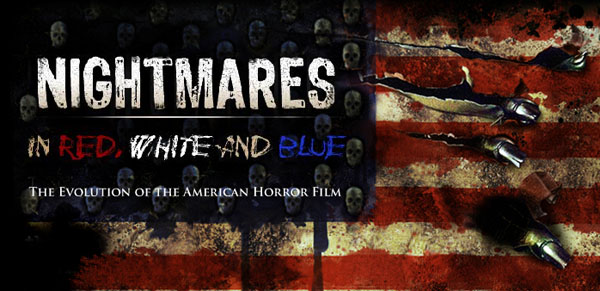
Nightmares Red White Blue Review
Photo: dvdtalk.com

The Government Inspires Horror

This is not a political view point. This is an observation from the movie. Since the 1920s, filmmakers have used horror to speak out against the government. According to Nightmares, people in power have been a symbol of horrific things: poverty, war, starvation, violence. Horror films speak out against those trying to harm us.

For example, in the 1920s, a “monster” may have been a disabled veteran. Government + war = disabled vet who appears as a “monster” to society. Horror filmmakers have also used government entities and events, such as Hitler’s reign and the Holocaust, as inspiration. Or Sci-Fi horror to speak out against government/alien conspiracy theories.

I learned a lot by watching some of the greats discuss their own experiences during these eras, and explain how they used horror to release their fears and tastefully speak out against them.

Evil Lies Within

In the documentary, John Carpenter says there are two types of evil: The evil out there (Universal monsters) and the evil within (eg: human ego and pride). Carpenter says, “it’s in our own human hearts. And that’s a harder story to tell.”

I found this interesting because if you think about your favorite horror movie, there is an inner evil within someone. Whether its a Mayor who’s unwilling to lose tourism money (Jaws) or a killer seeking revenge (Freddy, Jason, Michael), the evil lives within someone. The overall message is people are evil; anyone can snap; and that is scary.

Nightmares Red White Blue Review
Photo: Huffington Post

Today’s Horror Punishes This Evil

This isn’t directly stated, but when Saw was mentioned, I realized today’s horror movies only set out to punish people. The horror genre stays true to its roots and speaks out against social wrongdoings, but instead of the attacking the government, now it feels like horror movies attack the people.

It Follows was one of the big movies in 2015, and the “monster” was an STD. It Follows punished those who are irresponsibly sexually active. The modern teen horror movie has turned into a digital stalker (Unfriended). Teens are punished for spending too much time connected and enjoying others’ humiliation via social media. Sinister and Insidious punishes the working parent. Instead of staying home to care for their kids, parents are busy with their own agendas or aren’t home. And the list goes on.

Other Highlights

I don’t want to give too much away, but you’ll probably see all your favorite horror movies mentioned. Nightmares in Red, White & Blue covers everything from the early 1920s to the mid 2000s. Many experts are featured, and they reveal why they made a movie or what message they wanted to share. Nightmares is fast-paced, and you’ll learn a lot about how American history influenced the genre and what people were feeling at the time.

PS: Nightmares in Red, White & Blue is free on Amazon Prime streaming right now. If you check it out, let us know what you think in the comments below!


Web Series Review: The Guild

In 2009 I’d never heard of Felicia Day or really paid much attention to online video.  My sister and I were obsessed with Demon’s Souls and during one of our many conversations she mentioned she was watching a show online called The Guild while playing Souls and after watching the episodes a couple times it was a great playlist just to put on repeat and listen to over and over for background while you played.

The premise wasn’t immediately grabbing to me.  I didn’t play online much.  I still haven’t played an MMO.  I don’t play in groups when I do play online (Mostly just Mike and I playing various versions of Diablo).  But I watched the first episode and fell in love with it.  What’s it’s appeal?

Every cast member of the Knights of Good are terrific. Each distinct and absolutely hilarious.
  • The Cast: Felicia Day, Sandeep Parikh, Jeff Lewis, Amy Okuda, Vince Caso, and Robin Thorsen ARE the show.  As the titular guild, “The Knights of Good” they are the people we see and get to know during the course of the show.  Anyone who’s played games, online or off, knows gamers like these.  The Rule Nazis, the acid tongued, the goof off… We’ve all had experiences with them and they’ve made their marks on our gaming memories…for better or worse.  The fact that none of the cast was really into gaming prior to the show speaks volumes to how good they all are as performers.  The expanded cast is also excellent, most notable are Wil Wheaton, Mike Rose, Teal Shearer, Teddy Garces, and Alexandaer Yi as rival guild “The Axis of Anarchy” and Michele Boyd, Ted Michaels, Brett Sheridan, and Fernando Chien as great supporting characters.
The Axis of Anarchy. Season 3 might be my favorite partially due to the casting of the rival Guild.
  • The Concept: You can get this show whether you play online or play games at all.  At its base it’s just a person with a slightly unhealthy obsession trying to interact with a the world, both with those who share the obsession and those to whom it’s completely alien.  We follow Felicia’s Cyd Sherman from her closeted socially awkward start, to her attempts to shed her awkardness, and finally we come back to her accepting who she is, who her friends are, and where she is in life.  I can’t think of a season or episode I don’t like, even as the budgets increased and premises expanded it remains relatable and actually tracks, broadly, Felicia’s progress from shut-in gamer to an industry outsider-insider.
  • The Impact: Reading Felicia’s book made me realize how fast the internet world has changed. When I was watching the show YouTube was a place for cat videos and to find low-res versions of British TV shows not available in the US.  I still had a MySpace account.  Twitter wasn’t even a word most of us knew.  This was one of the first big shows to make internet-based entertainment a phenomenon.  It took a niche topic, released it on a niche medium, and had widespread impact.  Felicia was able to launch her Geek and Sundry due to its success and many other online-only YoutTube shows followed in its wake.  While it wasn’t the first and only (ONLY Tanith has the first and only…big ups to my 40k homies…) it was one of the avant garde pioneers and showed that YouTube shows could have narratives, productions, and concepts to rival TV.  Look at YouTube now and you’ll see the legacy of Felicia Day’s Guild on countless channels covering countless topics.

In many ways internet personalities, those who Felicia describes as “situationally famous,” are more “personal” than other celebrities.  Performers like Felicia, James Rolfe, Jim Sterling, and Joe Vargas invite us into their worlds, and in many cases literally into their homes, to entertain us.  Because of this we feel we know them better and can relate to them in ways we can’t with TV, movie, and music celebrities.  Media has changed and I now find I spend far more time using internet media than I do anything “conventional.”  Felicia and those who joined her in the internet media revolution have really changed entertainment forever.  So while people lament the derivative nature of TV show and movies I say you’re looking in the wrong place.  There are great experiences out there waiting for you to “sha-like-ub-scribe” and will provide hours upon hours of unparalleled, unique entertainment.

Quite multi-talented, the cast released several songs related to The Guild.  “Do You Want to Date My Avatar” is probably the most famous, and is a great pop song in addition to being a fun show tie-in.

The Jem Movie: Universal Got What They Deserved

Jem and the Holograms 2015 had the third-worst opening in box-office history. That’s a pretty hefty price tag and epic fail for Universal, and my response is: They deserved it.

As a woman in my 30s, I was delighted to hear they were going to make a movie of my beloved childhood idol. You see, I was obsessed with Jem and the Holograms when I was a girl. I had the dolls, car, outfits, cassette tapes and books. My mom and I dressed up as them for Halloween.
As an adult, I have even watched a few episodes online. They are not as appealing now, but my taste in music has improved and I expect more. However, I still enjoy them.

jem-and-the-holograms
quirkbooks.com

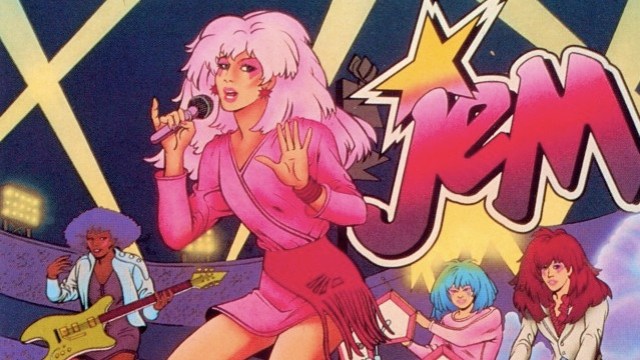
That is why I refused to see this movie after the trailer was released. Jem’s story was not a heart-felt, coming-of-digital-age story. The original Jem series was about glam, fashion, music, and relationships. There was drama, adult themes, mild cartoon violence, and flawed heroes. It was an 80s cartoon! These cartoons brought real-world issues to kids in a fun way. They were not politically correct. They did not try to make you feel warm and fuzzy. Many 80s cartoons simply taught kids how to deal with conflict.

Instead of rebooting the cartoon into an animated feature or sticking to some of the original story, Universal decided to modernize – aka bastardize – it. I will never see the movie, so I’m going to have to bash the trailers. Here are my biggest problems with the movie and why it failed:

  • A YouTube star. Because the world needed or wanted that? No.
  • It was a teen story. Jem and the Holograms and The Misfits were not teens. They were adults. They partied, had adult relations, and experienced adult conflicts. The cartoon showed kids how to deal with mature problems and relationships.
  • Universal chose the wrong audience. Who was the audience for this movie? It was women between the ages of 30-40 and possibly their moms. This age group is nichey, but there are roughly 157 million women born between 1980 and 1990 (US Census Bureau). That was the audience. As someone in that audience, I can say that a movie made about Hole vs. Babes in Toyland would have been more accurate to Jem and catered to the audience.
  • The music was awful. Again, audience. My generation still listens to Joan Jett and Guns N Roses. We still love hairbands and bad-A chicks. Not pop stars.
  • Identity crisis. Jem did not have an identity problem. She knew who she was. She was a rockstar superhero with a secret identity. She was not a troubled teen trying to find herself or hide and from the world. You would think with the superhero trend right now, Universal would have been smart enough to make that angle work. Here’s an idea: A female Scott Pilgrim-type movie. That would have been gold.
  • The costumes. If you’re going to “modernize” an 80s cartoon/movie, how does it make sense to have them play a keytar? The makeup and costumes looked like a Hunger Games rip off. In fact, I get a very Capitol feel from Juliette Lewis’ character and Hollywood from the trailer.
  • Synergy was Eve from Walle. And a projector that played home movies at that. The original Synergy was an 80s supercomputer built to alternate reality. She created holograms – hence the name – and could change their appearance. Synergy transformed reality, allowing them to have a different identity.

And there you have it. I accepted a live-action movie, and for a moment, was excited to see what Hollywood could do with my childhood idol. When I realized I could not relate to the story and characters, and they butchered it, I vowed to never see it. I would not watch this movie if it was my only form of entertainment. I will never support it. And Universal should pay close attention because 157 million women apparently felt the same way.

Web Series Review: Co-Optitude

As I mentioned in my Ready Player Two! post, I’m a huge fan of local co-op. No matter how Microsoft tries to push the benefits of online multiplayer it will never take the place of playing a game with friends in the same room and experiencing actual social interaction.

In what I consider to be my spur of the moment “Days before Christmas” series I thought I’d cover one of my favorite webseries, Co-optitude.

When Geek and Sundry first launched I immediately became addicted to Wil Wheaton’s Tabletop and Felicia’s The Flog. One of my favorite early Flogs was her playing Streets of Rage on the Genesis with her brother, Ryon. The series was one of my favorite retro series and watching the two of them play it proved to be tremendously entertaining.

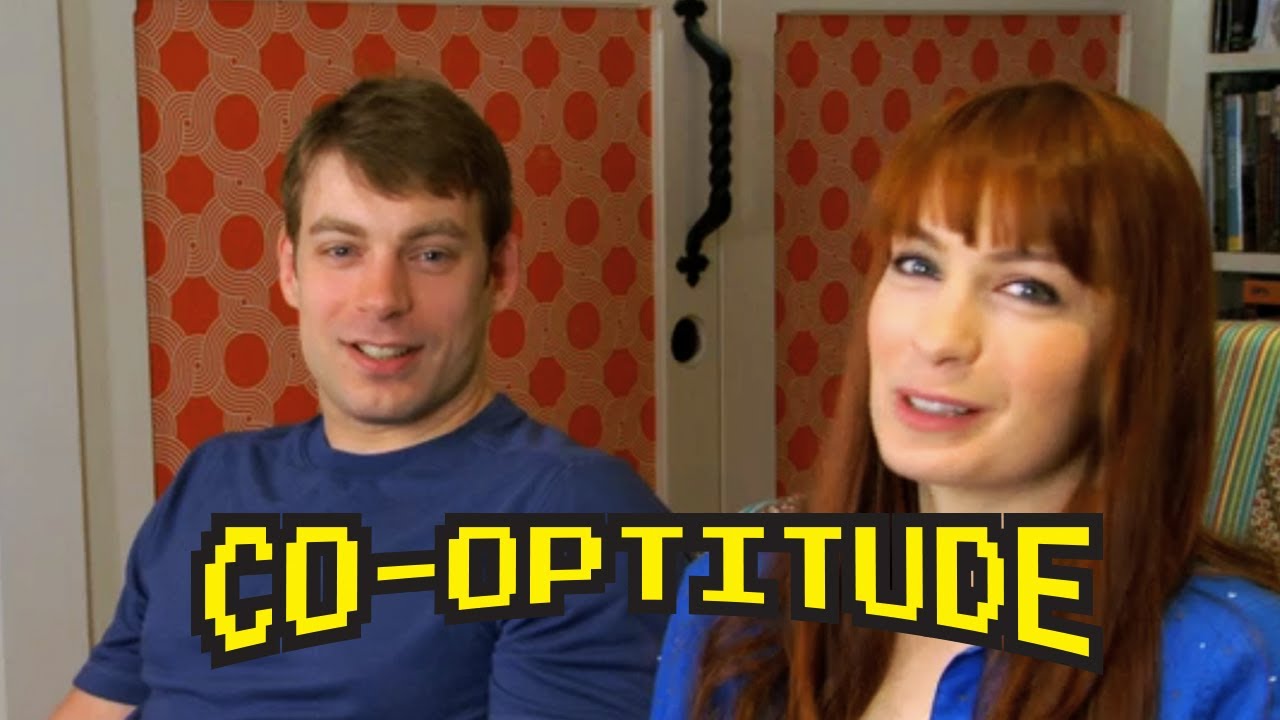
From the early Flog plays, including Gunstar Heroes, Battletoads, and Golden Axe they launched their own webseries Co-Optitude where…yep they play video games and hilarity ensues.

Over Thanksgiving I had a Fallout 4/Co-Optitude binge and realized just how great the series is.

In a world where everyone has a let’s play channel on YouTube what makes Co-Optitude stand out?

  • Felicia Day: I mentioned in my review of You’re Never Weird on the Internet (almost) that Felicia is one of those rare people you feel you know when you watch her in her videos or in her interviews. This is never truer than watching her interact with her brother. The laughter, the rage, the creativity shown in the insults and profanity used in the show are absolutely genuine. Sure, there are scripted moments, but even in those you can tell they enjoy making these shows and how much fun they are having.
  • Ryon Day: Anyone who thought Felicia may have been born out of some kind of magical internet realm, Ryon Day proves that whatever circumstances made Felicia into the charming, smart, strange person she is also factored into the creation of her brother. Ryon is every bit as funny as his sister and also is a great internet personality in his own right. Watching the two of them snipe at each other, compete in one and two player games, trade barbs, and demonstrate their game playing acumen (or lack thereof) is endlessly entertaining. As much as I love Felicia, I have to admit Ryon ends up with the catch phrases and some of the most memorable moments in the show. And speaking of catch phrases…
I missed out on this shirt…I’d kill for one.
  • Catch Phrases/Quotes: I don’t think I’ve ever seen a web show develop more on-the-fly catch phrases as this one. There’s the now iconic (used correctly, Jim Sterling) “Let’s play this f*cker,” but there have also been others, “We’re Gucci” (Meaning “we’re good,” though they couldn’t remember where it came from), the poorly conceived, “We didn’t get far but we got…fun,” and one that may be common but I’d never heard it before, “Oh they know about you” (usually combined with some insulting reference).   There’s the terrific sign off, “Don’t forget to Sh-Like-ubscribe” or “Like, share, and subscribe” crammed into one portmanteau.  Who doesn’t like giving beloved, classic video game characters silly names, “Anuss, Poopy, Nypps, Smegz, Nutsaq, and Taintiez?” Not only that but random sing-a-longs (Bonnie Tyler’s “Total Eclipse of the Heart” is a favorite) make frequent appearances.
  • Bad Game Play: For some reason watching people pick up and play a game, especially classic games, with no experience and no pre-knowledge of the game is vastly amusing. It’s essentially the way we used to play games when we got them. No one read the books. We just jumped in and tried them out. Made dumb mistakes, argued with our friends and family who played, blamed the game for our poor abilities. We did all of it in our own homes not on the internet. It takes some guts (“Nickelodeon” Guts even) to be a bit buffoonish on the internet, especially playing Mario, Sonic, Pokémon, and Final Fantasy games, series with rabid fan bases. Even as much as I love some of the series, watching Felicia and Ryon play FFVII and name their characters Poopy Esq, Anuss II, and Tantiez is damn funny.
Apparently Dr. Watson has his own catch phrase. It’s “Whazzuuuuuup?”
  • Hector and Jess: This summer when Felicia was doing her book tour and Ryon was changing jobs the Geek and Sundry Twitch team took over Co-Optitude for about two months.  The Felicia and Ryon show has a unique feel.  The Hector and Jess shows have a unique feel of their own, but one that was no less hilarious and entertaining.  Watching them play through Catherine (it’s a weird game that I LOVE.  I have the special edition with the odd polka dot boxers…) or even better Sherlock Holmes, made for a great time.  I wouldn’t mind a permanent Co-Optitude spin off series with these two.

Co-Optitude has joined Jim Sterling’s Jimquisition, Cinemassacre’s Angry Video Game Nerd, and another show I’m saving for my next “Days Before Christmas” post as my favorite web playlists. They’re hilarious, genuine, fun-in-spirit, and are always good for a much-needed laugh.

Feeling a bit down from seasonal depression? Watch some Co-Optitude and a couple of Days will definitely improve your day.

Book Review: You’re Never Weird on the Internet (almost)

Like everyone else on the internet I love Felicia Day.  If you don’t know who she is stop what you’re doing right now, find some of her work, and then you will love her too.  She is the perfect combination of charming, awkward, clever, adorable, classy, and vulgar to make for an absolutely unique personality.  More than anything, you always get the impression she is being completely genuine.

Earlier this year she released her memoir, You’re Never Weird on the Internet (almost) and, even though I don’t usually read “celebrity” books I knew it would be a must buy.

The most pleasing aspect of the book is Felicia’s writing style.  If you’ve ever heard her audio commentary on The Guild DVDs, watched her play video games badly with her equally hilarious brother Ryon, or seen The Flog on her Geek and Sundry YouTube Channel, you should be familiar with her style.  She speaks very quickly, almost breathlessly as ideas, words, and concepts just flood over you too fast to comprehend.  Then when you do absorb them you wonder how anyone could possibly express themselves that quickly…  I’m not naive enough to think the book was written as a stream of consciousness,  but while reading it you can picture Felicia in her pastel Flog set telling you these stories and even imagine the cutaways and edits for her parentheticals and asides.  The writing style is without a doubt in her voice and has her unique hammers-in-a-typewriter cadence in the best way.  It’s like having a conversation with her.

Though it’s a memoir, she does an excellent job of making the book profoundly personal, without making it a gossipy tell-all.  She never dishes or trashes anyone.  Even when it’s clear some of the vaguely referenced parties would deserve it.  She keeps stories of her personal life classy, sharing only the bits that advance her narrative.  The only person she ever is really hard on is herself, and as she seems to be an OCD perfectionist (something I can relate to a little bit…just a little) I can understand that.  In one of her best anecdotes she relates how she struggled to get an “A” in one of her college math classes, studying all night, killing herself to keep her 4.0, even against the professor’s advice.  When she maintained her 4.0 and got the “A” she craved she actually found later that it wasn’t really worth anything.  All the stress and trouble it caused didn’t equate to anything real once the course was over.  It’s something that those of us who obsess can truly relate to, as we find out the things we worried about and lost our minds over really didn’t matter too much after all in retrospect.

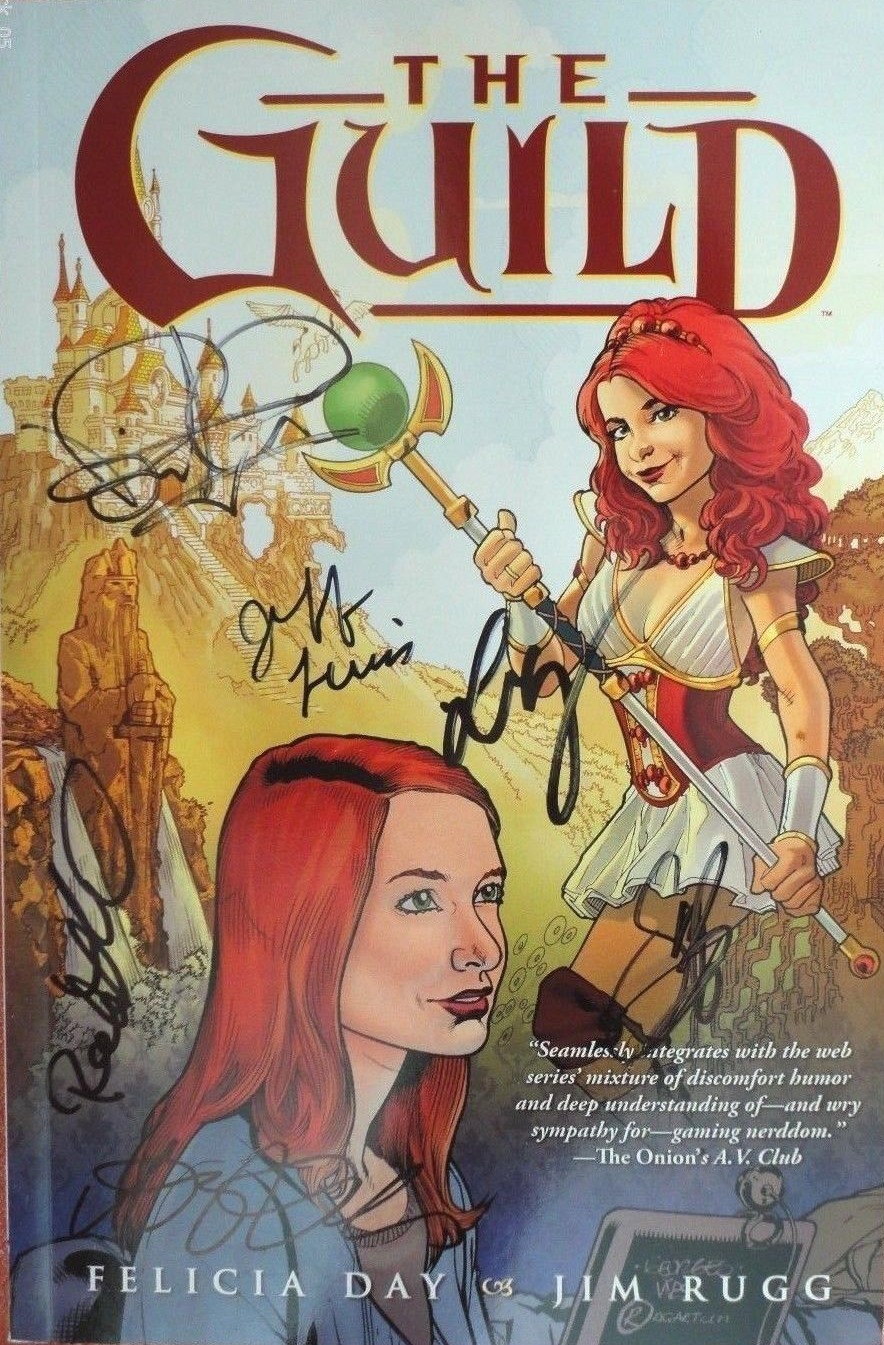
Copy of The Guild graphic novel signed by the cast!

Much of the middle section of the book is about her creation of The Guild which was fascinating as it’s how I, and a number of others, first found her.  This section was eye opening as it shows the ups and downs of a creative person creating with no budget, but it also shows what can be accomplished if you try hard enough and have the right support group and even how something you love and created can be utterly all-consuming.

Felicia described herself as an absolute workaholic. A habit that she describes as helping her create the brilliant Guild but ultimately self destructive if left unchecked.

My only complaint, if you can call it that, is actually that I wanted the book to actually be longer.  She tells wonderful stories of her home school life; multiple classes of violin, singing, and performance; her move to Hollywood and the awful acting sessions and auditions.  But I would’ve liked to hear what it was like to succeed, to get the part on Buffy the Vampire Slayer or to later become Charlie on Supernatural.  I’m not sure if those are well-known stories I just haven’t come across yet, but her perspective on those successes would have been interesting to hear.

By far the most moving sections are the last two.  Even though I’m not a “constantly online” person I did notice a period where Felicia seemed to withdraw some from her shows, at least the Geek and Sundry ones I watched, and the book explains why.  Having had friends with severe depression and had minor bouts myself this section was by far the most powerful.  Hearing how someone with similar compulsions was able to shake off the negative and focus on the positive was profound.  The last narrative section deals with the GamerGate nonsense (and yes I’m calling their “movement” nonsense…) from late last year and earlier this year.  I actually remember reading the post she references in book and it’s interesting to see the fallout from that, and how sometimes just having an opinion when you’re a public personality (even when only “situationally famous” as she calls herself) can have major effects on your life.

If you are a fan of Felicia Day, Geek and Sundry, internet culture, or creativity in general You’re Never Weird on the Internet (almost) is a terrific read.  Felicia lets you inside her unique and creative mind for 260 pages and gives you greater appreciation for what can be done if you never give up and fully embrace your weird.  Once you do you’ll find a wonderful world full of more people who appreciate it than you ever imagined.

Felicia Day’s Website

The Geek & Sundry page

Geek and Sundry’s YouTube Page

The Guild Home Page

Originals and Remakes: Horror Films that Need a Modern Remake

We hope you’ve enjoyed our October Original vs. Remake series. We had a blast comparing them, and we hope you’ve tried at least a couple!

We also understand many have grown tired of the remake trend; however, a few horror movies need a remake. Whether getting back to classics or bringing light to underrated movies, we wanted to conclude the series with something a little different. Theses movies could and need a modern remake:

James’ Picks:

The Cabinet of Doctor Caligari (1920)

The original film in 1920 was a silent German expressionist masterpiece borne out of the inter-war period in Europe. It is a story told from the perspective of one character and actually has a twist worth something (if you haven’t seen it I won’t spoil it here). The main plot revolves around a mad doctor, Caligari, who uses a sleepwalker, Cesare, to murder for him. It is shot with painted shadows, twisted imagery, and a warped perspective as the narrator shares his own mentally distorted view of what happened. I can imagine this film, shot by a talented director using practical effects (Edgar Write I’m looking at you..) for a modern audience relieving some of the abstract and abbreviated storytelling prevalent in the silent era. There was a 2006 remake, but one, true to the original, of wider scope and scale would do this amazing classic justice.

White Zombie (1932)

I first saw this film in a zombie-thon when I was a teenager. It came on with Romero pictures and was distinctly out of place and, for me, unusual. As an adult I’ve come to appreciate just how fascinating this film is and how great a remake would be. It focuses on Madeleine and her fiance Neil. A wealthy plantation owner, Charles, is also in love with Madeleine and enlists a voodoo mystic (played here by the glorious Bela Lugosi…someone would have to up their game to play this role) Murder Legendre (though his name is not really heard in the film except for maybe one piece of dialogue). In a great scene we see Murder use his powers to turn Madeleine into a voodoo zombie, a status of wakeful hypnosis fully under Murder’s control. What would make this a great remake? Well getting back to the original voodoo zombies, powerful zombie masters, great characters straight from the origins of horror (Dr. Bruner is Van Helsing in all but name.) A great modern remake could, again, fill in a vague story from the dawn of horror cinema and bring this tale to a modern audience. Plus it would introduce people to how the zombie legend originated. Let’s face it, the flesh-eating zombie thing is kind of done, whether it be from unknown causes or disease or whatever they cook up. Let’s put some magic back in zombie movies and tell a great classic story in a new way.

Raven’s Picks

Cherry Falls (2000)

Brittany Murphy Cherry Falls
Photo from: scare-tactic.blogspot.com

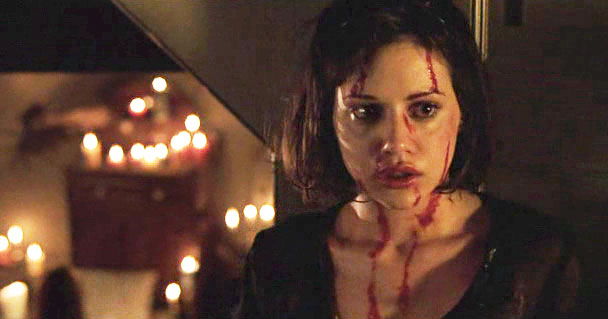
Cherry Falls ranks as my favorite teen slasher. However, many have never seen or heard of it. I realize that a remake would seem a little insensitive to Brittany Murphy, but I bet she would be honored knowing this movie received the attention it deserves. There are two reasons why Cherry Falls needs a remake. First, it was never released in the U.S. I’m guessing Hollywood thought it was too influential, as the storyline suggests teens must lose their virginity to survive. If America’s youth are that easily influenced, it’s time to look at the parents. Second, we haven’t had a good teen slasher since Scream 4, and that was in a series. I can’t remember the last good teen slasher. Hollywood needs to stop making crap that no one wants to see and get back to basics. Cherry Falls had an original storyline – gasp! – and serves horror well, as it’s dark, funny, gruesome, and entertaining. The horror film industry needs to cut back on CGI ghosts and jump scares, and get back to making movies that rely on a good story and actors.

Cabin by the Lake (2000)

Cabin by the Lake
Photo: youtube.com

Cabin by the Lake – a USA Network-release – is gold. In fact, good luck finding a DVD copy under $40, and you can find a lower-quality version on YouTube. Judd Nelson plays a writer/serial killer, and Hedy Burress is a fantastic final girl. Nelson not only kills them, he has created an underground garden of victims deep in the lake. The movie is funny, suspenseful and entertaining. A Cabin by the Lake remake would bring back a theme that has disappeared: the crazy writer. I mean a writer who is unbalanced and disturbed on his/her own, not one driven crazy by a supernatural force. The original story is different and refreshing, and again, it would be nice to see Hollywood get back to basics. I enjoy horror movies for a number of reasons, but entertainment value tops the list. Minus a few, modern horror movies are no longer entertaining. They focus too much on mood and CGI, and not enough on the story or character development.

If done correctly, all of these remakes would get Hollywood back on track, and introduce new and forgotten stories and elements to modern audiences. We hope good screenplay writers out there will pay attention!

We’d love to hear what movies you think could use a remake or reboot! Feel free to tell us in the comments or on social media.