Trends in Modern Storytelling in Film: Conan – Actors and Characters (2011)

As I mentioned previously, the 2011 version’s star Jason Momoa actually looks the part of Conan far more than Arnold.  He really does resemble a Vallejo painting quite well.  His choices for his portrayal of the conqueror aren’t bad at all.  He laughs heartily, drinks, brags, threatens all with believability, so why is it that when people say “Conan” the vast majority will say something in an Austrian accent?  Charisma.  Momoa certainly has the attitude and the look but he doesn’t have that “special quality” that Arnold possesses.  It’s no shame, few do, but it’s one of the strongest reasons I think Arnold made a superior Conan.  His presence and persona in the part are just overwhelming.  Add to that the voice, and yes, range Arnie gives his Conan (his exclamation of “you killed my people!” in rage and despair is far more effective than the many anger-filled tirades in the new film voiced in a grumbling hiss through clenched teeth) and this it becomes relatively clear why 1982’s portrayal will endure while 2011’s is classified as more a popcorn film.

Momoa looked very Conan-esque as Drogo in Game of Thrones.

Furthermore since we see so much of Conan’s childhood (a trend I think the film industry needs to start doing without…we see how Michael Meyers, Hannibal Lector, Darth Vader, and Conan become who they are rather than providing glimpses of a backstory and letting either good dialogue flesh them out or leaving it to the audience’s imagination) we see he has changed little from when he was a warrior boy to when he was a warrior adult.  Leaving only modest room for the character to grow and removing the mystique provided so well through montage in the first film.

Momoa’s performance is quite good, but not as larger-than-life as a guy who’s entire life is “larger-than-life” but what of his cast mates? Nonso Anonzie is great as Artus and wins the prize for the secondary character I’d most like to see in a spinoff.  Said Taghmaoui is good as a stereotypical thief but his character is in it with such unusual irregularity you don’t get nearly as attached to him as you do Subotai.  The main female character, Tamara, played by Rachel Nichols is done well, but she falls back into the “chosen one” category that so many characters are in (though “chosen for sacrifice” is less appealing) and has none of the bad-assery of Valeria.  Which only leaves our villains.

Of course Khalar Zym is our bad guy, played well with manic ferocity by Stephen Lang, however when comparing villains we see how much simpler he is as a character to Thulsa Doom.  Not only did his back story require a long pre-title narration, but he IS a skull-smashing, sword wielding, wildman.  He’s the Sonny Corleone of Conan villains to Thulsa Doom’s Michael and it makes you wonder how a cell-block boss like him could maintain power in the intervening decades between Conan’s village being burned and adult Conan’s revenge.

Zym looks more like a crazy villain than did Jones’ Thulsa Doom

This film’s scene is clearly stolen, as was mentioned previously, by Rose McGowan as Marique, who is a far more fascinating villain than Zym.  Not only is she a wicked sorceress with serious Elektra issues, but she is played somehow both as a incredibly creepy and still somewhat sultry by McGowan, who really has to try not to be full-on sultry just standing there in most of her roles.

Rose McGowan is great as Marique, possibly the best character in the film as her background and motivations aren’t always 100% obvious.

2011’s actors all did well with what they were given and made a fun adventure film, but it’s almost as though the bar they were provided was set far lower than in 1982’s outing.  Next post we’ll compare the two methods and see what they both accomplish.

Trends in Modern Storytelling in Film: Conan – Actors and Characters (1982)

OffTheCharts

According to the weirdo, but shamefully funny Pauly Shore comedy Son-in-Law,­ “charisma” is “… a special quality of leadership that captures the popular imagination and inspires allegiance and devotion.”  It’s a rare thing, even amongst the popular, talented, or famous.  If Pop Idol and American Idol have proved anything beyond the desire for mass audiences to watch public humiliation, it’s that just being great at something isn’t often sufficient.  But being good enough and having a lot of charisma can often be the difference between the singer who makes the records people buy and the singer who simply rings up the records people buy.

No one would ever claim Arnie is a great thespian.  I don’t feel he’s given the credit he deserves for being a decent actor most of the time though.  Arnold is good at playing Arnold, and these are often the roles he takes.  Most people couldn’t name off the top of their heads the characters Arnold plays in Predator, Commando, and  The Running Man (Alan “Dutch” Schaefer, John Matrix, and Ben Richards, by the way) as most people just say, “I like it when Arnold did this or that.”  But he does emote sadness, humor, goofiness, and rage all effectively, even if it’s essentially the same in most of his movies.

Arnold in 1977s “Pumping Iron” looking a lot like Conan as King of Aquilonia

His portrayal of Conan is no different.  He very successfully expresses emotion and his Conan is vengeful, inquisitive, ferocious, and gloomy, all believably during the film.  When he prays to Crom, you believe it.  When he asks “does it always smell this bad? How does the wind ever get in here?” you find yourself asking it along with him.  When he glares humorously and knowingly at Subotai for having a better god than him we glare with him.

And why is that?  Arnold has charisma.  His persona is even bigger than his Mr Olympia biceps.  In fact, it’s what got him the part as Conan.  Going by Boris Vallejo’s art and Robert E. Howards dark-fringed, sullen-eyed, bronze-skinned Cimmerian, the only aspect Arnie had was his massive physique and his larger-than-life personality, so readily on display in Pumping Iron where he was just being himself.  A part he played effectively for the next 30 years.  In fact, when you ask a lot of people what they know about Conan they more often than not say some lines, sometimes made up…in Arnold’s voice.  He left his stamp on the character as indelibly as he left it on the Terminator.  Yeah so-called “better” actors have been in other Terminator movies, but when asked “did you see The Terminator?” no one would respond, “Is that the Christian Bale movie?” despite many people out there jumping on the Bale wagon recently.  Many mistakenly believe if Arnold wasn’t a world-class muscleman he wouldn’t ever have been a star.  That’s certainly part of what he built his mountain of money on, but if you look at just this film it also stars Ben Davidson and Sven-Ole Thorsen who are arguably bigger and muscley-er than Arnold, but 9 out of 10 people wouldn’t know them.  So there is definitely something he has that they don’t.  And that something is “a special quality of leadership…yadda yadda yadda.”

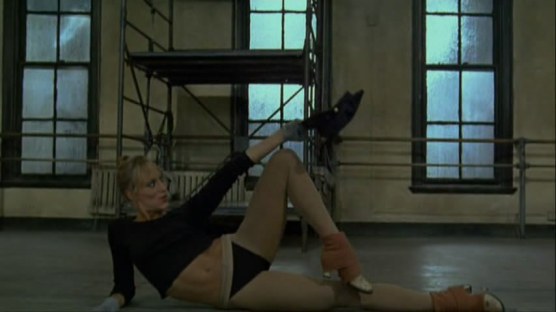
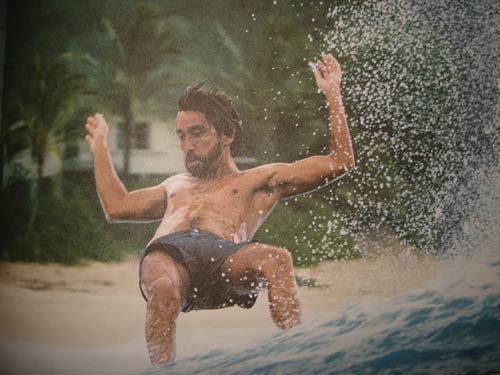
The other characters in the 1982 film received their parts for similar reasons.  Sandahl Bergman was cast as Valeria after director John Milius saw her in, believe it or not, All That Jazz, and exclaimed “she’s a valkyrie!”  Gerry Lopez, Subotai, a surfing buddy of Milius’, received his part based largely on his disarming personality rather than his acting ability, and it is his demeanor more than his dialogue that brings the character out.  Yet put together, they created some great characters, and despite my desire to propose marriage to Valeria at any given moment, Subotai comes close to stealing the show.

Sandahl Bergman in the “Air-Rotica” sequence in “All that Jazz”
Gerry Lopez was a surfer before he was an actor.  It was his swagger, slouch, and persona that makes the character of Subotai what he is.

The guy who really might steal the show is no surprise.  Despite a power-house cameo by Max von Sydow and some great over-work by Mako, James Earl Jones is without a doubt one of the most effective villains in fantasy films as Thulsa Doom.  The first question I would pose is: how many evil things do you see Thulsa Doom do?  Really the only thing you see him do personally is behead Conan’s mother in the beginning of the film; though given the world that’s established you’d think that kind of thing happens all the time.  So what makes Doom effective as a villain?  Sure he’s a 1,000-year-old sorcerer leader of a cannibal cult, but it’s what he doesn’t do that makes him powerfully scary; not because he can’t just because he couldn’t be bothered.  Jones plays him with so much subtle power you’re only moments away from falling to your knees in the worship of Set yourself.  Jones actually says he doesn’t want to play his villains in the typical, manic, Batman-villain type crazy evil.  Think Darth Vader, and, I think more powerfully, Thulsa Doom.  He never gratingly shouts orders or smashes skulls.  You know he can but he has “guys” for that.  He’s far too powerful to mix it up.  So when he says, “Now they will know why they are afraid of the dark. Now they learn why they fear the night” you shake in your boots far more than if he drew an axe and roared.

As Doom James Earl Jones radiated silent, subtle power. He wasn’t needlessly cruel or wildly vicious. It made him seem all the more powerful because of his confidence and calm.  In that scene it is his utter LACK of emotion that makes him seem so frightening.   The scene itself is terrifically done, shot in silence with only the score and Jones to focus emotions.

The characters are all believable for their world and included in an organic, if sometimes convenient ways for the story.  Again, this film isn’t perfect (what film is) but for the most part you overlook anything that isn’t 100% pristine because its intentions are so pure and its narrative so excellent.  Next time, we’ll look and see how the 2011 characters and actors compare.

A Love Letter to Psych

I received some bad news this week. To most, this may seem silly or dumb, but to me this was momentarily Earth shattering. Wednesday night, Psych announced this would be the last season. Five episodes left, and they’re done.

I cannot express how much this hurt. I have followed a show since day one, and I wasn’t even sure I would like it. It originally followed Monk, which was a hard show to follow. I loved Monk, and Psych looked a little too goofy for me. Oh, was I wrong.

I’ve wanted to review Psych or at least talk about my favorite episodes for awhile, but it never felt right. I hold it so close to my heart that it’s hard to put into words. I never felt that I could express why this show is so awesome or why it means so much to me.

Therefore, I’m writing my love letter to Psych. I can’t write this after the final episode because I will be a bumbling mess, and sometimes you have to ram an issue head on and never look back. I hope you enjoy what the show means to me…

  • It always makes me laugh. Unless you know me well, this isn’t easy. Psych never lets me down, and it always cheers me up. I have rewatched every episode dozens of times, and I laugh every time. There’s no rhyme or reason to it – sometimes it’s a facial expression, sometimes a one-liner, or even a nickname for Gus. The show isn’t afraid to be silly, and it embraces randomness. We need to laugh often, and Psych brings me happiness in the darkest times.
  • It’s my escape. I’m a full-time everything and work a lot. I seldom have free time, much less undisturbed alone time. Psych is that for me. I don’t want to be talked to or interrupted; that’s my hour to lose myself and relax. I binge watch to get lost and go to a place that’s simple and familiar. I can shut out the rest of the world and not think.
  • It speaks to my generation. So few shows aim at my age group, and the ones that do are very nichey. Psych covers everything from horror movies to wrestling to 80s movies to 90s pop culture. It’s almost impossible to get every reference, and you can rewatch them and pick up new ones. My favorites are the tributes to horror movies (Tuesday the 17th, The Devil in the Upstairs Bedroom, Here’s Lassie, etc.), and I’m not ashamed to say I have watched Tuesday the 17th every Tuesday the 17th since the episode aired, no matter what.
  • It’s love. When you truly love something, you should show it. I have a pillow, hoodie, two sets of PJs, slippers, bobble heads, two pineapples, etsy models, all seasons on DVD, and a shirt. Most of those were gifts, but my friends and family know that Psych is a straight path to my heart. I’m mildly obsessed and proud of it.

Psych pillow

With that said, I will miss the show terribly, but I will always cherish it. Psych has made me laugh, cry, and scream for joy. I want to thank the cast and team who made a great show – one that I have looked forward to for the last eight years. I wish the cast and crew all the best, and hope they continue to brighten up the world. It is with a heavy heart that I say goodbye, but as Chaucer said, “There is an end to everything, to good things as well.”

Trends in Modern Storytelling in Film: Conan – A Case Study Part 2

OffTheCharts

What makes a good protagonist character?  I was once given advice by a good friend about one of my characters who I created to be a warrior savant.  During one scene the character meets his match, but refuses to give up.  My friend told me he felt this was the most relatable the character ever was.  Not his brilliance as a combatant, but when he refused to give up despite the long odds.  With that advice in mind I completely changed the character to embody those traits rather than his previous traits of being a natural genius.  I still believe a character that has to face hardship to gain ability makes for a better hero and we return to the two Conan films to see how this trend has changed over the years.

Conan the Barbarian (1982) – The Wheel of Pain: Becoming Great

Wheel of pain

As I said in my previous post, the Schwarzenegger Conan is sold into slavery after his village is burned and his people killed.  In a dramatic montage we see him and dozens of other boys herded into a desert where they push a monstrous device the filmmakers dubbed “the wheel of pain.”  During the scene we see young Conan with many other slaves pushing the wheel.  Then adolescent Conan with fewer slaves pushing it.  Then adult Conan, now as Arnold, pushing it alone.  Conan is insinuated to have pushed the device for perhaps a decade and a half, some of that time alone; only the strength of his will keeping him alive and making him stronger.  Because of the strength he has gained, his rather benevolent slave master takes him to a fighting pit where he is instantly in over his head as a more experienced fighter rushes him, wounds him, and nearly kills him.  Again, Conan’s strength of will, along with the physical strength he gained pushing that wheel, overcomes the opposition and he defeats his opponent.  We then see another montage as Conan improves in the fighting arena.  Mako’s narration provides his impetus:

He did not care anymore. Life and death – the same.  Only that the crowd would be there to greet him with howls of lust and fury. He began to realize his sense of worth. He mattered. In time, his victories could not easily be counted. He was taken to the east, a great prize, where the war masters would teach him the deepest secrets. Language and writing were also made available, the poetry of Kitai, the philosophy of Sung…

Here we see him improving himself, fighting endlessly.  We see him training with masters, studying, practicing endlessly into the night.  We see Conan getting better so that when the time comes for him to fight for real, we know why he can and feel he has earned the victories over his enemies.  This is what makes him a great protagonist.

Conan the Barbarian (2011) – Born of Battle – The Chosen One

Recently there has been a strange trend in making our heroes the “natural genius” or “chosen one” that I find unusual; almost as though we want our heroes to be naturally better than us rather than to have them work for their abilities.  This “chosen one” trend can be seen in a lot of recent films.  The Matrix, Star Wars I-III, Eragon, and most disturbing to me (no joke) Kung Fu Panda, where the guy who worked his tail off to be great is the villain, and the “gifted” character who doesn’t have to work to be great is the hero.

In the 2011 Conan film Conan, in an interesting scene, is born when his pregnant mother is stabbed and his father performs an impromptu sword-cesarean.  We then see young boy Conan who wants to partake in a trial for the older boys to race through the mountain with a small egg in their mouths, those who return without breaking the egg can participate in battle.  The boys are ambushed by vicious, adult, tribal warriors during the race.  The other boys retreat but Conan stays to fight.  The young boy killing them all, beheading them, and returning to town without breaking the egg.  It makes for a rousing scene…however something is missing from the character.  We just accept our hero is naturally better than the older boys.  He is our hero and he’s gifted, even as a young boy he’s better than his peers, enemies, everyone but his father.  There is no progression from boy, to warrior.  He’s always mighty, and therefore many of his fights are less fulfilling because we know he’s gifted, and furthermore we don’t feel he has earned his strength.  He was “born of battle,” he just is great he didn’t have to work, train, and struggle to become great.

Many great, classic characters embody when I think of when I consider what makes a great hero.  Rocky immediately springs to mind; he knows he can’t beat the champ, saying:

Who am I kiddin’? I ain’t even in the guy’s league.  It don’t matter ’cause I was nobody before… That don’t matter either.  It really don’t matter if I lose this fight…  ‘Cause all I wanna do is go the distance…if…that bell rings and I’m still standin’ I’m gonna know for the first time in my life that I weren’t just another bum from the neighborhood.

It’s this we can all relate to.  Few of us are as slick and talented as Apollo Creed, but many of us feel like just another bum from the neighborhood and look for a way to disprove it.  It makes me wonder why so many of our recent heroes have been written to simply be great rather than earn greatness.  Is it an aspect of lazier writing (writers would rather just have characters be than explain why) or is it endemic of our culture?  No one wants to earn their greatness, we all just want to be granted greatness and declare ourselves great.

It might seem like a little heavy thinking for a discussion about a couple of fun fantasy-action-adventure films, but it is worth consideration.

The next post will be about the actors’ in both films; analyzing heroes, villains and how they are portrayed.

Trends in Modern Storytelling in Film: Conan – A Case Study

OffTheChartsI came late to the Conan films. I knew it was where a young Arnold Schwarzenegger got his first big movie role, and I remember seeing parts of Conan The Destroyer as a kid, which makes sense as the sequel is far lighter and more kid-friendly than its predecessor, Conan The Barbarian.  In fact, I wasn’t really aware of the first movie until adulthood and didn’t see it until only two years ago.  I was vaguely aware of it, but always assumed when people mentioned Arnold Schwarzenegger in Conan they were talking about the one I had seen.

I saw the 2011 Conan the Barbarian starring Jason Momoa before I saw the 1982 Arnold film as it was on Netflix streaming.  I remember it got mediocre reviews, but I found it to be a fun action-adventure-fantasy film.  I thought it must outshine the original, I had seen The Destroyer, and despite a fun feeling and a really cute Olivia D’Abo (as a kid that was a big selling point) it was clear the modern take was superior…until I finally saw the 1982 version weeks after I saw the 2011 version.

Conan the Adventurer

Many agree the original 1982 Conan the Barbarian is a terrific, grown-up, action-adventure film.  I agree, it is a great, great film; but during my viewing of it, I realized there are some big differences in storytelling circa 1982 and storytelling circa 2010.  This progression isn’t just strange, but also a little confusing as, in many cases, it feels almost like we’re taking steps forward in technology but steps backward in narrative.  It’s something that has been showing up in a lot of films/shows/stories recently, but as these two films are relatively fresh on my mind and display these differences in such bright clarity, I thought I would use the Conan the Barbarian films, 1982 and 2011, as case studies in how film making and storytelling have changed…not necessarily for the better.  I’ll steer clear of the Robert E. Howard source material, as not only is that digging into a different concept (printed stories versus movie adaptations), this mini-post-series is about narratives and trends in film making more than the Conan character.  I’ll start this week with quick mini-reviews of the two Conan films in question, I actually enjoy them both, but in case anyone hasn’t seen them, I thought a brief intro would be nice:

Conan the Barbarian (1982)

Conan82

This film was conceived as a possible vehicle for the then up-and-coming star Arnold Schwarzenegger.  After being impressed by the body builder’s persona in Pumping Iron, he was cast as the eponymous barbarian as the potential start of a franchise.  The film, directed by John Milius, also starred Sandahl Bergman and Gerry Lopez as Conan’s thieving allies, Valeria (who, along with Sorsha in Willow and Selene in the Underworld films is one of my favorite female characters ever) and Subotai (named for the most ferocious of Genghis Khan’s generals).  The story is mostly grounded in reality, as we follow Conan’s journey to find the man who slaughtered his village and sent him into slavery.  We see Conan the boy, the slave, the pit fighter, the thief, the warrior, and finally the hero.  The narrative takes Conan into conflict with Atlantean sorcerer Thulsa Doom (sorcerers were always the most dangerous to Howard’s Conan, as displayed by his arch nemesis Thoth Amon) played terrifically by James Earl Jones with a calm gravitas most villains lack nowadays.  Also appearing are legendary Japanese actor, Mako as a wizard and one of the best narrators in film history, and a cameo by Max von Sydow as King Osric who sets Conan’s band on the mission that finally puts him on collision course with Doom.  Directed with grandeur, acted with full-force, filled with amazing sets, and loaded with action, 1982’s Conan is what you want out of a “grown up” fantasy film and if you haven’t seen it go check it out now!

Conan the Barbarian (2011)

conan_the_barbarian_logo_wallpaper-wide

This version stars Jason Momoa, fresh off his Game of Thrones part, as Conan in a story that shares some similarity with the 1982 film but diverges to become its own, distinct movie.  We see much more of Conan’s youth, see his father (played with power by Ron Perleman), and more of Cimmeria.  The film’s villain, Khalar Zym, destroys Conan’s village in search of a powerful magical relic that will bring back his necromancer wife.  We are then transported to adult-Conan’s life as a reaver and pirate, and we meet his allies Artus and later the thief Ela-Shan.  Conan’s “fate” brings him in contact with Princess Tamara and he has to protect her from Zym who needs her to complete his ritual.  The most interesting character is actually Zym’s witch daughter, Marique, portrayed with creepy perfection by Rose McGowan.  It too is filled with fun action, interesting venues, high-energy action.  While not as “complete” a film as the 1982 version, it is still a fun movie, Momoa certainly has the look of Conan, and the story is inventive.  Well worth a watch if you like modern fantasy action movies.

With one film made 30 years before the other, and since the latter is neither a direct sequel, nor a true reboot of the original franchise, it stands to reason a lot of differences in narrative, style, and characters would appear.  The next in this series will be a look at how the character traits of the Conans in their respective films differ, and how they may represent the prevailing trends of “heroism” during the time they were made.

Slimed: Nick’s History – Part 2

“What’s the point of being safe? Let’s be raw…We hoped our irreverence and the voice we were speaking in would inspire kids.” – Will McRobb, “The smartest guy in the room at Nickelodeon”

And inspire they did. As promised last week, we’re going to dive back into Slimed! An Oral History of Nickelodeon’s Golden Age, a fun book that tells the story of the network’s heyday.

So, why was 80s-90s Nick so great? At the time, it was edgy and different. All of the shows were completely different from one another, and sometimes they had little-to-no budget to make it all work. It wasn’t pretty sets and people; it was real kids doing real things. Kids played and competed in healthy ways, got dirty outside, made fools of themselves – and it was good.

Back then, Nick’s mission was to be “the network for kids”, and they succeeded by raising a generation of people who love cartoons and still have a great sense of humor (well, most of us). It wasn’t politically correct, and it wasn’t afraid to address real-world issues. If you ask anyone who grew up in the 90s if they had a favorite Nick show, they’ll say yes. They’ll probably list a few. In fact, I own all available seasons of Are You Afraid of the Dark, Salute Your Shorts, Hey Dude, and Clarissa Explains It All.

Here are a few more highlights from the book:

  • Characters – I found it interesting that certain actors are very different from the characters they played on the show. For example, Joe O’Conner and Elizabeth Hess, who played Clarissa’s parents. O’Conner played a very laid-back dad, whereas Hess played the more rigid, health-conscience mom. Their interviews showed that O’Conner was kind of uptight, and Hess supported Melissa Joan Heart and her controversial career decisions.
  • Child Actors – We hear so much about child/teen actors cracking from the celebrity-status pressure. I was relieved to read that most of these stars turned out well. Many of them have families and normal lives, and some continued their acting career and stayed in the business. There are a few that seemed to struggle, but that’s life, and considering how big Nick was in the 90s, it’s nice to know stardom didn’t ruin their lives.
  • Doug – I’ve always wondered why Doug moved to Disney, and the book tells the story. The show wasn’t the same; it was almost too cutesy and lost what little edge Doug had (compared to other Nick cartoons). I didn’t continue to watch it, and if I wanted Disney, I’d pop in a movie. Nick knew how to do cartoons.
  • Ren and Stimpy – Did you know the creator was kicked off his own show? I’m not telling the full story – because you’ll want to read the book – but it involved money, censorship issues, and a controversial episode called Man’s Best Friend, which was banned. The episode is now available on DVD, and after doing some digging, I don’t see the big deal. There are way worse things on now in content and quality.

I hope you’ve enjoyed the review and check out the book. It’s worth the read!

I also want to send out a special shout-out to the author Mathew Klickstein who messaged us this week and thanked us for our review. It helped restore my faith that some people are just so cool. Happy reading!