Guest Post: A Nightmare on Elm Street – Original vs. Remake

Happy Halloween week, everyone! Our good friend Blake Best, author of Seeing Red and Green, joined in the remake conversation this month to discuss this horror classic. Please show some love, and feel free to learn more about him in our Artist Spotlight: Blake Best.
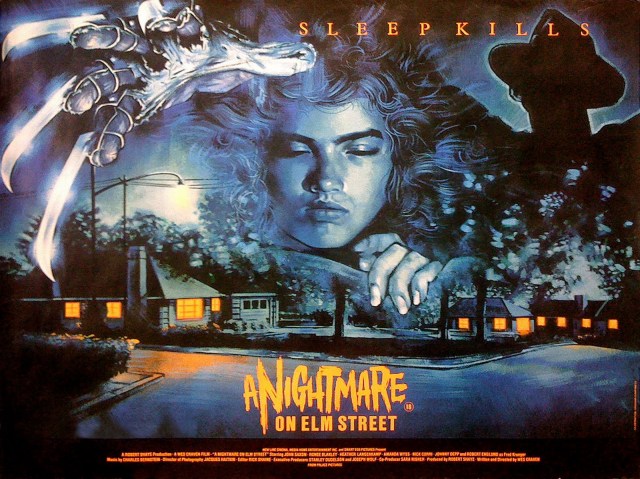
A Nightmare on Elm Street

A Nightmare on Elm Street: Original vs. Remake

When the original “A Nightmare on Elm Street” was released in 1984, it became a surprise hit. The late Wes Craven (1939-2015) created the perfect horror film: great story, believable characters, and the cinematography was spot on for the dark nature of the film. Craven expanded on the “rubber reality” concept and in doing so created an iconic boogeyman in “Freddy Krueger” (Robert Englund), the fire-scarred, razor-fingered maniac that launched one of the most successful horror franchises in modern cinema.

The remake of the film was released in 2010 to DEFINITE mixed reviews. Most purists balked because Robert Englund did not return as “Freddy,” the role that essentially made him a household name among horror fans. Jackie Earle Haley was cast instead, fresh off his turn as “Rorschach” in the hit film “Watchmen.” Another reason for the criticism was the presence of Michael Bay as a producer on the film. Bay is known for his attachment to action blockbusters like the “Transformers” films. I was initially biased because of my unabashed love of the first “Nightmare” film. My new book “Seeing Red & Green” examines the popularity of the films and discusses why “Freddy Krueger” has become such a pop-culture icon. I concluded there would be no better time than now to share my comparison of the original to the remake.

Similarities:

There are a few similarities between the films. The basic premise is the same, with a group of teenagers sharing collective nightmares about this dark and ominous man. Several of the teens are killed off by Freddy one by one in unique ways and the ending of the film is ambiguous, leaving room for a possible sequel. Freddy’s general appearance is very similar to the original film (tattered red and green striped sweater, hat, and razor fingered glove), though in the remake his sleeves are striped and the makeup has been altered to resemble a more realistic burn victim.

Differences:

The differences are the defining characteristics in comparing the films. The characters are altogether different (including Nancy, who is less the girl next door and more an introverted artistic type) and Freddy himself underwent changes to his backstory.

The original allows you to get to known the characters on a more personal level, allowing you to feel a certain way about them (sympathize, clamor for their death, etc.) The remake doesn’t give you enough time to know them. With the exception of a couple of characters, the majority of the teens are introduced and promptly killed off, allowing you no time to feel ANYTHING about them.

Freddy’s backstory in the original was that of a child killer who escaped conviction due to a technicality. Vengeful parents cornered him in his boiler room hideout and set him ablaze. The remake’s backstory is markedly different, with the revelation that he was a pedophile. Originally Craven intended for this to be included in the original film, but it was scrapped due to a very public scandal in California involving children at the time of the film’s production. In this film the child killing facet of his backstory is completely removed from his “pre-burning” history. The film goes one step further and toys with the audience, leaving them unsure of Freddy’s guilt (until closer to the ending of the film).

The original featured all practical special effects, as computer generated imagery (CGI) was over a decade away from being introduced. Freddy’s makeup/prosthetics and all of the other effects (including the “face through the wall” gag) were all physical effects made with latex, wires, ingenuity and a ton of fake blood, around 500 gallons. The remake featured an overabundance of CGI effects, including a portion of the “Freddy” makeup. The iconic “face through the wall” effect was entirely CGI. It feels like the CGI was used to distract audiences from issues with the plot and character development.

The original “A Nightmare on Elm Street” was an entirely original concept and used very few tropes typical to the ‘slasher’ genre at the time. The remake actually re-used several one liners from the previous “Nightmare” films. I’ll leave it to you to figure out which ones!

How do I rank them?

The original surpasses the remake in nearly every way, save for budget ($1.8 million for the original, around $35 million for the remake). The 2010 film is far less gory than the original, which is surprising, since the films are part of the ‘slasher’ genre. “A Nightmare on Elm Street” (2010) is less of a “remake” and more of a “re-imagining,” geared towards catching the attention of younger generations

— Blake Best, author of “Seeing Red & Green”
Friday the 13th: Original vs. Remake

As we draw closer to the end of the month, you knew we’d save some of the best slasher movies for last. Friday the 13th is one of my favorite horror movies, and I have been watching it since I was a little girl. I think I was 8 the first time I saw it. When I was 10, I went to camp and was cautious of my surroundings because of this movie. Few movies can do that nowadays.

Friday the 13th
Photo: dailyutahchronicle.com

There are several differences between Friday the 13th (1980) and Friday the 13th (2009), but I must point out something important. The 2009 movie is not a remake of the original. From the opening scene, Jason’s story has already happened. His legend lives and haunts campsites everywhere. His story is told around the campfire as if it’s happened several times. It’s also not a sequel because it cannot and does not fit into the series. And in the 2009 version, Jason is the killer. Horror fans know that doesn’t happen until Friday the 13th Part II.

Friday the 13th – The Original

The original Friday the 13th is well done and follows suit with many horror movies from this time period that try to prevent teens from having sex and partying. If you don’t behave, you’ll die. This message is classic of the genre, and there is a final girl.

One of my favorite things about it is the sound; it is a very quiet movie. You hear rain, crickets and frogs outside, and the music only comes in when the killer does. I miss that. Nowadays, either everything is filled with music for soundtracks or talking. We don’t need constant conversation, especially if people are telling you what they see. One reason this movie is so effective as a creepy camp movie is because there is natural sound. You hear the natural environment, which puts you into the movie. There are also incredible shots of the lake and surrounding area. You want to feel relaxed, but there’s a psycho killer disrupting it. The score pays tribute to Hitchcock’s Psycho, and audiences clearly see the people who made this movie are old-school horror fans.

Mrs. Voorhees Friday the 13th
Photo: fridaythe13th.wikia.com

The Women

Spoiler alert: Jason’s mom, Mrs. Voorhees is the killer. I really love this. In the slasher cannon, a woman is seldom the killer, and even though she’s tiny, her rage and disdain for teenagers is pretty awesome. She harbors her son’s spirit and uses that to fuel her motivation. More importantly, she has clear motivation, which is something the 2009 version lacks. The final fight scene between Mrs. Voorhees and Alice feels real. They roll around, pull hair, scream and squeal, hit each other, and Alice decapitates her in the end. The final fight is entertaining, fun, and the end of the movie serves as a perfect set up to a sequel or conclusion.

Friday the 13th – The Homage

I have to say I don’t love Friday the 13th 2009. I have so many issues with the movie-making decisions, and I can’t compare the original with the 2009 version because they’re completely different. By today’s standards, the 2009 version is OK, not great. I think it was so popular because Jared Padalecki stars in it. Supernatural fans probably saved this movie from bombing.

However, his character is completely useless. The first time I watched Friday the 13th 2009, I was furious that his costar Danielle Panabaker – at a whopping 5’6” – saves him several times. Spoiler alert: She dies. This is where the 2009 version screwed up most. They had the opportunity to do something few slashers have done: Have two final girls. This could have put the movie at the forefront of the girl-power movement before girl-power was a movie trend. Her death was unnecessary and leaves you wondering why they invested so much into her character.

The main characters are probably my biggest problem with this movie. They are idiots and make terrible decisions, and they have no development. The two minor guys Chewie and Lawrence are the best characters in the movie. These guys add comedic relief and have likable qualities, and you actually care when they die. Most everyone else you want to see die.

I also find this movie painfully boring. There’s a difference between build-up and boring. The conversations are boring; the shots are boring and way too dark; and aside from pretty people, there’s not much to invest in. There’s way too much music and talking. These people never shut up, which slows down the action. Movie tip: Slasher movies should not be dialogue heavy. Lack of sound and the killer’s music help make these a stand-out genre.

I can tell the cast and crew did try to pay homage to the series though. They did not try to outdo the series or remake the original, which I appreciate. Kills are similar to others in the series, and they made Jason scarier. He’s quick, smarter, and powerful. The 2009 made Jason 2.0 in a tasteful way, not a stupid cyborg way. They have both a campsite and cabin settings, paying tribute to the early movies and updating accommodations to fit 21st-century times. Let’s face it, present-day college kids would stay at a cabin, not in tents.

The verdict: The original. As fair as I try to be and as much as I love Sam (Padalecki), I vote for the original. I appreciate the 2009 version for not butchering the Friday the 13th series, but in the end, Mrs. Voorhees wins in my book.

P.S. If you want to see a perfect tribute to the series, watch Psych’s Tuesday the 17th. It’s horror/comedy gold.

Feel free to share your thoughts in the comments, and happy horror watching!

Thirteen Ghosts: Original vs. Remake

I saw the 2001 version of Thir13en Ghosts when it came on my college’s free movie channel (it showed second run theater films). When first watching it I really enjoyed it for its genre-spanning qualities, it was a bit funny, a bit creepy, a bit gory, and a bit action-y. It came to my utter surprise a few years later when I found out it was a remake. I saw 1960’s 13 Ghosts on basic cable and at the time I thought it was actually a goofy comedy, not a horror movie. I’ve since re-watched them both and have to say they are both great fun and a fine example of how to do a modern remake.

The Plot:

The basic plot for both films is essentially the same: A family having money problems receives notice that a wealthy Uncle has died and left them his house. The catch is that the house is haunted by twelve ghosts (the thirteenth being a mystery) and the spirits seem angry and threatening.  The ghosts interact with the characters but can only be seen using special glasses, something that surprised me was in the original.

In the original the family is told up front, the house is haunted, and it displays the classic “can you spend the night in a haunted house for a lot of money” trope. The ghosts threaten the characters via Ouija Board and the whole thing plays like a really great episode of Scooby-Doo, with a lot of misdirection and a good combination of real-world villains and supernatural spooks. The family doesn’t know it but there is treasure in the house and the son, Bucky, finds some money and the Lawyer, Ben, asks him to keep it a secret. We find the uncle, Plato Zorba, communed with ghosts with his housekeeper, Elaine Zacharides (played wonderfully by Margaret Hamilton of Wicked Witch of the West fame and even called “a witch” several times in the film) and twelve of the unfortunate spirits they channeled are trapped in the house awaiting a thirteenth to free them.

The remake is very much in the spirit of the original. A father, Arthur Kriticos (played by the terrific Tony Shaloub) loses his wife and now cares for his two kids (one of whom is Shannon Elizabeth) along with his live-in housekeeper. His Uncle, Cyrus (F. Murray Abraham!) leaves him his house and the family moves in. Unbeknownst to them but “knownst” to us (to quote Mel Brooks) Cyrus used to hunt ghosts and trapped twelve of them in the house for nefarious purposes. The lawyer, Ben, is still there and plays a similar if minimized role. Hamilton’s character is split between Matthew Lillard’s Dennis Rafkin and Embeth Davidtz’s Kalina Oretzia who hunted ghosts with Cyrus. Here the ghosts are part of a grand evil scheme of Cyrus’, but are still prisoners in the house waiting to be freed by a thirteenth ghost. It’s a clever way to update the story and stay true to the original.

The Ghosts

Margaret Hamilton, the Wicked Witch of the West herself, as Elaine in 13 Ghosts.

The ghosts in the original aren’t all as well defined but the effects on them work well to make them eerie, especially for the time. We know of a hanging ghost, an executioner, a lion and his tamer, a skeleton, an Italian chef, and eventually Zorba himself. The film effects used by theater-experience pioneer William Castle made for pretty good ghosts, even if the effects were rudimentary even for their time (yes at one point you can even see the strings on a fly!) The ghost footage is used and reused but it’s so interesting it catches the eye every time. Character reactions range from fear (the older sibling Medea is threatened and the father is afraid) to indifferent fun (Bucky actually enjoys their antics sometimes) but at their scariest you can see how well even low-budget effects can work when used correctly. In this film the thirteenth ghost is created by Ben, when the ghost of Zorba attains his vengeance on the lawyer for murdering him and prevents him from killing Bucky to claim the treasure for himself, thus freeing the ghosts but Elaine later reveals they will be back…but not in an ominous manner.

In the remake the ghosts have a defined purpose in the “Black Zodiac” and the house is a machine “designed by the devil and powered by the dead” from plans by an astrologer name Basileus used to open a portal to hell granting the machine’s master powers. What’s interesting about these ghosts is their design, each is appropriately gruesome with great names, “The First Born Son, the Torso, The Bound Woman, The Withered Lover, The Torn Prince, The Angry Princess, The Pilgrimess, The Great Child & Dire Mother, The Hammer, The Jackal (who is GREAT), and the Juggernaut,” with Arthur representing the thirteenth ghost created out of an act of pure love. Instead, the machine is thwarted and the ghosts captured by Cyrus (who is revealed to be alive!) turn on him and are freed from captivity. The design of the house is a little more out-of-reality but is still very creative and the use of glass and sealing spells adds even more to the looks unique look. The entire mythology created around these ghosts is terrific and it builds up to a fantastic conclusion.

What Makes them Work?

Both movies mix horror, humor, and mystery together in perfect doses. The 1960 version is a goofier film, both in some of its characters and its production values, but it is still very enjoyable. It’s not perfect but highly entertaining and like the original Dark Shadows TV show is charming and loveable for its William Castle cheesiness and skinflint budget. The story is still pretty solid and it even has a moderately positive ending. The remake is less “goofy” but is still silly and has some downright laugh-out-loud portions and a winking style that makes the audience know they aren’t taking it seriously while still playing it straight. It also holds its story together well with excellent characters and also a positive ending, rare in modern horror.

The Verdict:

Is surprisingly a TIE. I enjoyed both equally but differently, the original appealing to the simplistic ghost story lover in me, the remake to my modern, slick horror cravings. Neither strive to be cinematic classics or masterpieces but both are highly entertaining and make for terrific, ghostly viewing.

The Fog: Original vs. Remake

The original. Enough said.

I’m kidding … I won’t end the post here, but I could. I could spare you some remake bashing, but that’s not our purpose. We try to be fair in our reviews, so I’m only going to stick to some major points. After seeing the remake, I can understand why fans were so upset. If you liked the remake, I’d love to hear why, so feel free to contact us or post a comment. We’re always open to other opinions!

A brief intro to both movies:

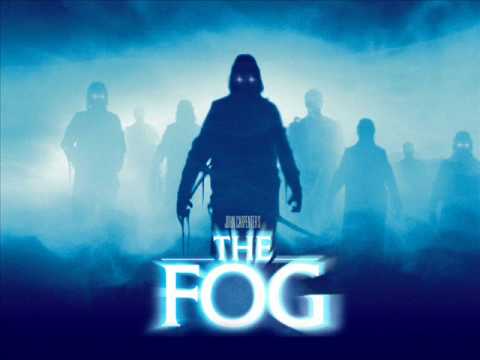
The Fog (1980) was directed by John Carpenter, and starred and featured classic actors and actresses you know from Halloween and Spielberg’s Jaws. The film exemplifies classic ’70s- to ’80s-style good horror, as it is was creepy, well shot and most acting was well done. It takes place in a small island town with a dark history and sea urban legend.

The Fog (2005) was directed by Rupert Wainwright, who you may know from his movie Stigmata, and John Carpenter helped write this screenplay. Shame on him. It sort of stays true to the story and does take place in the same setting. The performances depend on the actor, and there are some major issues compared to the original. It would take a day to discuss everything they changed, so I’m going to spotlight my five biggest issues with the remake and why it doesn’t work.

1980 The Fog
Photo: YouTube

The Fog: The Top Five Differences That Break The Remake

The Fog – Even though both carry the title, there is one major difference between the two. In the remake, the actual fog is an afterthought, and you have no reason to fear it. The Fog (1980) focuses on the fog and what happens to the characters when it appears. The remake does not. Instead, it focuses on the characters – who we don’t care about – and the fog might as well be a spring shower. The Fog (2005) lacks suspense, spookiness, and you ask yourself why they even bothered keeping it.

Radio Personality – A sex icon in the ’80s, Adrienne Barbeau did a stellar job as a sultry radio personality in the original. If I lived in this small town, I’d listen to her. Great look, great voice, great personality. As many radio personalities, she can turn it on and off as well. For the most part, she stays in the lighthouse watching over the island when the fog comes in. She is the reason many people survive.

In the remake, Selma Blair plays this part. Her character is the only redeeming aspect of this movie. She’s no Adrienne Barbeau, but she tries, and we easily see that. She’s a hot rocker chick, which I appreciate given the time period, and she really tries to embrace the character. Many of the scenes and lines are the same, and she is the light in this movie. Blair does the best with what she has.

Cinematography – Dean Cundey was the director of photography for The Fog 1980. If you don’t recognize the name, you know his other works including Jurassic Park, the Back to the Futures, the original Halloween II, The Thing (1982), and dozens of others. The shots in the original are amazing. The movie is shot so well, it’s a piece of art in itself. The remake throws all that out the window. Nathan Hope has this role in the remake, and I will just say he is no Cundey.

The Priest – This may have been the most confusing aspect for me, other than the ending. In Fog 1980, the priest serves a priest role. He provides the legend, explains what’s happening and why, and helps save the town in the end. He does drink, but that shouldn’t be a big deal, right? Wrong.

Fog 2005 blows this completely out of proportion. I asked myself is that supposed to be the priest? I thought it was a homeless guy dressed as one. That’s what the original did to this character. They took a regular person with a vice – because we all have one – and turned him into a blubbering mess of a man. He serves no purpose, and if he was supposed to, you wouldn’t know it because they butchered the character so badly. He’s an unreliable character who is supposed to help, but as an audience, we blow him off. I have to ask why? Why did they do this? It doesn’t make sense or serve the movie in any way.

The Ending – Where to begin … Spoiler alerts: They changed A LOT in the remake, including the ending. I seldom rip apart something, and this is one of those moments. In the original, there is a climax. The fog once again moves in, and all hell breaks loose. You see main characters wherever they are on the island, and there is unity as well as disconnect. Everything ends up okay because the priest accepts his fate to defeat the fog and what lies within it. Most main characters survive, and the potential for the fog to come back to another town with a similar history leaves you uneasy. Well done.

The remake does none of this. During this climatic scene, all characters end up in the same place. Never mind that Blair is supposed to watch out for the town in the lighthouse; let’s have her there too. Then, kill the priest with CGI glass from broken displays. Then for extra fun, let’s have a ghost pirate in love with a main character, have her kiss his decayed face, turn into a ghost, and walk away in the graveyard moonlight. I cannot express enough disdain for that ending, and shame on everyone who had anything to do with it.

The verdict: The original. Unless you want to yell at the TV for poor movie-making decisions.

Dawn of the Dead: Original Vs. Remake

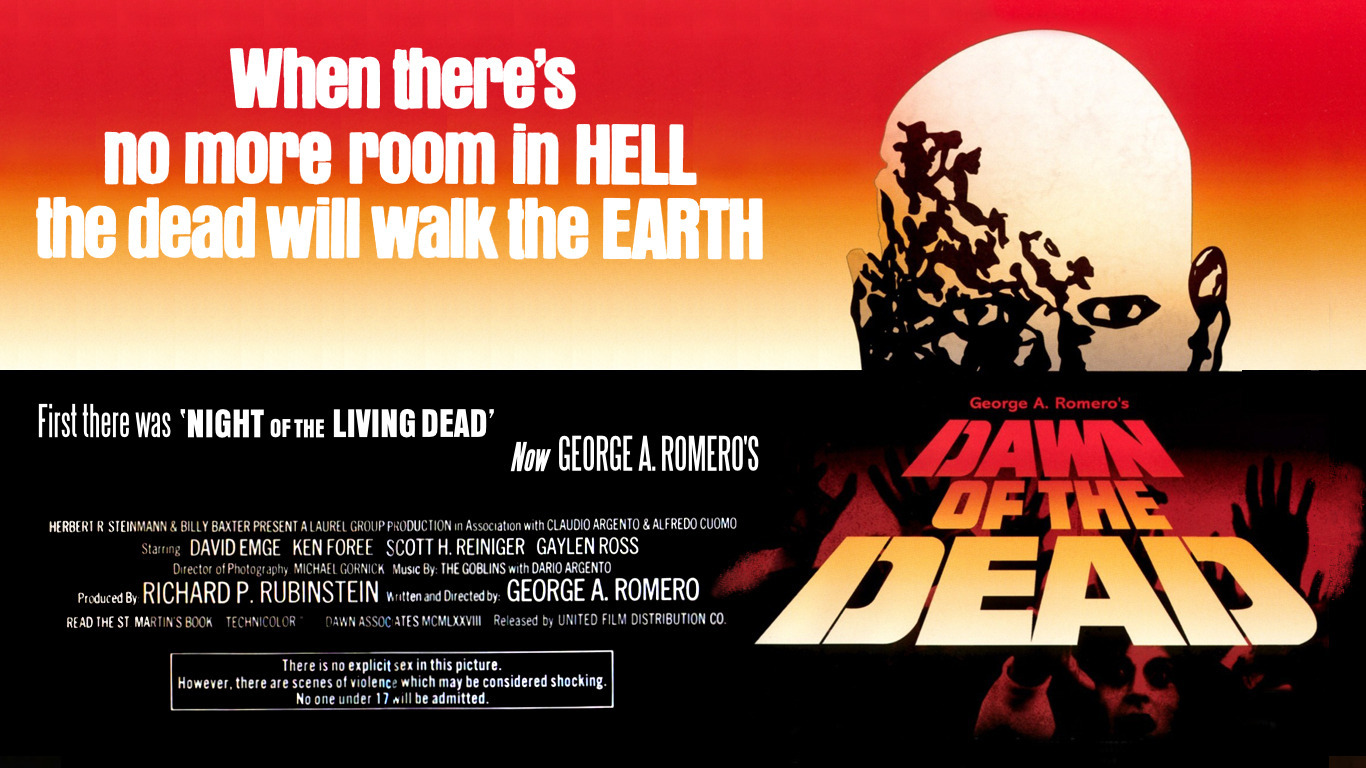
Few horror movies have been as influential on pop culture as George Romero’s Dead films. Though he started with the small, but revolutionary 1968 film Night of the Living Dead it was his follow up Dawn of the Dead in 1978 that made a greater impact on the future of zombie entertainment. These movies established the undead flesh eating zombie on film (then mostly referred to as “ghouls” in the culture) and interpersonal conflict between the human characters we follow during the story. It was Dawn however that created the idea of urban/suburban survivors scrounging for supplies and trying to subsist in a zombie-ravaged post-apocalypse. Over the years Romero’s first three zombie films developed a rabid cult following and the first film was the subject of a near perfect remake (directed by special effects guru Tom Savini) in 1990.

In 2004 a remake of Dawn of the Dead was released, directed by former commercial director Zach Snyder in his first feature film. Immediately the cult based around Romero’s original work rebelled, but as audiences, even die hard horror audiences, began to see the film it became clear this wasn’t just a cash-grab remake but, like Savini’s, one very much in the spirit of the original film.

Dawn of the Dead (1978)

The original Dawn of the Dead took what worked from the tight and focused Night of the Living Dead and expanded it into a broader world. It trades the isolated farm house for a suburban shopping mall, though it maintains the idea of a small group banding together. There is a lot that works and some that doesn’t, but it still makes for an entertaining film.

The Good:

  • Characters: With such a small cast you get to know and care about the main group of characters. Gaylen Ross and David Emge as the news broadcast couple are effective as neophytes who want to survive but don’t start out with everything it takes. Scott Reiniger is great as a SWAT member who actually cares about what he’s doing but realizes the cause is lost, and Ken Foree steals the show as Peter, another SWAT member who ends up as the defacto leader thanks to his cool head, forceful personality, and common sense. Even when annoying you genuinely like them and want them to survive the horror.
  • Location: The suburbs shopping mall and how they use it is remarkably effective and part of what ended up being the most influential. It’s the first time we’ve seen regular people scavenging for survival the ruins of the old world.
  • Effects: The zombie and gore effects are terrific. Some of the more gruesome zombies look truly gruesome. Given the age of the film, a lot of the practical effect really do hold up and as they are practical effects make a big impact on screen.

The Bad:

  • Tangents: The film lacks the focused intensity of Night, which behaved as a short wild ride. It meanders from SWAT raids to redneck hunts. Sometimes the scenes feel unnecessary and given the length of the film you wonder how many of the extraneous scenes and montages need to be in there as they can kind of take you out of it.
  • The Stupid: There is a LOT of stupid in this movie. From characters that behave in incredibly dumb ways to enhance artificial tension (by not being able to get their keys or forgetting a bag) to entire sequences that really take away from the mood. While zombie movies tend to agree other people can be more dangerous than zombies…rampaging bikers riding through the mall hitting zombies with pies is a tonal left turn. And to me is a massive black mark on an otherwise great narrative arc.

Dawn of the Dead (2004)

Surprisingly the remake actually follows the intro of the original Night of the Living Dead more than Dawn. A 10 minute build to set up the world and events is followed by a plot-punch in the face as the zombies take over. It takes what the original film did, stripped some of the goofier stuff, and added a bit of modernization to make a great progenitor for modern zombie horror.

The Good:

  • Characters: AGAIN the characters are the strongest part of the film. The larger cast starts with principle character Ana played by Sara Polley, and later adds Ving Rhames, Mekhi Pfeiffer, Jake Weber, Lindy Booth, and even Matt Frewer in supporting roles. The cast is bigger but each character feels as though they have a purpose and you care about their outcomes, whether you want for them to make it or to be brutally shotgunned. My favorite is Michael Kelly as CJ. You initially hate his character but as the story progresses he ends up being one of the best. A testament to the writing and performance. Ken Foree does a cameo saying his famous quote from the original as does Tom Savini, appearing as a sheriff. And he is one cool mofo.

  • Sound Design: There is an old saying that sound design is something that you don’t notice unless it goes wrong. The original made some odd sound and music queues, from western-style bullet ricochets to silly music stings. The remake is spot on in sound design and the ambiance is incredible because of it. The musical design is absolutely terrific, the Johnny Cash intro, the Richard Cheese montage, and the Jim Carroll outro are stand outs. Zombie cries are eerie and combat impact is brutal. Notably the zombie baby is pretty freaky…
  • Narrative: Written by James Gunn now of, Guardians of the Galaxy fame, from Romero’s script, the story is, if anything, stronger than the original. We grow with characters and hope for their success. As their various trials and tribulations unfold we invest wholly and are gutted with each death. It’s hard to think of a modern zombie movie with so many effective individual story subplots, arcs, and resolutions. It might be missing some of the anti-consumerism of the original, but Romero’s handling of that subject was a bit ham-fisted to me anyway.

The Bad:

  • Modern Zombies: I’m not a fan of modern zombies and this movie is one of the first that made the undead zombie stronger and faster than the living. Biologically alone this makes no sense at all and fast zombies just feel added to create a better sense of danger. I think the sheer number and ferocity of humans who want to eat you is bad enough without making them move like extras in a kung fu film.
  • The Downer Ending: One of the best aspects of the original film is it has a positive ending. While things aren’t looking great overall, characters show resolve and conclude this chapter of their narrative with a little positivity.  The character we all invested in the most comes through in the end. Modern horror likes to let the bad guys win or end on a note in minor key and Dawn 2004 does this. While the ending is ambiguous you do discover the plan you’ve invested in is in at least some way a failure. It is a decent ending but I’d have liked to see something good for the characters we’ve been built up to love.

The Verdict:

Some thought has to be given to the impact of the original but enjoying a movie is a visceral feeling and I actually prefer the remake. While both movies have great benefits I feel Romero’s relatively guerrilla style made for a film that is less well made and the story didn’t quite have the effective edge of the remake. A lot of this hinges on the climax, as we I feel the remake benefited from having the zombies as the primary cause of the climax rather than a bunch of roving Hell’s Angels. As I said in my Nightmare post a remake can work if you give it to a good writer/director. Zach Snyder, unlike a lot of directors who came from TV and music videos (I’m looking at you Samuel Bayer) is very good at telling a story visually (if he can be a bit cliché and overdone) and Gunn delivered an excellent story as he has proved he is capable of doing since. Both make for good viewing, if you want to see where modern zombie horror originated (millennials who think Zombie-Personal Drama started with The Walking Dead are about to learn something) the original Dawn of the Dead will show you that and give you a great story. For an exciting film with a better developed sense of what works and what doesn’t the remake wins for me.

Black Christmas: Original vs. Remake

Having seen the Black Christmas remake several times, I had to review this one. In my experience, many young people have no idea these movies exist, and it has been lost in the slasher cannon. I also realize many longtime horror fans cherish Black Christmas, as it predates most slasher movies and is often credited as one of the first. For those who don’t know, the story is based on actual events and pays homage to the babysitter/man upstairs urban legend. You will hear, “the call is coming from inside the house,” which is pretty cool.

I have some mixed feelings about both movies. Essentially, the plot and characters are the same, and as you assume, it takes place during Christmas break. When you watch both, it’s easy to say, “Okay, that’s supposed to be so-and-so,” without much effort.

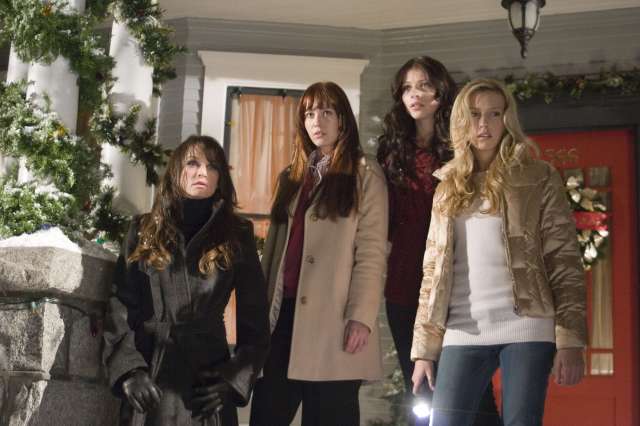
The remake is not well received, but that’s unfair. Black Christmas 2006 adjusted the original in a way audiences could appreciate and understand. For that reason alone, I feel it’s a near-perfect remake. It respects and enhances the original. If they kept the movie as is, modern audiences would have still hated it because the expected standard of good film-making has decreased dramatically over the last 40 years.

The Original Black Christmas

Black Christmas 1974
Photo: crypticrock.com

One of my favorite things about Black Christmas 1974 is the camera work. The movie is extremely well shot, and you see throwbacks to greats like Hitchcock. The audience also experiences the killer’s POV, as you walk through the house or hide in a closest as the killer. You may recognize this style in the original Halloween.

The character development is some of the best I’ve ever seen. One of the first differences I noticed was the original only uses a few main girls in the house, whereas the remake uses several – think three verses seven. Using fewer characters adds a more personal feel, and you get to know them in-depth. I did not love any one character, and at times, I felt like I was watching the Real World. Yes, you want the audience to care about the characters, especially when they are in danger, but the personal stories get a little tiring and slow down the action too much.

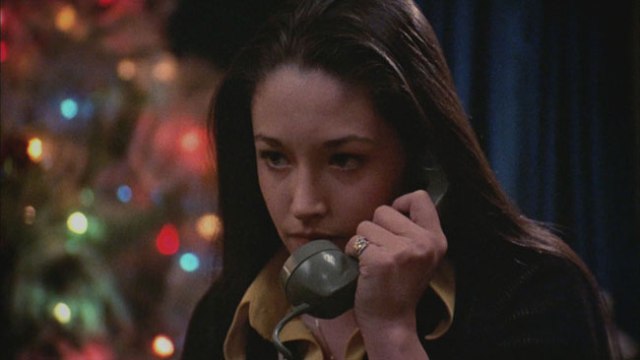
However, the characters are done extremely well and have distinctive stories and roles. The house-mother who keeps bottles of liquor around the house and the drunk sorority girl (Margot Kidder) who cusses a lot and discusses watching turtles and zebras mate add a fun element. There is a final girl (Olivia Hussey), but she is not quite the cutthroat fighter-type we have all come to love. Remember, this movie was released before there was such a thing as a final girl. The first half of the movie also has some very funny lines, props and scenes, and counters the drama well.

It does lack some things though. The killer has no real identity, which is a little frustrating because it feels random for no good reason. It completely lacks a back story, and many times when the killer calls, what he says is inaudible. The things you do hear don’t add anything special, and much of the profanity seems unnecessary. The original also takes you on a roller coaster with twists and turns, but it doesn’t wrap it all up well.

The Remake of Black Christmas

Black Christmas 2007
Photo: superiorpics.com

Black Christmas 2006 did something unique: it gave a much-needed back story. Having watched these out of order, I did not realize how much back story they added, but it works. The back story makes the killer more dynamic and interesting, and you can understand his motivation. I may receive some backlash for this, but if I had watched these for the first time in order, I would have been really confused as to “why?” after the original. You have to watch both to get a full well-rounded story.

The remake also completes the story. Spoiler: the final girl wins. The original ends like so many modern horror movies, leaving itself open to a sequel. The remake does not do this. There is a very clear plot arc, and it fills in the holes from the original.

New Black Christmas does go dark fast. The unnecessary shock factor ranks No. 1 as my least favorite thing about modern horror because filmmakers feel that if they slack off on a good story or, in this case, character development, they can add a killer making Christmas cookies out of his mother’s skin, and it works just as well. Wrong. Sure, I expected the remake to have more blood and gore, but some aspects make it seem like they were trying too hard. We don’t need to see him eat eyeballs or his mother because it adds nothing to the movie.

The verdict: Which is a better-made movie? The original. Which do I enjoy more? The remake.

We look forward to hearing from you if you’ve seen these, and if you haven’t, you should add them to your Halloween watchlist. Although, I watch them at Christmas time too!