The Pilkington Experience: Karl the Author

PilkingtonLibrary

I’ve previously reviewed Karl’s two Idiot Abroad tie ins, but Karl was actually a published author well before that show.  This post will briefly cover his first two books, The World of Karl Pilkington and Happyslapped by a Jellyfish.  Bother are must-haves for Karl fans and are similar in nature to the two Idiot Abroad books in a way.

The World of Karl Pilkington

This is the first book (as far as I can tell, though there may have been at least one article in a monkey magazine that was previously discussed…) Karl “wrote.”  I use “wrote” in quotations because much of the book consists of transcripts of some of the best bits of both the XFM shows and the early podcasts.  I read this book a little over a year ago after watching the first Ricky Gervais Show animations.  The origins of this book can likely be traced to an off-side statement Ricky made in the XFM days when he requested someone to write down everything Karl says for a year because he wanted to make a book out of them.  The results are terrific, especially since I didn’t find the XFM shows until WELL after I read the book.  This was my first introduction to “the horse in the house,” and this story alone is worth reading the book for.  Also included are several “monkey news” stories (I was surprised after seeing the animations that these were different, as I mentioned in my XFM review, this feature goes back to their old radio show days!)  It really gives the full stories of some of the best conversations between Ricky, Steve, and Karl.

Happyslapped by a Jellyfish

The first thing I had to do was look up the term “happyslapped” which apparently means to have a mean prank pulled on you.  This book is almost the Idiot Abroad books in prototype.  It consists of several of Karl’s diary entries mixed in with stories and reminisces.  Several of these diary entries were read on the podcasts so much of it will be familiar.  The book covers Karl’s holiday travels with Suzanne.  Included are his trips to Malaga, Tenerife, Madeira, the Cotswolds, and several locations in the US (in at least one of which Karl and company were broke!)  The title refers to an incident that occurred where Karl was stung by a jellyfish in the Caribbean thus bringing about an epic rivalry between Karl and the invertebrate that continues to this very day!  It’s a great peak into Karl’s adventures (on his own terms, for the most part…) in his own words.

Fans of Karl will definitely enjoy these reads, even if sometimes they might seem a bit redundant if you’ve recently listened to the radio shows or podcasts.  I, for one, listened to the audio, read the books, and laughed out loud both times!

The Pilkington Experience: The Further Adventures of an Idiot Abroad

PilkingtonLibrary

Unlike the first companion book that went with the original season of Idiot Abroad, the second series book is NOT a travel diary.  Karl explains he didn’t feel well enough or have the time to complete a diary on these trips and decided to write his thoughts on his travels after the fact.

In some ways it works out better. He’s able to look back and discuss exactly what happened on his travels with the benefit of hindsight.  There are times when you do miss his instant thoughts on a subject and the format of the diary that appears in the first book.

The layout is very similar to the first book.  Each chapter consists of one episode, starting with Ricky and Steve’s pitch (often expanded from what appears on the show), and then continues with Karl’s thoughts on the events of the specific adventure.  Like the show, the final bucket list item is only part of the chapter, and we get Karl’s thoughts on the mini-bucket list items Ricky and Steve tried to get him to do.

The main text expands on what happens on the program and adds some extras (like doing “zorbing” in New Zealand or Karl’s expanded Glee performance where he had lines and got them in the wrong order).  A fan of the series will definitely like the additions, and it helps better understand the order of events (like Karl’s option to do a wing-walk or participate in the International Mr. Leather Competition).

One of the best features of the book is the running checklist of “bucket list” items that Karl checks off.  He says at the beginning of the book, after analyzing the bucket list he realized he actually completed a lot more of the list than he thought, and probably more than most people.  Of course, in traditional Karl fashion, he takes liberties with his “completed” list.  To him having been offered the chance to do something is as good as completing it.  For example, experiencing weightlessness and doing a bungee jump are both checked off the list.  While he certainly had some experiences with both of these choices whether or not you could say he really experienced them in the way they are intended in the bucket list is a bit debatable.  In a way I can see the purity in this kind of thinking.  Most of us don’t have the opportunity to experience the bucket list items.  And there is pressure, especially on a travel program; to do everything that comes you’re asked to do for the program.  When present with something he didn’t want to do, Karl wouldn’t do it…however he actively chose not to do these activities after a real opportunity to do them.  How many of us would get the chance to experience travelling into space?  Karl had the chance and the fact that he decided NOT to do it is as good as participating to him!  I can understand that.  Thinking of skydiving, I could say it’s something I would not want to do, and I’ve never been asked to.  I’d think if someone did give me the chance and I said “no!” that would be good enough for me to cross it off the list!

One of the bubbles that shows two things Karl decided not to do!

Most interestingly, “get in the Guinness World Book of Records” IS something he checked off the list and deserved to for the “most downloaded podcast,” the Ricky Gervais Show, which many of us know was really all about him.

Similarly interesting are the things he doesn’t check off as completed and his thoughts on why he didn’t do them and wouldn’t.   Researching your family would only be interesting to Karl if he could trace his family all the way back to the earliest stages of life (“an ape, jellyfish, or slug” according to him!), that he’d only want to “continue his gene pool,” if there was some kind of “try before you buy” program, or that it would be good to see orangutans…but he would want to see them in London and not travel all the way to Borneo to do it.

Like the first companion book, The Further Adventures of an Idiot Abroad is a must-read for fans of the show.  We only see snippets of Karl’s adventures on the show.  The books always fill in the gaps and give readers more of his unique philosophy.

As a bonus, there are some comments on the THIRD season of Idiot Abroad in this book.  While he doesn’t go into detail, some of what happens during the Marco Polo Trail episodes is mentioned.  Since we aren’t likely to get a book about THAT series it was a nice surprise!

A video of Karl at his first ever book signing:

It’s available here!

The Pilkington Experience: Idiot Abroad Season 2

PilkingtonLibrary

When I originally watched the first season of Idiot Abroad and reviewed it I decided I would put off my review of the second season until I had a chance to read Karl’s accompanying book.  It took a long time for me to get my hands on the book but I’ve since read it and now feel I’ve completely experienced season 2.

An Idiot Abroad 2 - The Bucket List

Anyone tuning in to Idiot Abroad Season 2 will be familiar with it immediately.  The first season featured Ricky Gervais and Stephen Merchant sending Karl Pilkington around the world to visit the “Seven Wonders” and experience different cultures.  Ricky did this specifically to annoy Karl and put him in situations he’d hate.  The second season featured even MORE of this concept.  For season 2 they sent him around the world so he could cross things off the “bucket list,” or things to do before you die.

Immediately Karl was confused (in fact he’s had this confusion before) by thinking that it was things to do RIGHT before you died (his quote was “If I was on me death bed, I wouldn’t want to be climbin’ Mt. Kilimanjaro.”)  But after discovering what was actually intended he agrees and goes around the world again.

Karl tries to pick things off a list of 100 choices that seem the least awful to him.  Among these are: Spend the night on a desert island, drive Route 66, go whale watching, swim with dolphins, and travel the Trans-Siberian Express.  Of course Ricky and Stephen crop up throughout the show to send Karl on unexpected adventures and even change the rules.  Even Karl says, “Nothing has been what I thought it would be.’  Of course this was to be expected, but even I was surprised with what they’d make Karl do.  From swimming with sharks rather than dolphins (Karl puts it when comparing sharks to dolphins, “It’s the most dangerous thing on the planet to the nicest.  Harmless.  Armless.”) to seeing whales from the deck of a fishing boat…after chopping bait and nearly being sick.

Side adventures include: Meeting up with ladyboys in Thailand, Sumo wrestling in Japan, visiting the Dwarf Village in China, having some Russian Cosmonaut training, and participating in Glee in America.

KarlMonkey

Favorite moments for me:

1.)    ANYTHING to do with bungee jumping:  Possibly the best runner in the history of the show, Ricky and Stephen continually try to get Karl to do bungee jumping.  Anything related to it, from his first “experience” in New Zealand, to a “land dive” in Vanuatu, to a bungee ambush in South Africa, I don’t think I’ve ever laughed as much as I did during these sections.

2.)    The Cuddle Party in America:  Imagine either Statler or Waldorf at a party where everyone gets together for a hug.  Karl is one of the world’s least-snuggly person.  And there he is in a room with dozens of people who just want to cuddle.  To quote him, “How long does this go on for…”

3.)    Trying the Dish that Started Sushi: It looked like the worst food in the world.  Even the chef who gave it to him didn’t look like he wanted to be near it.  It’s not a spoiler to announce that Karl ended up sick in a Japanese garden…

This season also has the most moving moment in the history of the show.  While climbing Mt. Fuji Karl admits that he never finishes much in life.  He never really completed school; he hasn’t gotten married.  In his words, “Unless it’s a packet of biscuits I don’t finish it.”  So he really put everything into climbing Mt. Fuji.  To reaching the top just so he could say it’s something he completed.  It’s extra impressive to see someone who is known as a complainer and pessimist giving his all to do something he really wants to.  He also wanted to invent something new, something he achieved during his travels in Japan!  His last thoughts on climbing Mt. Fuji are not only very Karl, but also what just about anyone would say.

As a bonus, here is the invention Karl created during his climb up Mt. Fuji, the Pilko-Pump-Pant.  Ricky and Stephen mock it…but as a person who sits in the floor a lot I can see the benefits of owning a pair!

Next post is a review of Karl’s companion book to Season 2, The Further Adventures of an Idiot Abroad.

Extra bonus, the full video of Karl selling his pants on TV!

The Pilkington Experience: The Ricky Gervais Show (HBO)

PilkingtonLibrary

The Ricky Gervais Show on HBO

The XFM shows had a real unpolished, by-the-seat-of-the-pants feel to them.  There were strange errors, failed games, and awkward conversations.  Those shows really did feel like you were listening in on three buddies who were only vaguely aware that you’re listening.

I haven’t had a chance to listen to all the podcasts yet (though I have several of them on order) but they are a far slicker version of the XFM radio shows.  I saw the HBO cartoon version before I listened to the XFM shows and I was surprised at how many of the features and conversations are slightly repeated.  Though the podcasts are clearly as unscripted as the XFM shows.  Like many good friends, I think they just like to hear some of the same stories again.  We’ve all been sitting around with our friends and said, “Hey tell that one again!” always to the same raucous laughter.  Also, since XFM was a local London radio station, the podcasts opened up stories that only the limited radio audience had heard to a wider audience.

RGShowTitle

As before here’s my list of favorite aspects of the show:

1.)    The Animation: The cartoon representations of Ricky, Stephen, and Karl are terrific.  Slightly inaccurate, beautifully simple and exaggerated caricatures of what are now well-known celebrities with great expressions and classic style (no spikey-angled anime look here, much more Hanna-Barbara).  The animations of the stories they tell are equally terrific.  Seeing cartoon Karl act out his famous fight in the bathroom (over a “woman” at the age of seven) or Stephen’s experiences at carnival in Rio are priceless.

2.)    Themes: I’ve not listened to the podcasts, but the HBO shows tend to revolve loosely around a theme.  It could be philosophy, crime, war, metaphors, films, sports, or history.  It’s interesting to watch the conversations meander from topic to topic, and go WAY off topic, always with hilarious results.  Surprisingly they do tend to bring the very loose threads back together in some way.

3.)    Monkey News: Monkey News made a “triumphant” return on the podcasts and also on the HBO cartoons.  The ones in the cartoon are slightly less ridiculous than the original XFM examples.  In fact Karl’s news about the chimp that went into space isn’t too far off the mark.  It IS off the mark, but not “there was this monkey, right, that stole a car and went to Spain” ridiculous.

4.)    Karl’s Diary: This is the best feature on the Ricky Gervais Shows I’ve heard.  It’s far better than Monkey News, Rockbusters, or any of the various features they put together over the years.  This feature was simply Stephen reading from Karl’s Diary, with commentary from Ricky and further explanation from Karl.  Highlights include: Karl and Ricky at a work meeting (Ricky tries to wrestle him); the “mirrored wall” in Karl’s flat; Karl’s opinion that ultrasound infants look like frogs; Karl’s vacation to the Cotswolds; and of course Karl’s first poem.

5.)    One-Shot Features: There were several little vignettes that appear during the show that are priceless.  These include: Desert Island Discs (what would you take to a desert island? Karl’s bringing a dictionary…); a tricky puzzle involving identical doors to heaven and hell; Karl and the problem of free will (featuring the brain’s “Onion Lobe”), a virtual reality flotation tank that simulates real life; and my favorite, Karl’s Future Predictions, which not only has one of the funniest lists I’ve seen, it also has one of the funniest conclusions in comedy history.

52300310

My next big project is listening to all the podcasts to see how much they’ve edited out for the animated show.  I’m looking forward to seeing what I’ve missed.

If you are a fan of Idiot Abroad and don’t want to listen to hours and hours of XFM radio shows (which are brilliant but can be hit or miss at times) and want an impression of how Ricky and Stephen first started with Karl, the HBO shows are brief snippets of how they got their start together!

Enjoy Karl’s Future Predictions!

The Pilkington Experience: XFM Shows

PilkingtonLibrary

Several of my previous posts have exposed my enjoyment of all things Karl Pilkington.  I think the man is a perfect mixture of creativity-LACK of creativity, over-complexity, and simplicity all rolled into one.  I started with Idiot Abroad Series 1, watched Series 2 and 3, have read his books, watched the HBO animated Ricky Gervais Show, and have since listened to all the old XFM radio broadcasts that started his association with Ricky Gervais and Stephen Merchant.  For a few posts I thought I would review everything Karl-related I’ve read, watched, and listened to in case others are interested in what else Karl can offer besides being annoyed around the world.  I’ll start from the beginning!

The Ricky Gervais Show on XFM

Hearing Ricky discuss the conditions of broadcasting on XFM you’d think they were producing a show out of someone’s garden shed.  Despite the supposed conditions, this show produced countless terrific moments and truly introduced the world to Karl Pilkington.  This show, more than any of the other shows Ricky, Stephen, and Karl have done, feels like a true, unedited chat between three mates sat in a room for long stretches at a time.  In fact many of the topics, conversation, and features show up again in the podcasts.  There are lots of terrific moments and segments in this show, but here are the best reasons to listen in:

1.)    Karl: Just experience how strange Karl sees and thinks of things.  Some great moments include Karl Getting his GCSE results (I won’t ruin it.  It’s worth the surprise), his desire to “educate Ricky” with pun-entitled facts, and his various misunderstandings of what he’s heard, read, or seen are always hilarious.

2.)    Karl’s Observations: Karl has a unique view of the world and can often focus on something you would never give second thought to.  For example Ricky told him a story of a chimpanzee son that got into an argument with his chimpanzee father and ran away.  Karl’s response was, “What were they arguing about?”  Some of his observations are even stranger, such as Chinese people not aging well, or his theoretical plan on how to shorten the queue for those attending the visitation of the Queen Mother.

3.)    Monkey News: This feature carried over into the later podcasts, but this is where it got its start.  Not only does it include the classics of the monkey who robbed a bank, the one who drove a car into Spain, and one who got a job in a hair salon; but it also includes the “Victorian Ape Woman,” a monkey porn film maker, and a chimp who got arrested in Russia for vagrancy.  While the stories themselves are hilariously unlikely, almost as good are Ricky’s explosive reactions to them usually ending with the show’s unofficial catch phrase “You’re an idiot! Play a record!”

4.)    White Van Karl: This concept was taken from the Sun newspaper that went to various “working class” individuals (who drove white work vans) and asked them their opinions on the week’s news.  Stephen turned it around to ask Karl what he thought of the news.  Some of the best are thoughts on celebrities coming out, Zoe Harris (Karl’s childhood girlfriend, he put a hole in her dress and dumped her), and (maybe my favorite moment of all time) the cloning of “man-moths.”

5.)    Rockbusters: Ricky and Stephen truly seemed to dislike this contest (Karl gives a “cryptic clue” that relates to the name of a band and the initials of the band, the listeners email answers to win lousy prizes, i.e. “exploding pet,” the band has the initials “AK,” the answer was “Atomic Kitten”) but some of his clues were absolutely brilliant.  And most of the bad ones made for such hysterical moments they were worth it. The best ones include “She has her husband’s gloves and a pair of her own,” band “HH,” answer “Herman’s Hermits;” “Do you think your kid will get that strawberry for me?” band “WP,” answer “Wilson Pickett;” and “the Scottish fellas can’t get into their emails,” initials “KL,” answer “Kenny Loggins.”  The worst ones: “The people from the East Midlands swear a lot;” band “TTD,” answer “‘Tourette’s’ Trent D’arby,” “Why are the Jamaican fellas twirling fish around their heads?” band, “DS,” answer the “‘De-trout’ Spinners,” and finally “a couple of people were arguing at the fruits and vegetables in the supermarket,” band “B,” answer “Banana-drama.”

6.)    Ricky and Stephen Stories: It’s important to remember whose show it is.  Ricky and Stephen have moments of pure comic gold as well.  Ricky’s training in boxing and Stephen’s terrific story of being tricked into picking up a pig after a party to impress a girl, then crying in the backseat after he got the car stuck and another guy had to move it.  It’s hard not to laugh at all of them.

7.)    Karl’s Childhood: Ricky and Stephen often comment that Karl grew up in a fairy tale.  Not in a good way, more like he grew up in a land filled with strange, mystical beings.  The magpie he tamed as a pet, the two boys at his school with big heads and webbed hands, the woman with a head “like a sack of potatoes,” the family with the horse in the house.  It’d all be too much to believe except I don’t think Karl possesses the guile and wherewithal to lie…

And that’s just for starters. There are also the shows where Karl is out and Claire Sturgess serves as producer.  She does an excellent job and is more like a “regular” producer.  Letting the show-runners talk and only adding comments occasionally.  It provides an example of what the program would be like without Karl…and it’s still funny!  Just not as…odd.

There are also several uncomfortable moments in the show, like all good friends Ricky, Stephen, and Karl have arguments.  They pick on and at one another (Karl at Stephen being very tall, with big “goggy” eyes, and unfortunate luck with women; Stephen on Karl being stupid, lazy, and with a head like an orange; Ricky…constantly picking on both…all the time…for everything.)  It can get too far and, in fact, the end of Series 2 Karl says he’s tired of working with the two of them and doesn’t want to come back for Series 3 (he does…negotiated an extra day off, for which Ricky and Stephen brutally mock him).

Not every show is equally strong, but when it is good it is some of the best humor you’ll ever experience.  If you like the podcasts and/or Idiot Abroad check them out. Almost all of them (I listened to 97 episodes) are on YouTube and are well worth the time!

Historical Shorts: Napoleon

HistoricalShorts

I’ve found that people hate history.  I’m not sure why, but nearly everyone I know hates reading it, hearing about it, and thinking about it.  I personally blame the way history is taught rather than the subject itself.  I’ve found far too many history instructors spend too much time on minutia and specifics rather than informing students on the STORY part of history and allowing them to hear the interesting tales that make up the rich tapestry of human experience.

I love history and have spent years of my life studying it.  I think of most people could hear some of the stories I’ve heard, they might change their opinions on it and maybe even spark an interest in studying history on their own.  It’s more than just kings and battles, names and dates!

In this series I’ll share some brief bullet points the average person may not know about a specific historical concept, and one of my favorite stories.  I’ll cover historical figures, events, eras, and even a few historical movies (those will be fun…)

I hope it inspires people to maybe be more open-minded about history and find it more a fascinating journey into our shared past than a boring slog through dreary timelines.

I’ll start with one of my favorites: Napoleon Bonaparte.

Historical Shorts: Napoleon

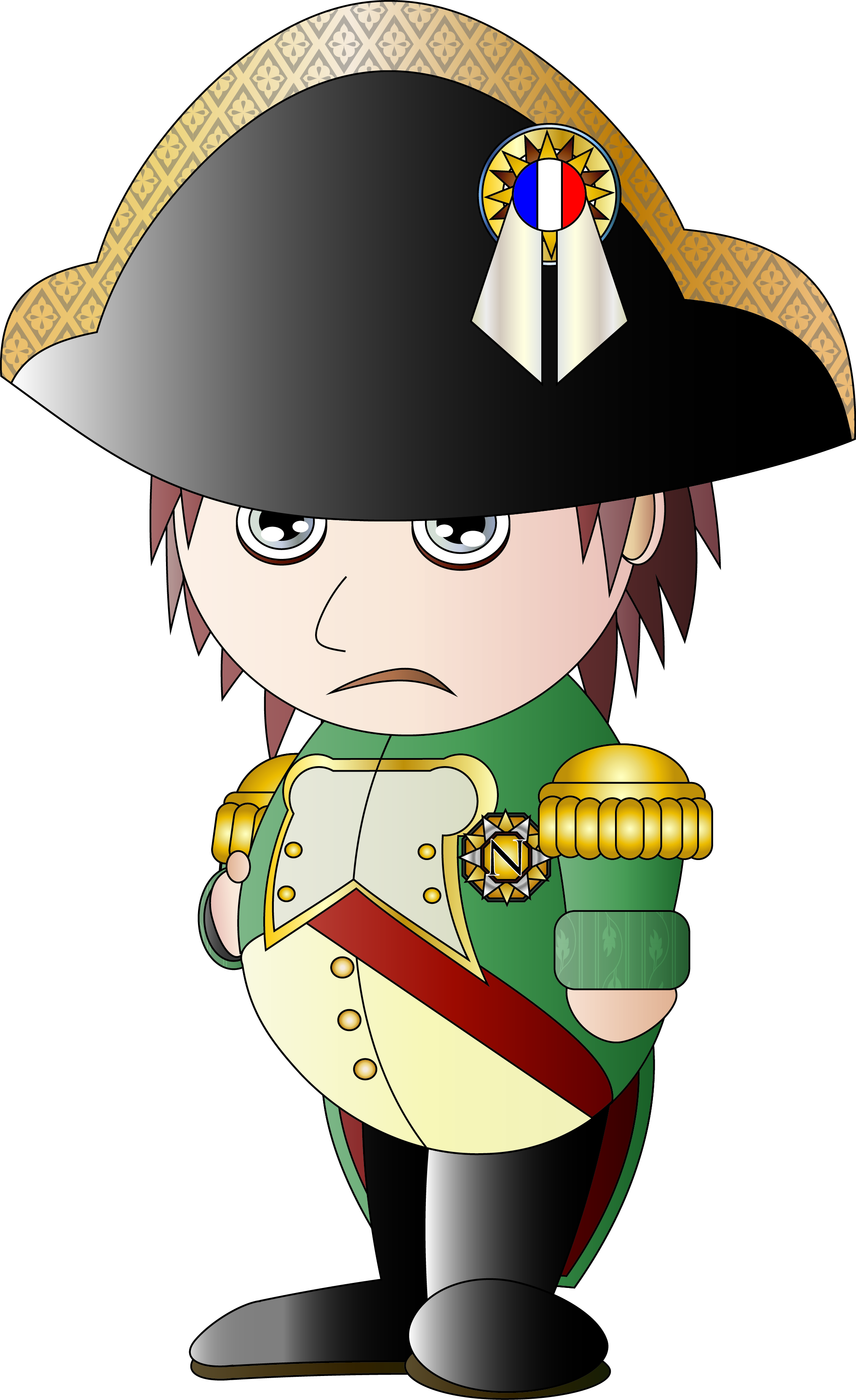
  • NapoleonNapoleon wasn’t French but a Corsican, born Napoleone Buonaparte in 1769, the same year the island was conquered by France.  He spoke French with an accent throughout his life.  He despised the French (and his father for his complacency with the French government) until he was rejected by Corsican patriot Pasquale Paoli and driven from his home island.
  • Napoleon was trained in artillery and put cannon to good use during his many campaigns.  During his earliest battles the young general won the respect of his men by sighting and positioning cannons with their crews.  This was the duty of a corporal and no other officer would have done such a menial task.  It earned him the nickname “The Little Corporal.”
  • Napoleon’s campaign in Egypt 1798-1799, though strategically unimpressive, laid the foundations for the modern study of Egyptology and his army was accompanied by scholars, scientists, engineers, and architects.  The most important discovery on this expedition was the Rosetta Stone, which became the key to deciphering Egyptian hieroglyphics.
  • He was wildly popular amongst his own men and used his popularity and charisma to good effect.  He often awarded medals himself (taking the medal off of his own uniform and pinning it on “the bravest man of the unit”) and is quoted as saying, “A soldier will fight long and hard for a bit of colored ribbon.”
  • He was often noted as being personally courageous in battle, having no fewer than 10 horses shot from under him while on campaign.

The Return from Elba

Following the disastrous campaign in Russia, Napoleon returned to France to find the greatest powers of Europe arrayed against him.  Despite fighting one of the most remarkable campaigns in military history, the overwhelming odds eventually took their toll and the Emperor was defeated.  The Coalition powers removed Napoleon from power and reinstated the Bourbon monarchy (which had been violently overthrown by the French Revolution prior to Napoleon’s rise to power) under Louis XVI and banished Napoleon to the island of Elba.  He was named the ruler of the tiny island, but he soon became bored with his new life and managed to get himself smuggled back to France in February of 1815.  News of Napoleon’s return from Elba spread quickly and Louis XVI immediately took action, sending his new royal army, many veterans from Napoleon’s campaigns, to intercept and arrest the upstart.  Bonaparte’s growing army met the King’s army at Lyon and rather than engage them in combat, Bonaparte stepped forward to meet them and shouted, “If any of you wishes to shoot your emperor, you may shoot him now!”  The King’s troops erupted in a cheer of Vive l’Empreur hoisted Bonaparte up on their shoulders and immediately joined his cause.  Upon hearing this Louis XVI fled Paris and Napoleon once again took control of the nation.

To his credit, he immediately sued for peace with England, Prussia, Austria, and Russia (his greatest enemies) but this was rejected without contemplation.  His return to France after exile in Elba is known as “The Hundred Days” and ended with Bonaparte’s defeat at Waterloo.  Despite fighting reluctantly in a campaign he never wanted he very nearly even pulled off a victory over the combined British-Prussian armies.  Archduke Wellington, commander of the British army, citing it as “the nearest run thing you ever saw in your life.”

Napoleon was sent to, St. Helena, a volcanic rock in the middle of the Atlantic Ocean, circled by ships of the Royal Navy to ensure he never again could escape.

The Emperor died in exile in 1821, leaving behind a legacy, both positive and negative that has few comparisons in history.

Napoleon returns from Elba