Halloween: Original vs. Remake

We hope everyone had a happy and safe Halloween! Another holiday has come and gone, however we had so much fun and great conversations about this topic that we’ve decide to extend it another week. We also want to thank everyone for reading and discussing horror movies with us all month. It is my pleasure to review this one, and heads up, I could talk forever about this one!
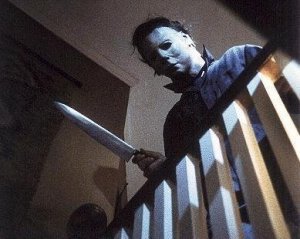
Michael Myers 1978
Photo: http://halloweenmovie.wikia.com

Halloween – The Original

Possibly my favorite movie from this era and definitely in my top five in the genre, John Carpenter’s Halloween is a classic. This was one of the first – maybe even the first – slasher movie I saw as a kid. I don’t want to gush and seem like a fan girl because I do poke fun at a few things too. So, here are a few of my favorite things about the original Halloween.

False Sense of Security: From the opening scenes, the audience sees this is a quite little suburban town. The teenagers are decent kids who party, but most teenagers do. The younger kids are excited about Halloween, and there are lots of shots of trick-or-treaters, trees, streets and houses. As the movie unravels, you feel sympathy for these townspeople. They have encountered a tragedy and evil that may defeat them and destroy their little town. You wouldn’t expect an evil force, and the original takes you from all those wonderful Halloween memories you have to fearing Michael Myers. It takes you on a roller coaster of emotion and disrupts what should be a fun-filled holiday.

Pure Evil: Myers is pure evil. It’s that simple. Some people are just born with an evil that consumes them. Whether you believe in this theory or not, the original Halloween did. There was no backstory. You do not know why Myers was a killer, and I never cared to know. I just accepted the “pure evil” within him because it was believable. He never says a word. He just punishes and kills, and that’s what makes him more threatening to me. Evil motivates him, and if you aren’t scared of evil, then what does scare you? The evil serves as a supernatural force, which is much harder to control than a person. It’s unpredictable, reckless, and illogical. The idea that you can’t control it is more effective from a horror standpoint and leaves you uneasy throughout the movie.

Jaime Lee Curtis: My pick for the top final girl. Curtis set the bar for final girls. She’s played several strong female characters over the years, and Halloween helped her establish that career role. In Halloween, her character is smart, responsible, fun, and studious, however she also smokes pot and hangs out with her friends. She is a normal teenager who becomes tormented by Myers. Her character was developed very well, and you follow her through her ups and downs. She was strong and weak; she fought and cried. She was a woman survivor. Curtis is and always will be Laurie Strode.

Michael Myers 2007
Photo: filmedge.net

Halloween – The Remake

I don’t think I saw Rob Zombie’s Halloween in theaters, and if I did, I apologize to who I saw it with! We’ve talked a little about re-imagining movies – such as A Nightmare of Elm Street – and that’s what Zombie’s version is. He took the original and built on it. It wasn’t a true remake because he added and changed a lot, and Zombiefied it as only he can do.

I have a few issues with this version, but as a stand-alone horror movie, it’s pretty intense.

No security: As an audience, you never feel safe watching this movie. Zombie takes you from a highly dysfunctional lower-class family, to an asylum, then back to the dysfunctional family. There is nothing pretty in or about this movie. As an audience, it’s difficult to feel shocked about anything that happens because you almost expect it. It’s predictable. Whereas in the original, the murders are a tragedy because terror invades a small quiet town. You get to know the town as a whole, instead of Myers. I don’t agree with Zombie’s choice because Myers and his life are terrifying enough. He strips all innocence from the beginning. And if you take away the town’s innocence from the beginning, you take it away forever and leave no hope.

The backstory: I appreciate a little backstory, but I feel the first half of this movie is way too long. Zombie refuses the idea of “pure evil,” and make Myers a product of his environment. Coming from a dysfunctional and abusive household, Myers snaps. Then he is so consumed by loss and hatred, it turns into evil. Comparing the two, I prefer the original idea, however I accept that modern audiences need this backstory. They want to know why, and they have to see progression. If Zombie had shortened it 20 more minutes, I think most people would not complain about the length. Reviewers seem split down the middle about this – you either love or dislike the backstory – I side with the latter.

Laurie Strode: Once Myers escapes, Halloween 2007 turns into a respectful remake. Scout Taylor-Compton portrays Strode’s character well, and she stays true to the innocent good-girl type. Her character is modernized, and for the purposes of the remake, that’s okay. However, audiences don’t really know her. The emphasis on Myers is so heavy, Halloween 2007 lacks teen character development, which should be as important as Myers’ story. In the remake, Strode doesn’t stand out above her friends, and she is not the only final girl. It’s a disservice to the character, and I wonder if Annie (Danielle Harris) survives because the first franchise kind of screwed her over.

Final Thoughts

Zombie does keep a lot of the original details, which shows he wasn’t trying to outdo the original Halloween. Myers dresses up as a ghost with the glasses, Zombie uses the original score, the masks are the same, the girls resemble the original girls, etc. It is gruesome and bloody, which I can take or leave. I also expect that from Rob Zombie. I enjoy the movie much more once Myers escapes, but the violence and kill scenes feel too long. For that reason, I can’t watch this movie often because it borders torture instead of quick-slasher fashion.

The verdict: The original. I watch it every Halloween night, and it is perhaps a perfect slasher movie.

Feel free to share your thoughts in the comments!
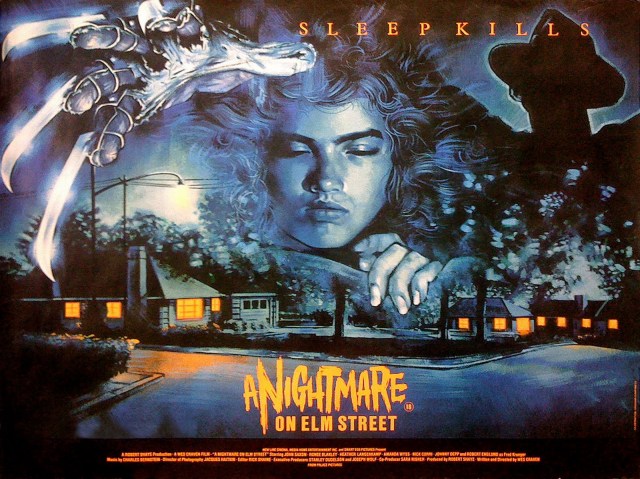
Guest Post: A Nightmare on Elm Street – Original vs. Remake

Happy Halloween week, everyone! Our good friend Blake Best, author of Seeing Red and Green, joined in the remake conversation this month to discuss this horror classic. Please show some love, and feel free to learn more about him in our Artist Spotlight: Blake Best.

A Nightmare on Elm Street

A Nightmare on Elm Street: Original vs. Remake

When the original “A Nightmare on Elm Street” was released in 1984, it became a surprise hit. The late Wes Craven (1939-2015) created the perfect horror film: great story, believable characters, and the cinematography was spot on for the dark nature of the film. Craven expanded on the “rubber reality” concept and in doing so created an iconic boogeyman in “Freddy Krueger” (Robert Englund), the fire-scarred, razor-fingered maniac that launched one of the most successful horror franchises in modern cinema.

The remake of the film was released in 2010 to DEFINITE mixed reviews. Most purists balked because Robert Englund did not return as “Freddy,” the role that essentially made him a household name among horror fans. Jackie Earle Haley was cast instead, fresh off his turn as “Rorschach” in the hit film “Watchmen.” Another reason for the criticism was the presence of Michael Bay as a producer on the film. Bay is known for his attachment to action blockbusters like the “Transformers” films. I was initially biased because of my unabashed love of the first “Nightmare” film. My new book “Seeing Red & Green” examines the popularity of the films and discusses why “Freddy Krueger” has become such a pop-culture icon. I concluded there would be no better time than now to share my comparison of the original to the remake.

Similarities:

There are a few similarities between the films. The basic premise is the same, with a group of teenagers sharing collective nightmares about this dark and ominous man. Several of the teens are killed off by Freddy one by one in unique ways and the ending of the film is ambiguous, leaving room for a possible sequel. Freddy’s general appearance is very similar to the original film (tattered red and green striped sweater, hat, and razor fingered glove), though in the remake his sleeves are striped and the makeup has been altered to resemble a more realistic burn victim.

Differences:

The differences are the defining characteristics in comparing the films. The characters are altogether different (including Nancy, who is less the girl next door and more an introverted artistic type) and Freddy himself underwent changes to his backstory.

The original allows you to get to known the characters on a more personal level, allowing you to feel a certain way about them (sympathize, clamor for their death, etc.) The remake doesn’t give you enough time to know them. With the exception of a couple of characters, the majority of the teens are introduced and promptly killed off, allowing you no time to feel ANYTHING about them.

Freddy’s backstory in the original was that of a child killer who escaped conviction due to a technicality. Vengeful parents cornered him in his boiler room hideout and set him ablaze. The remake’s backstory is markedly different, with the revelation that he was a pedophile. Originally Craven intended for this to be included in the original film, but it was scrapped due to a very public scandal in California involving children at the time of the film’s production. In this film the child killing facet of his backstory is completely removed from his “pre-burning” history. The film goes one step further and toys with the audience, leaving them unsure of Freddy’s guilt (until closer to the ending of the film).

The original featured all practical special effects, as computer generated imagery (CGI) was over a decade away from being introduced. Freddy’s makeup/prosthetics and all of the other effects (including the “face through the wall” gag) were all physical effects made with latex, wires, ingenuity and a ton of fake blood, around 500 gallons. The remake featured an overabundance of CGI effects, including a portion of the “Freddy” makeup. The iconic “face through the wall” effect was entirely CGI. It feels like the CGI was used to distract audiences from issues with the plot and character development.

The original “A Nightmare on Elm Street” was an entirely original concept and used very few tropes typical to the ‘slasher’ genre at the time. The remake actually re-used several one liners from the previous “Nightmare” films. I’ll leave it to you to figure out which ones!

How do I rank them?

The original surpasses the remake in nearly every way, save for budget ($1.8 million for the original, around $35 million for the remake). The 2010 film is far less gory than the original, which is surprising, since the films are part of the ‘slasher’ genre. “A Nightmare on Elm Street” (2010) is less of a “remake” and more of a “re-imagining,” geared towards catching the attention of younger generations

— Blake Best, author of “Seeing Red & Green”

Friday the 13th: Original vs. Remake

As we draw closer to the end of the month, you knew we’d save some of the best slasher movies for last. Friday the 13th is one of my favorite horror movies, and I have been watching it since I was a little girl. I think I was 8 the first time I saw it. When I was 10, I went to camp and was cautious of my surroundings because of this movie. Few movies can do that nowadays.

Friday the 13th
Photo: dailyutahchronicle.com

There are several differences between Friday the 13th (1980) and Friday the 13th (2009), but I must point out something important. The 2009 movie is not a remake of the original. From the opening scene, Jason’s story has already happened. His legend lives and haunts campsites everywhere. His story is told around the campfire as if it’s happened several times. It’s also not a sequel because it cannot and does not fit into the series. And in the 2009 version, Jason is the killer. Horror fans know that doesn’t happen until Friday the 13th Part II.

Friday the 13th – The Original

The original Friday the 13th is well done and follows suit with many horror movies from this time period that try to prevent teens from having sex and partying. If you don’t behave, you’ll die. This message is classic of the genre, and there is a final girl.

One of my favorite things about it is the sound; it is a very quiet movie. You hear rain, crickets and frogs outside, and the music only comes in when the killer does. I miss that. Nowadays, either everything is filled with music for soundtracks or talking. We don’t need constant conversation, especially if people are telling you what they see. One reason this movie is so effective as a creepy camp movie is because there is natural sound. You hear the natural environment, which puts you into the movie. There are also incredible shots of the lake and surrounding area. You want to feel relaxed, but there’s a psycho killer disrupting it. The score pays tribute to Hitchcock’s Psycho, and audiences clearly see the people who made this movie are old-school horror fans.

Mrs. Voorhees Friday the 13th
Photo: fridaythe13th.wikia.com

The Women

Spoiler alert: Jason’s mom, Mrs. Voorhees is the killer. I really love this. In the slasher cannon, a woman is seldom the killer, and even though she’s tiny, her rage and disdain for teenagers is pretty awesome. She harbors her son’s spirit and uses that to fuel her motivation. More importantly, she has clear motivation, which is something the 2009 version lacks. The final fight scene between Mrs. Voorhees and Alice feels real. They roll around, pull hair, scream and squeal, hit each other, and Alice decapitates her in the end. The final fight is entertaining, fun, and the end of the movie serves as a perfect set up to a sequel or conclusion.

Friday the 13th – The Homage

I have to say I don’t love Friday the 13th 2009. I have so many issues with the movie-making decisions, and I can’t compare the original with the 2009 version because they’re completely different. By today’s standards, the 2009 version is OK, not great. I think it was so popular because Jared Padalecki stars in it. Supernatural fans probably saved this movie from bombing.

However, his character is completely useless. The first time I watched Friday the 13th 2009, I was furious that his costar Danielle Panabaker – at a whopping 5’6” – saves him several times. Spoiler alert: She dies. This is where the 2009 version screwed up most. They had the opportunity to do something few slashers have done: Have two final girls. This could have put the movie at the forefront of the girl-power movement before girl-power was a movie trend. Her death was unnecessary and leaves you wondering why they invested so much into her character.

The main characters are probably my biggest problem with this movie. They are idiots and make terrible decisions, and they have no development. The two minor guys Chewie and Lawrence are the best characters in the movie. These guys add comedic relief and have likable qualities, and you actually care when they die. Most everyone else you want to see die.

I also find this movie painfully boring. There’s a difference between build-up and boring. The conversations are boring; the shots are boring and way too dark; and aside from pretty people, there’s not much to invest in. There’s way too much music and talking. These people never shut up, which slows down the action. Movie tip: Slasher movies should not be dialogue heavy. Lack of sound and the killer’s music help make these a stand-out genre.

I can tell the cast and crew did try to pay homage to the series though. They did not try to outdo the series or remake the original, which I appreciate. Kills are similar to others in the series, and they made Jason scarier. He’s quick, smarter, and powerful. The 2009 made Jason 2.0 in a tasteful way, not a stupid cyborg way. They have both a campsite and cabin settings, paying tribute to the early movies and updating accommodations to fit 21st-century times. Let’s face it, present-day college kids would stay at a cabin, not in tents.

The verdict: The original. As fair as I try to be and as much as I love Sam (Padalecki), I vote for the original. I appreciate the 2009 version for not butchering the Friday the 13th series, but in the end, Mrs. Voorhees wins in my book.

P.S. If you want to see a perfect tribute to the series, watch Psych’s Tuesday the 17th. It’s horror/comedy gold.

Feel free to share your thoughts in the comments, and happy horror watching!

The Fog: Original vs. Remake

The original. Enough said.

I’m kidding … I won’t end the post here, but I could. I could spare you some remake bashing, but that’s not our purpose. We try to be fair in our reviews, so I’m only going to stick to some major points. After seeing the remake, I can understand why fans were so upset. If you liked the remake, I’d love to hear why, so feel free to contact us or post a comment. We’re always open to other opinions!

A brief intro to both movies:

The Fog (1980) was directed by John Carpenter, and starred and featured classic actors and actresses you know from Halloween and Spielberg’s Jaws. The film exemplifies classic ’70s- to ’80s-style good horror, as it is was creepy, well shot and most acting was well done. It takes place in a small island town with a dark history and sea urban legend.

The Fog (2005) was directed by Rupert Wainwright, who you may know from his movie Stigmata, and John Carpenter helped write this screenplay. Shame on him. It sort of stays true to the story and does take place in the same setting. The performances depend on the actor, and there are some major issues compared to the original. It would take a day to discuss everything they changed, so I’m going to spotlight my five biggest issues with the remake and why it doesn’t work.

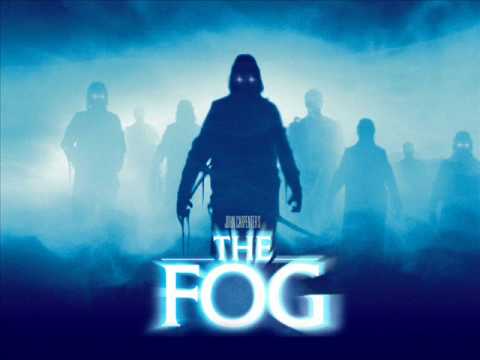
1980 The Fog
Photo: YouTube

The Fog: The Top Five Differences That Break The Remake

The Fog – Even though both carry the title, there is one major difference between the two. In the remake, the actual fog is an afterthought, and you have no reason to fear it. The Fog (1980) focuses on the fog and what happens to the characters when it appears. The remake does not. Instead, it focuses on the characters – who we don’t care about – and the fog might as well be a spring shower. The Fog (2005) lacks suspense, spookiness, and you ask yourself why they even bothered keeping it.

Radio Personality – A sex icon in the ’80s, Adrienne Barbeau did a stellar job as a sultry radio personality in the original. If I lived in this small town, I’d listen to her. Great look, great voice, great personality. As many radio personalities, she can turn it on and off as well. For the most part, she stays in the lighthouse watching over the island when the fog comes in. She is the reason many people survive.

In the remake, Selma Blair plays this part. Her character is the only redeeming aspect of this movie. She’s no Adrienne Barbeau, but she tries, and we easily see that. She’s a hot rocker chick, which I appreciate given the time period, and she really tries to embrace the character. Many of the scenes and lines are the same, and she is the light in this movie. Blair does the best with what she has.

Cinematography – Dean Cundey was the director of photography for The Fog 1980. If you don’t recognize the name, you know his other works including Jurassic Park, the Back to the Futures, the original Halloween II, The Thing (1982), and dozens of others. The shots in the original are amazing. The movie is shot so well, it’s a piece of art in itself. The remake throws all that out the window. Nathan Hope has this role in the remake, and I will just say he is no Cundey.

The Priest – This may have been the most confusing aspect for me, other than the ending. In Fog 1980, the priest serves a priest role. He provides the legend, explains what’s happening and why, and helps save the town in the end. He does drink, but that shouldn’t be a big deal, right? Wrong.

Fog 2005 blows this completely out of proportion. I asked myself is that supposed to be the priest? I thought it was a homeless guy dressed as one. That’s what the original did to this character. They took a regular person with a vice – because we all have one – and turned him into a blubbering mess of a man. He serves no purpose, and if he was supposed to, you wouldn’t know it because they butchered the character so badly. He’s an unreliable character who is supposed to help, but as an audience, we blow him off. I have to ask why? Why did they do this? It doesn’t make sense or serve the movie in any way.

The Ending – Where to begin … Spoiler alerts: They changed A LOT in the remake, including the ending. I seldom rip apart something, and this is one of those moments. In the original, there is a climax. The fog once again moves in, and all hell breaks loose. You see main characters wherever they are on the island, and there is unity as well as disconnect. Everything ends up okay because the priest accepts his fate to defeat the fog and what lies within it. Most main characters survive, and the potential for the fog to come back to another town with a similar history leaves you uneasy. Well done.

The remake does none of this. During this climatic scene, all characters end up in the same place. Never mind that Blair is supposed to watch out for the town in the lighthouse; let’s have her there too. Then, kill the priest with CGI glass from broken displays. Then for extra fun, let’s have a ghost pirate in love with a main character, have her kiss his decayed face, turn into a ghost, and walk away in the graveyard moonlight. I cannot express enough disdain for that ending, and shame on everyone who had anything to do with it.

The verdict: The original. Unless you want to yell at the TV for poor movie-making decisions.

Black Christmas: Original vs. Remake

Having seen the Black Christmas remake several times, I had to review this one. In my experience, many young people have no idea these movies exist, and it has been lost in the slasher cannon. I also realize many longtime horror fans cherish Black Christmas, as it predates most slasher movies and is often credited as one of the first. For those who don’t know, the story is based on actual events and pays homage to the babysitter/man upstairs urban legend. You will hear, “the call is coming from inside the house,” which is pretty cool.

I have some mixed feelings about both movies. Essentially, the plot and characters are the same, and as you assume, it takes place during Christmas break. When you watch both, it’s easy to say, “Okay, that’s supposed to be so-and-so,” without much effort.

The remake is not well received, but that’s unfair. Black Christmas 2006 adjusted the original in a way audiences could appreciate and understand. For that reason alone, I feel it’s a near-perfect remake. It respects and enhances the original. If they kept the movie as is, modern audiences would have still hated it because the expected standard of good film-making has decreased dramatically over the last 40 years.

The Original Black Christmas

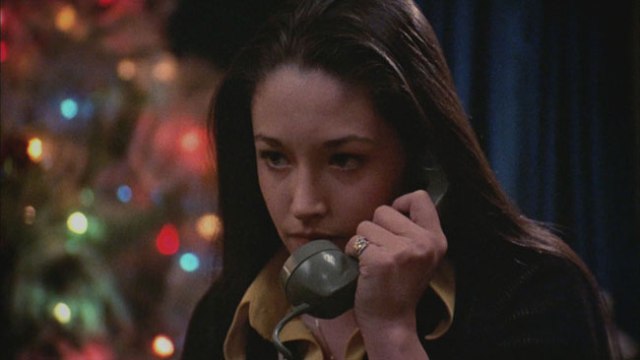
Black Christmas 1974
Photo: crypticrock.com

One of my favorite things about Black Christmas 1974 is the camera work. The movie is extremely well shot, and you see throwbacks to greats like Hitchcock. The audience also experiences the killer’s POV, as you walk through the house or hide in a closest as the killer. You may recognize this style in the original Halloween.

The character development is some of the best I’ve ever seen. One of the first differences I noticed was the original only uses a few main girls in the house, whereas the remake uses several – think three verses seven. Using fewer characters adds a more personal feel, and you get to know them in-depth. I did not love any one character, and at times, I felt like I was watching the Real World. Yes, you want the audience to care about the characters, especially when they are in danger, but the personal stories get a little tiring and slow down the action too much.

However, the characters are done extremely well and have distinctive stories and roles. The house-mother who keeps bottles of liquor around the house and the drunk sorority girl (Margot Kidder) who cusses a lot and discusses watching turtles and zebras mate add a fun element. There is a final girl (Olivia Hussey), but she is not quite the cutthroat fighter-type we have all come to love. Remember, this movie was released before there was such a thing as a final girl. The first half of the movie also has some very funny lines, props and scenes, and counters the drama well.

It does lack some things though. The killer has no real identity, which is a little frustrating because it feels random for no good reason. It completely lacks a back story, and many times when the killer calls, what he says is inaudible. The things you do hear don’t add anything special, and much of the profanity seems unnecessary. The original also takes you on a roller coaster with twists and turns, but it doesn’t wrap it all up well.

The Remake of Black Christmas

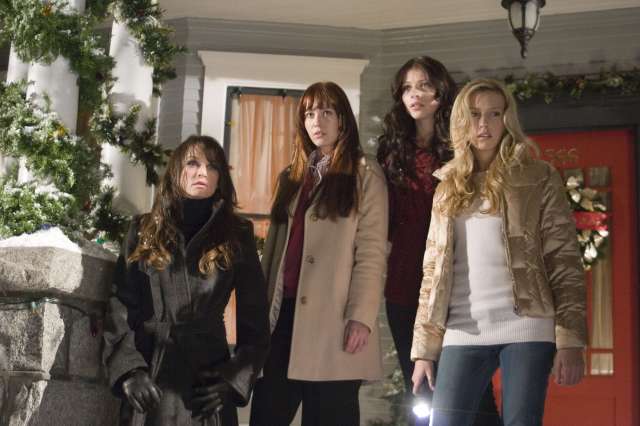
Black Christmas 2007
Photo: superiorpics.com

Black Christmas 2006 did something unique: it gave a much-needed back story. Having watched these out of order, I did not realize how much back story they added, but it works. The back story makes the killer more dynamic and interesting, and you can understand his motivation. I may receive some backlash for this, but if I had watched these for the first time in order, I would have been really confused as to “why?” after the original. You have to watch both to get a full well-rounded story.

The remake also completes the story. Spoiler: the final girl wins. The original ends like so many modern horror movies, leaving itself open to a sequel. The remake does not do this. There is a very clear plot arc, and it fills in the holes from the original.

New Black Christmas does go dark fast. The unnecessary shock factor ranks No. 1 as my least favorite thing about modern horror because filmmakers feel that if they slack off on a good story or, in this case, character development, they can add a killer making Christmas cookies out of his mother’s skin, and it works just as well. Wrong. Sure, I expected the remake to have more blood and gore, but some aspects make it seem like they were trying too hard. We don’t need to see him eat eyeballs or his mother because it adds nothing to the movie.

The verdict: Which is a better-made movie? The original. Which do I enjoy more? The remake.

We look forward to hearing from you if you’ve seen these, and if you haven’t, you should add them to your Halloween watchlist. Although, I watch them at Christmas time too!

My Bloody Valentine: Original vs. Remake

Happy October, everyone! We’re excited to bring you our annual Halloween-themed posts for the month. For 2015, original and remade horror movies will go head-to-head, and we’ll try to pick a favorite. We hope you enjoy the reviews, and comments are always welcome!

My Bloody Valentine: Original (1981) vs. Remake (2009)

Photo: denofgeek
Photo: drafthouse.com
Photo: denofgeek
Photo: denofgeek


When the remake came out, I remember several bad reviews because they changed nearly everything. I can understand how purists would argue it’s terrible because so much changed. However, I think you have to look at it like a re-imagining, much like Zombie’s Halloweens, which is not always easy. With that in mind, I love these movies, and they deliver delightful horror fun in different ways.

Similarities:

I was surprised by how much I loved the original My Bloody Valentine. It has a solid story, strong characters, and is shot very well. The laundromat scene is probably one of the best kill scenes during this time period. The camera work in this scene has a monster-movie feel to it and increases your heart rate a little. The remake of My Bloody Valentine is just good slasher fun. It doesn’t take itself seriously, and when you watch them back-to-back, I don’t think the remake was supposed to. They did not intended to outdo the original, just modernize it for a new generation.

There really aren’t a lot of similarities. Sarah’s character is the same. They both use Axel’s name, and the Harry Warden story line is used. Both slasher movies are set around Valentine’s Day, and we can assume the killer gets away. That’s about it.

Differences:

These are what set the movies apart. The stories are completely different: they reversed the two main characters, the killer is different, etc. Here’s a breakdown:

  • The original focuses more on the “curse” or urban legend surrounding the holiday. For example, if the kids have the Valentine’s Day party, people will die. The killer moves the hearts upside down when he kills, and we see way more extracted human hearts. In the remake, the holiday is more of an aside, and the movie could take place any time of year. This allows the original to have more purpose, whereas the remake feels almost like a senseless revenge film.
  • Both take place in a small town, but the original has more of a close-knit feel. In the remake, the characters don’t seem to like each other. They back-stab, allow adultery, and just put up with one another. In the original, the adults hang together and watch out for the younger adults, and the YAs party together. There’s also an even mix of both age groups in the original, and you get to know the town. In the remake, you only get to know the younger adults, who act like their 50 instead of 25.
  • The remake is more scandalous. I’m sure this was done to appeal to 21-century audiences, and it works. As much as I love comradery, I enjoy watching Irene (Betsy Rue) chase the trucker down while completely naked. Tom (Jensen Ackles) locking himself in the cage is pretty ingenious. Sarah (Jaime King) trying to save the little skank sleeping with her husband is touching. The remake was also meant for 3D, which does not add a lot, but it adds a more fun element.

So, how to I rank them? It’s a tie for me. Both My Bloody Valentines entertain and rank high in my slasher movie cannon. For a solid film, watch the original; for a less serious treat, watch the remake. Either way, both are tons of bloody fun!